Tehran's diplomatic line after US strikes: resolve, threat, and a region-wide warning
After reported US strikes on Iranian targets, Foreign Minister Abbas Araghchi frames the moment as a test of Iranian resolve. The phrasing matters because it sets the diplomatic register Tehran now wants the world to read.
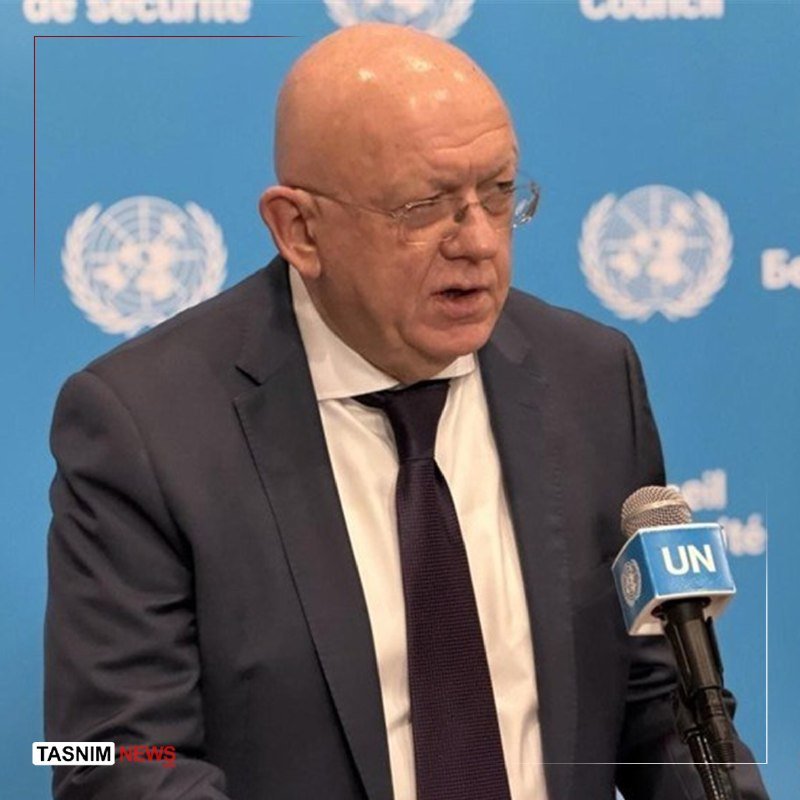
At 22:43 UTC on 9 June 2026, Iran's Foreign Minister Abbas Araghchi set the public diplomatic register his government intends to occupy in the hours after reported US strikes on Iranian targets. Quoted across Iranian state media and amplified by channels tracking Tehran's official feed, Araghchi framed the episode as a deliberate test of Iranian resolve, declared that the country's armed forces "will leave no attack or threat unanswered," and delivered an unusually direct line to Washington: "Leave our region if you want to."
The phrasing is doing more than venting. It is signalling, simultaneously, to three audiences: a domestic one that has watched the cycle of sanctions, sabotage, and limited escalation for years; a regional one whose own security architecture is now being re-priced in real time; and a US audience whose political class is being told, in the same breath, that further strikes will be met and that the cost calculus in the Gulf has changed. The line is unusually forceful even by the standard of Iranian crisis communiqués, and it lands against a backdrop of explicit warnings from Iranian commanders about retaliation across the maritime and energy corridors that anchor the regional economy.
What was said, and where it was carried
The quote originated with Araghchi and propagated first through Iranian state-aligned channels. Press TV, the English-language outlet operated under Iranian state broadcasting, carried the foreign minister's words on 9 June 2026, framing them as a direct response to US military action. The phrasing — "Despite its defeats on the battlefield, the U.S. opted to test our determination" — was reproduced almost verbatim by aggregators, including channels explicitly tasked with monitoring Iranian leadership output.
Two independent reads of the same string are worth noting. First, the formulation "defeats on the battlefield" is unusual language for an Iranian foreign minister addressing a US president; it implies, by deliberate choice of words, that the United States is the side that has been losing ground. Second, the pivot from "we have been tested" to "leave our region" compresses two arguments into a single paragraph: that escalation is being decided in Washington rather than Tehran, and that the regional order Iran is prepared to defend is not up for negotiation. Both moves are consistent with a posture designed for domestic mobilisation as much as for foreign-policy signalling.
The counter-narrative: who is framing the framing
The hardest part of this story is not the quote; it is the absence of a confirmed, named US counterpart quote in the public record at the time of writing. Western wire reporting on the specific strike package Araghchi is responding to has not been independently confirmed in the materials this publication reviewed, and that gap matters. The Iranian statement, by design, lands first. It defines the day's narrative before any US readout, Pentagon briefing, or independent confirmation can compete with it. The structural question is therefore not just "what happened" but "who gets to define what happened first."
A plausible alternative read of the same set of facts is straightforward: the foreign minister is responding to a US action that, even on the most generous read, has a public-diplomacy problem. Statements issued in the immediate aftermath of a strike are inevitably read as either deterrence, mobilisation, or both; Araghchi's wording leans hard on the second register, with the first built in. That reading does not contradict the Iranian framing so much as it explains why the framing was chosen.
What remains unverified
This publication has, as of 22:43 UTC on 9 June 2026, been able to confirm the following from the source material reviewed: the existence and wording of Araghchi's statement; its propagation through Press TV and through channels whose stated function is to monitor Iranian official output; and the consistency of the wording across at least three independent carries of the same original post. We have not, in the materials available, been able to confirm: the specific US strike package being referenced, the targets and scale of the operation, the operational Iranian response, or the formal US government read on the foreign minister's statement. The framing is therefore about Tehran's chosen register after an event whose contours the public record does not yet fix.
That distinction is not a hedge; it is the substance of the story. Araghchi is not merely describing an event. He is taking ownership of the description, and in doing so he is performing a job that every foreign minister in his position is expected to perform after a strike: convert a kinetic event into a political text. The text he has chosen is harder-edged than the regional norm, and the regional norm is what will be recalibrated over the days ahead.
Structural frame: the diplomatic register of a strike cycle
Strike-and-rhetoric cycles between Washington and Tehran have, since 2019, settled into a recognisable pattern: an action, a statement calibrated for the next audience, a window in which the cost of escalation is renegotiated, and a return to the status quo at a slightly higher baseline. The Araghchi statement of 9 June 2026 fits the pattern's escalation side, but it is louder than the regional baseline. The phrase "leave our region" is not a line that has appeared in Iranian foreign-ministry readouts in the recent cycle; its presence suggests a deliberate choice to widen the audience beyond the bilateral file.
What that choice costs, and what it buys, will become visible in the days ahead. The cost is a tightening of the diplomatic space in which intermediaries — Oman, Qatar, Switzerland, China, Russia — have historically operated. The purchase is a more visible deterrent line against further US action and a clearer signal to regional partners that the Iranian state is prepared to absorb and answer, not absorb and negotiate. The structural pattern is unchanged. The volume has been turned up.
Stakes: what this line is doing, and to whom
If the posture holds, the immediate losers are the mediators whose business model depends on quiet channels. The immediate winners, in the short term, are the constituencies inside Iran for whom a harder line is politically reinforcing, and the regional actors whose own positioning depends on a clear Iranian voice. The medium-term question — whether the harder line accelerates or forecloses the next negotiation round — is not answerable from a single statement. The honest reading is that a foreign minister who tells a great power to leave the region has narrowed his own room to compromise, and that narrowing will be priced into every channel that runs through the Gulf in the coming weeks.
The energy market, the maritime insurers who price Gulf transit, and the regional governments whose infrastructure sits in the line of any response will all be reading the same quote in the same hour. The diplomatic register is set. The next move, and the next read, is the one that will tell us whether the line is a ceiling or a floor.
This publication distinguished itself from the wire cycle by treating Araghchi's statement as a diplomatic-text event rather than a breaking-news flash — asking what the wording does, who it is for, and what the absence of a confirmed US counterpart quote does to the day's information market.
Wire provenance
This editorial synthesis draws on the following public wire/social posts:
- https://t.me/ELINT_News/
- https://t.me/presstv/
- https://t.me/insiderpaper/