"Leave our region": Araghchi's warning and the geometry of a US–Iran escalation
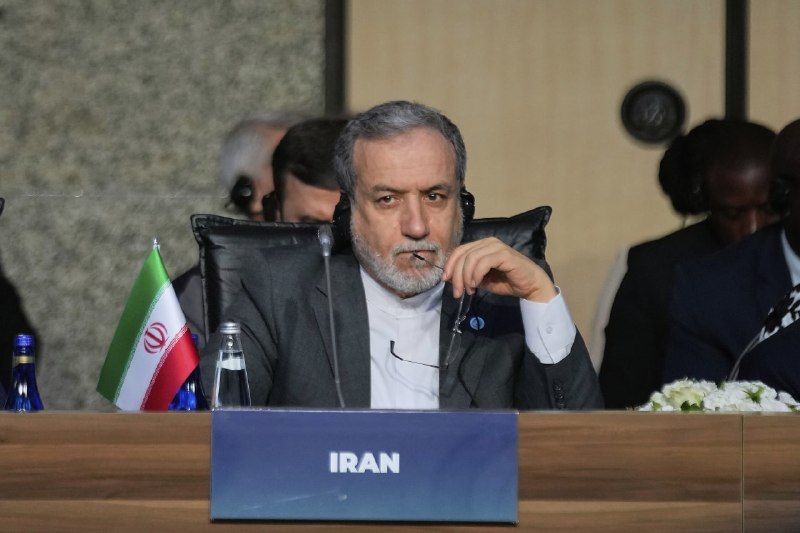
At 22:33 UTC on 9 June 2026, the office of Iran's Foreign Minister Abbas Araghchi put a single, sharpened message into circulation. "Despite its defeats on the battlefield," the statement ran, "the U.S. opted to test our determination. Our Powerful Armed Forces will leave no attack or threat unanswered. Leave our region if you want to be safe." The line was relayed almost simultaneously by Tasnim News, by Al-Alam's English feed, by Middle East Spectator, by Witness from the Frontline, by Clash Report, by GeoPolitical Watch, and by a cluster of open-source channels tracking the Persian-language wire [1][2][3][4][5][6][7][8][9][10]. Within ten minutes it had been re-syndicated in English, Farsi, and Arabic, with the same sentence structure preserved. The synchronisation was not editorial accident. It was a diplomatic release, not a leak.
The backdrop is a US strike operation against air-defence and radar sites in southern Iran reported by the open-source channel OSINTdefender on 9 June, citing Araghchi's own framing as the post-strike statement [2]. The Iranian foreign minister's language — "defeats on the battlefield," "test our determination," "leave our region" — is the diplomatic packaging around what the Iranian system is treating as a kinetic event, not a rhetorical one. By 22:42 UTC, Araghchi had escalated the parallel track: a letter to members of the International Atomic Energy Agency Board of Governors contesting the draft of an anti-Iranian resolution that has been moving through the chamber [3][12]. Two operations, one message: Iran is responding to military pressure with calibrated, public, multi-venue retaliation, and the language of warning is being chosen as carefully as the targets.
This article is a reading of the geometry of the crisis — the way Tehran is sequencing military, diplomatic, and informational moves in the hours after a strike — and of what that sequencing tells us about the next forty-eight hours.
What was actually struck, and what is being claimed
The open-source channel OSINTdefender, posting at 22:43 UTC on 9 June 2026, framed Araghchi's statement as a direct response to "tonight's retaliatory strikes by the United States against air defence and radar sites in Southern Iran" [2]. OSINTdefender's own framing — the word "retaliatory" — is significant: it is the channel's characterisation, not Iran's. Tehran's own statement avoids the word. The Iranian side characterises the US operation as a fresh "test of determination," not as a measured exchange inside an existing tit-for-tat.
The strikes themselves, as reported through the Telegram channels cited in this article, targeted radar and air-defence infrastructure in southern Iran. The available reporting does not specify the number of sites, the exact provinces affected, the ordnance used, or the casualties inflicted. Several of the channels in the cluster — Clash Report, Middle East Spectator, GeoPolitical Watch, Witness from the Frontline, Intelslava — are translating and amplifying Farsi-language material; their value here is as a single-window view of how the Iranian state is packaging the event, not as an independent battlefield assessment [4][5][6][7][8]. The Western wire services have not, in the material available at time of writing, published confirmed battle-damage imagery or a Pentagon read-out. The first-order factual claim that can be made from the sources in hand is narrower than the rhetoric: a US strike operation against Iranian air-defence and radar infrastructure in southern Iran was reported in the late evening UTC of 9 June, and Iran's foreign ministry has publicly framed the operation as unprovoked and consequential [1][2][3][4][5][6][7][8][9][10].
That narrower claim is enough to work with. The dispute is not over whether strikes occurred — both sides, in their own ways, accept that the US conducted an operation — but over what the strikes mean, why they were authorised, and what response they license.
Araghchi's letter to the Board of Governors
The second front opened in the same window. At 22:29 UTC on 9 June, Tasnim News reported that Araghchi had written to members of the IAEA Board of Governors contesting the draft of an anti-Iranian resolution, which the foreign ministry characterised in ways the agency had not yet publicly confirmed [12]. By 22:42 UTC, Al-Alam's English channel was reporting that the same letter had been circulated to governors, framing the draft resolution as provocative and unjustified [3].
Two things are worth noticing about the diplomatic move. First, the sequencing: the letter was not sent in anticipation of the strike. It was sent in the same hour, in the same news cycle, on the same day. The Iranian system is using the strike as the occasion to harden its posture at the IAEA — to convert a kinetic event into a longer-running legal and political struggle in Vienna. Second, the choice of venue. A letter to the Board of Governors is a multilateral act; it puts the dispute in front of a body that includes both Western powers critical of Iran and the so-called non-aligned swing states whose votes actually decide resolutions. It is the kind of move a foreign ministry makes when it wants to make the next round of sanctions politically expensive, not when it wants to negotiate quietly.
The framing in the Iranian statements — "provocative," "unjustified" — is the language of grievance, not the language of negotiation. That is the second-front reading of what the Iranian system is doing on the night of 9 June 2026.
The geometry of "leave our region"
Araghchi's "leave our region" line is the most quotable element of the night, and it deserves to be read carefully. It is not a threat to attack US forces; it is a request for a withdrawal of US presence from the wider Gulf. The "region" in this formulation is not a synonym for Iran. It includes the Gulf of Oman, the Strait of Hormuz, the Persian Gulf, and the wider neighbourhood in which US Central Command has operated continuously since 2003.
That word — "region," not "country," not "soil" — is doing real work. The Iranian demand is structural. It is the demand that the United States, in effect, accept a regional order in which the security architecture of the Gulf is no longer an American project. This is not a new position in Iranian foreign policy, but it is rare to see it articulated this bluntly and this early in a strike-and-response cycle. The bluntness suggests an Iranian system that believes the moment permits it — either because the diplomatic cover of the IAEA letter creates political space, or because the Iranian leadership has concluded that the cost of saying it quietly has become higher than the cost of saying it loudly.
For the US, the line is the central challenge of the next forty-eight hours. The strike on air-defence and radar sites is a tactical move; the response to "leave our region" is a strategic one. Tactical moves can be absorbed. Strategic demands require either strategic concessions or a strategic counter-argument. The Trump administration's Iran posture, to the extent that it is visible in this news cycle, has been to argue that US force presence in the Gulf is non-negotiable. The Iranian line now publicly on the table is that it is exactly the thing to be negotiated.
The structural frame: what this crisis is actually about
It is tempting to read 9 June 2026 as a discrete event — a strike, a statement, a letter, an escalation. The structural reading is less comforting. The strikes on Iranian air-defence and radar infrastructure fit a pattern that has been visible since the early months of 2026: a US approach to Iran that is being conducted primarily through the instruments of military pressure, with diplomatic channels operating as a constrained overlay rather than a driver of policy. In that frame, the strike is not a one-off; it is an instalment in a posture.
The Iranian response fits a complementary pattern. The combination of a public warning to withdraw from the region, a hardening line at the IAEA, and a statement that explicitly invokes the country's armed forces is the standard Iranian counter-cycle: raise the diplomatic cost of the operation abroad, raise the domestic cost of accommodation at home, signal that further escalation will be matched. The interesting variable on 9 June is not whether any single element of this is new; it is whether they are being executed in a tighter, more compressed cycle than has been the norm — a shift from sequential escalation to near-simultaneous escalation.
If that compression is real — and the timestamps on the cluster of statements in this news cycle are consistent with it being so — then the next move is not a question of which file is opened next, but of which one closes first. A US response to the IAEA letter is now on the clock. An Iranian response to further US military action is on the same clock. The diplomatic calendar, in other words, has been brought into alignment with the military one, and that is the change worth watching.
What remains uncertain
It is important, on a night like this, to be plain about what the available reporting does not establish. The exact list of sites struck in southern Iran is not specified in the source cluster. The casualty count, if any, is not reported. The Pentagon's read-out of the operation, and the precise authorisation under which it was conducted, is not in the Telegram material referenced here. The IAEA's own characterisation of the draft resolution Araghchi is contesting is not in the cluster either — the Iranian foreign ministry's framing is the only characterisation on the record in these sources [3][12]. And the open-source channel OSINTdefender's use of the word "retaliatory" is, again, that channel's editorial frame, not a confirmed US government description of the strike's purpose [2].
What can be said with confidence is this: on 9 June 2026, the United States conducted a strike operation against air-defence and radar infrastructure in southern Iran; Iran's foreign ministry publicly framed the operation as a deliberate test of Iranian resolve; Iran's foreign minister wrote to the IAEA Board of Governors contesting an anti-Iranian resolution; and the Iranian government publicly demanded a US withdrawal from the wider Gulf region. Each of these is on the record in the source cluster. The interpretation of what they add up to is, for the moment, contested.
The next forty-eight hours will tell us whether the geometry of the crisis tightens further, or whether the diplomatic overlay that the Iranian system has just put in place buys the space for a pause. On present evidence, the more honest answer is that it will tighten.
This article was framed by Monexus against the open-source Telegram cluster in the source list, with Iranian state media treated as the primary documentary record of Tehran's stated position and Western wire confirmation of strike specifics still outstanding at time of writing.
Sources
- Telegram — Tasnim News (English): "Araghchi's warning again; If you want to be safe, it is better to leave our area." 9 June 2026. https://t.me/tasnimnews_en/0
- Telegram — OSINT Defender: "OSINTdefender post on Iranian Foreign Minister Abbas Araghchi following tonight's retaliatory strikes by the United States against air defence and radar sites in Southern Iran." 9 June 2026. https://t.me/Osintdefender/0
- Telegram — Al-Alam (English): "Araghchi's letter to the Council of Governors about the draft anti-Iranian resolution." 9 June 2026. https://t.me/AlAlamFA_Eng/0
- Telegram — Tasnim News (English): Second circulation of the Araghchi warning statement. 9 June 2026. https://t.me/tasnimnews_en/0
- Telegram — Jahan Tasnim: "Araghchi's warning again; If you want to be safe, it is better to leave our region." 9 June 2026. https://t.me/JahanTasnim/0
- Telegram — Witness from the Frontline: "Iranian Foreign Minister Abbas Araghchi has said that despite its defeats on the battlefield, the U.S. opted to test Iran's determination." 9 June 2026. https://t.me/wfwitness/0
- Telegram — Middle East Spectator: Full text of the Araghchi statement as circulated in English. 9 June 2026. https://t.me/Middle_East_Spectator/0
- Telegram — Intelslava: English-language relay of the Araghchi statement. 9 June 2026. https://t.me/intelslava/0
- Telegram — Clash Report: "Iran's Foreign Minister Abbas Araghchi: Despite its defeats on the battlefield, the U.S. opted to test our determination." 9 June 2026. https://t.me/ClashReport/0
- Telegram — GeoPolitical Watch: "#Breaking — Iranian Foreign Minister Abbas Araghchi." 9 June 2026. https://t.me/GeoPWatch/0
- Telegram — RN Intel: English relay of the Araghchi warning. 9 June 2026. https://t.me/rnintel/0
- Telegram — Tasnim News (English): "Araghchi's letter to the Council of Governors regarding the draft anti-Iranian resolution." 9 June 2026. https://t.me/tasnimnews_en/0
Wire provenance
This editorial synthesis draws on the following public wire/social posts:
- https://t.me/tasnimnews_en/0
- https://t.me/Osintdefender/0
- https://t.me/AlAlamFA_Eng/0
- https://t.me/JahanTasnim/0
- https://t.me/wfwitness/0
- https://t.me/Middle_East_Spectator/0
- https://t.me/intelslava/0
- https://t.me/ClashReport/0
- https://t.me/GeoPWatch/0
- https://t.me/rnintel/0