Gaza crossings shut, prediction markets churn, and the news cycle keeps trading
On a single Sunday in June 2026, the United Nations was pleading for ceasefires to hold while retail traders priced the future of AI releases, mass deportation, and the IPO calendar. The two stories share a problem of authority.
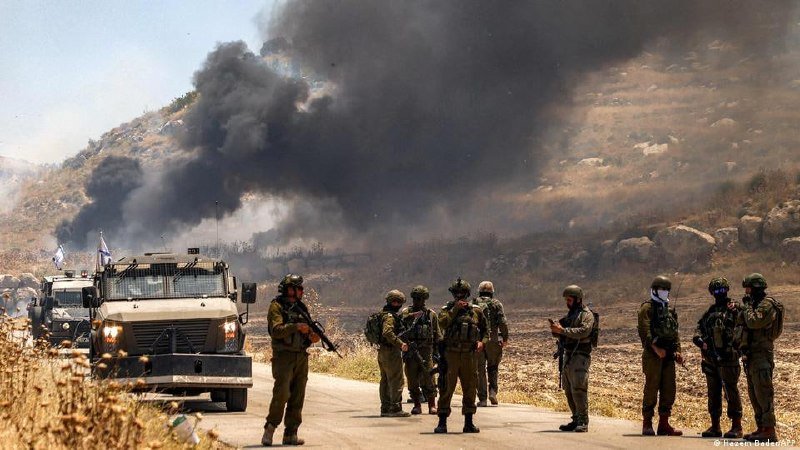
On the evening of 8 June 2026, the United Nations was making a public, on-the-record plea for ceasefires in Gaza to hold. According to Middle East Eye's live blog, Israel had shut the Gaza crossings, and the UN chief was pressing the diplomatic case that the pauses must not collapse (Middle East Eye, 8 June 2026, 22:53 UTC). Within hours of that appeal circulating on the wire, the same X timeline that carried the UN statement was also carrying live price ticks from a prediction market: a real-time chart of the probability that a new flagship AI model ships before a named deadline, a separate chart pricing how many people the Trump administration will deport by year-end, and a third tracking which companies go public before 2027 (Polymarket, 8 June 2026, 16:12–17:21 UTC).
These two stories sit on the same screen and they should not. The first is a question of life, death, and international humanitarian law. The second is a question of where retail attention, idle dollars, and algorithmic feeds have drifted. The fact that they cohabit a single timeline — promoted by the same kind of accounts, surfaced by the same kind of recommendation engines — is itself the story. The problem is no longer that the news is biased toward one frame or another. The problem is that the news has been demoted to a category of content, traded alongside sports, weather, and the IPO calendar.
Gaza, and what "ceasefire" still means in 2026
The Middle East Eye live blog, timestamped 22:53 UTC on 8 June, reports the UN secretary-general urging the parties to honour existing ceasefire understandings and noting that Israel has moved to close the Gaza crossings (Middle East Eye, 8 June 2026). The post sits inside a wider live thread that also tracks Israel's stated intention to control bridges and an area south of Lebanon's Litani river, and US-Iran signalling. The crossings closure is the kind of incremental step that, in a slower news cycle, would lead a Western evening bulletin. In the current cycle, it surfaces as a screenshot item, reposted, summarised, folded into a thread, and replaced within hours.
That collapse of attention is not neutral. A ceasefire held together by word and political will depends on the cost of breaking it being visible to the outside world. When a closure of crossings — which determines whether food, fuel, and medical supplies move — can be reported, summarised, and forgotten in the time it takes a prediction market to update a price, the signalling function of journalism has thinned out. The wire still does its job; the audience has stopped treating the wire as the day's main event.
The prediction market is not a poll and not a forecast
The Polymarket posts in the same window are not, strictly speaking, journalism. They are positions — bets placed by anonymous accounts on whether a specific event will occur by a specific date. The interface presents the implied probability as a live number, often in the single digits for long-shot outcomes, and the social loop around it converts those numbers into claims about the future. A chart that reads "3% chance" is a market-maker's spread dressed as information.
The danger is not that traders are wrong. It is that the public now reads a 3% line as more authoritative than a wire report, because it is a number with a price attached. Confidence and liquidity look like evidence. They are not. The same critique applies to the deportation and IPO markets cited in the Polymarket posts of 8 June (16:12 and 16:42 UTC): they are sentiment instruments with thin books, not forecasts. The fact that they are timestamped and charted, the same way an interest-rate decision is charted, is a presentation choice, not an epistemic one.
Two kinds of authority on the same screen
The deeper problem is structural. Journalism derives authority from process — sourcing, verification, correction, named bylines, editorial accountability. Prediction markets derive authority from price — the argument that, in aggregate, the people willing to risk money know more than the people who aren't. Both can be right; both can be wrong. When the two formats are surfaced side by side on a feed, they borrow each other's credibility. A number from a market looks more rigorous because it sits next to a wire report. A wire report looks more speculative because it sits next to a market.
That is the editorial complaint worth making in plain language: the platforms that decide what we see have stopped distinguishing between evidence and sentiment. The Middle East Eye post carries the institutional weight of the UN secretary-general's office. The Polymarket posts carry the institutional weight of… a custody account and a smart contract. Both are timestamped. Both are, in the loose sense, "live." Only one has a named actor with a mandate.
The stakes, stated without flourish
If this continues, two things happen. First, the cost of a ceasefire breaking — a crossing closed, a convoy turned back, a hospital cut off — gets amortised into a feed where it competes with a deportation chart and an IPO watchlist. Reporting on Gaza becomes a content vertical rather than a civic event. Second, the public learns to price everything. Politics, war, weather, corporate earnings, and humanitarian access all become instruments, and instruments are things you hold until they move against you.
The honest read is also the uncomfortable one: this is what a fragmented, attention-economy news environment looks like at full stretch. The UN can call for a ceasefire. The market can price whether the ceasefire will hold. The platform can put both on the same screen. None of those actors is lying. All of them, together, are producing a public that has lost the ability to rank the claims in front of it.
What remains genuinely uncertain
The sources do not specify the exact humanitarian impact of the crossings closure reported at 22:53 UTC on 8 June — that will depend on convoy schedules, fuel stocks, and hospital inventories that the live blog does not enumerate. Nor do the Polymarket pages disclose the size or composition of the books behind the prices, which means the implied probabilities are only as honest as the exchange's order book. What is not in dispute is the framing problem: a UN appeal and a betting line now travel through the same pipe at the same speed, and the audience has to do the ranking work the platform will not do for it. That is the part worth being clear-eyed about.
Desk note: Monexus treats prediction-market screenshots as market data, not as forecasts, and treats Middle East Eye's live blog as one of several wires on the Gaza file alongside Reuters, AP, and the BBC — usable, citable, and not load-bearing on its own.