Strikes on Iran’s Hormozgan coast subside, Iranian state media report
Iranian state outlets say calm has returned to Qeshm, Jask, Sirik and Mount Mubarak after what they described as “hostile actions,” in a brief episode that puts the southern coast back in the headlines.
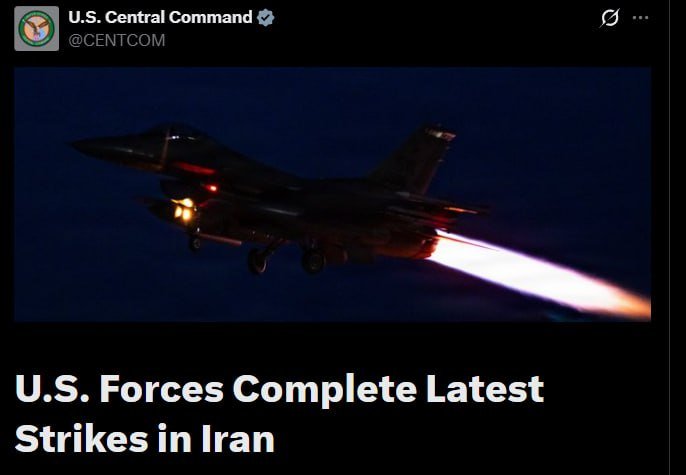
Iranian state television reported at 22:16 UTC on 9 June 2026 that calm had returned to the southern coast of Hormozgan province after what it described as a wave of “hostile actions” against targets on Qeshm island, the city of Jask, the town of Sirik, and Mount Mubarake Jask. The framing came from outlets that are themselves part of the Iranian state apparatus, but the locations named are well known, the locations are specific, and the sequence of statements — from initial reports of two points being hit on Jask and Mount Mubarak at 21:56 UTC, to a “calm restored” message repeated by multiple channels within the next half hour — is consistent across at least three separate Iranian outlets, including Al-Alam Arabic and Tasnim News.
The episode matters less for what it confirms than for what it sharpens: a string of incidents along the Iranian coast this year has steadily compressed the distance between routine confrontation and a wider conflagration. Reporting is partial and the Iranian account is the only account on the table, but the geography is enough to read. Qeshm, Jask, Sirik and Mount Mubarake are not abstractions. They sit on the seaward approaches to the Strait of Hormuz, through which roughly a fifth of the world’s traded oil moves. Any reliable strike on those locations, or any report of one, lands in an already-tense market and an already-tense diplomatic channel.
What the Iranian statements actually say
The first headline, at 21:56 UTC, was that two points in Jask and Mount Mubarak had been hit by what Iranian state television called “enemy shells.” The word choice — dushman and afrakh’ha-ye doshman, the standard Iranian state phrasing for an unnamed external adversary — is itself part of the message. It signals a kinetic event without naming the actor, a familiar Iranian pattern that preserves diplomatic deniability while putting Washington, Tel Aviv, or both on notice. The phrasing also leaves a corridor of plausible reinterpretation: “shells” can be read as naval gunfire, cruise missiles, or air-delivered ordnance depending on which account later emerges.
Twenty minutes later, at 22:16 UTC, Tasnim News — the outlet affiliated with the Islamic Revolutionary Guard Corps — moved the framing from event to resolution: the wave of “American attacks in the south” had subsided, and the situation was reported as calm. By 22:20 UTC, the same line was being carried by the wfwitness Telegram channel citing Iranian state TV, and by 22:27 UTC, Al-Alam Arabic had issued an “urgent” update using the same wording. That convergence is the strongest part of the Iranian account. Three outlets, including the IRGC-linked Tasnim, do not typically coordinate their wording on a half-hour turnaround unless the script comes from a single source inside the security apparatus.
What the statements do not say is more telling. There is no mention of casualties. There is no mention of damage to infrastructure at Jask port, which Iran has spent the last several years expanding precisely because it gives Tehran an export route that bypasses the Strait of Hormuz chokepoint. There is no claim of interception by Iranian air defence, which would normally be a centrepiece of state-media coverage in a window of this kind. The absence of those elements suggests the authorities wanted the incident on the record but did not want the magnitude of the response on the record — a calibration that, in itself, reads as deliberate.
What is known about the coast, and what is not
Qeshm is the largest island in the Persian Gulf and the centre of Iran’s free-trade zone; Jask is the operational terminus of the Goreh–Jask pipeline, which was built to give Iran an export route that does not transit the strait. Sirik is a smaller coastal town south of Minab, and Mount Mubarake Jask is the high ground that overlooks the approaches to Jask from the sea. Any military planner looking at the strait, on any side, knows these names. The Iranian reporting, even when filtered through state media, names the right places.
What is not known — and what the available material does not establish — is who fired, with what, at what, and with what effect. No Western wire had confirmed the strike at the time of writing, and no Iranian source has been allowed to put a number on damage or casualties. In the usual pattern of Hormozgan incidents, the first independent account emerges from satellite imagery hours later, and the first on-the-ground reporting from Iranian opposition outlets, opposition diaspora networks, or shipping trackers in the strait arrives on a similar lag. The published record, for the moment, is a single country’s account of an event that single country has an interest in framing.
Why a brief, ambiguous incident can still move markets
A reader unfamiliar with the Gulf might be tempted to set the story down at “calm restored.” The market, and the diplomatic channel, will not. Even a short, ambiguous strike on the Hormozgan coast shifts three dials at once. It raises the option value of insurance premiums for tanker traffic in the strait. It shifts the burden of proof in the next round of negotiations, because Tehran can now point to a kinetic event as the backdrop to any future talks. And it gives both Washington and Tehran a face-saving off-ramp in which both sides can claim the incident was contained.
The structural pattern is familiar: an incident that, on its own, would be a footnote, lands inside a year of accumulated friction and is therefore read as a step on a curve. Iran’s nuclear file is open, IAEA inspectors remain a contested presence, and the regional environment — from Lebanon to the Red Sea — has not quieted. A strike on the coast, even one the Iranian state itself describes as over, gets priced into that curve.
What remains contested
The dominant framing, carried in the Iranian material, is that an external actor — implied, and in Tasnim’s case stated, to be the United States — carried out a set of strikes on Iranian soil, and that the episode is now over. The plausible alternative read is that the incident was smaller than the Iranian framing suggests, that the language of “shells” and “attacks” is being used to harden domestic opinion ahead of a different news cycle, and that no foreign military action has been confirmed by any source outside the Iranian system. Both readings are consistent with the available record. The first is supported by the specificity of the locations named; the second by the absence of any Western confirmation and by the absence of any Iranian account of damage or casualties.
Until independent reporting — satellite imagery, shipping-tracker data, opposition-channel footage, or a statement from a third government — narrows the gap between the two, the responsible read is that something happened on the Hormozgan coast on the evening of 9 June 2026, that Iran says it has subsided, and that the question of who did what is, for the moment, an open one. Monexus will update as the record widens.
Desk note: wire reporting on this episode is, at publication, an all-Iranian account. Monexus has therefore carried the Iranian framing with the caveats that framing requires, rather than transposing it into a more declarative register, and has flagged the structural stakes — the Strait of Hormuz corridor, the Goreh–Jask pipeline, the negotiating backdrop — rather than the unverified specifics of this one episode.
Wire provenance
This editorial synthesis draws on the following public wire/social posts:
- https://t.me/alalamarabic
- https://t.me/wfwitness
- https://t.me/tasnimnews_en
- https://t.me/alalamarabic
- https://en.wikipedia.org/wiki/Goreh%E2%80%93Jask_pipeline
- https://en.wikipedia.org/wiki/Qeshm_Island