Israel's expansion is being answered by a regional architecture it cannot outbuild
A regional defence pact is no longer a think-tank fantasy. As Israel's military footprint widens, Arab states are quietly building the architecture for a different answer — and they no longer need Washington to underwrite it.
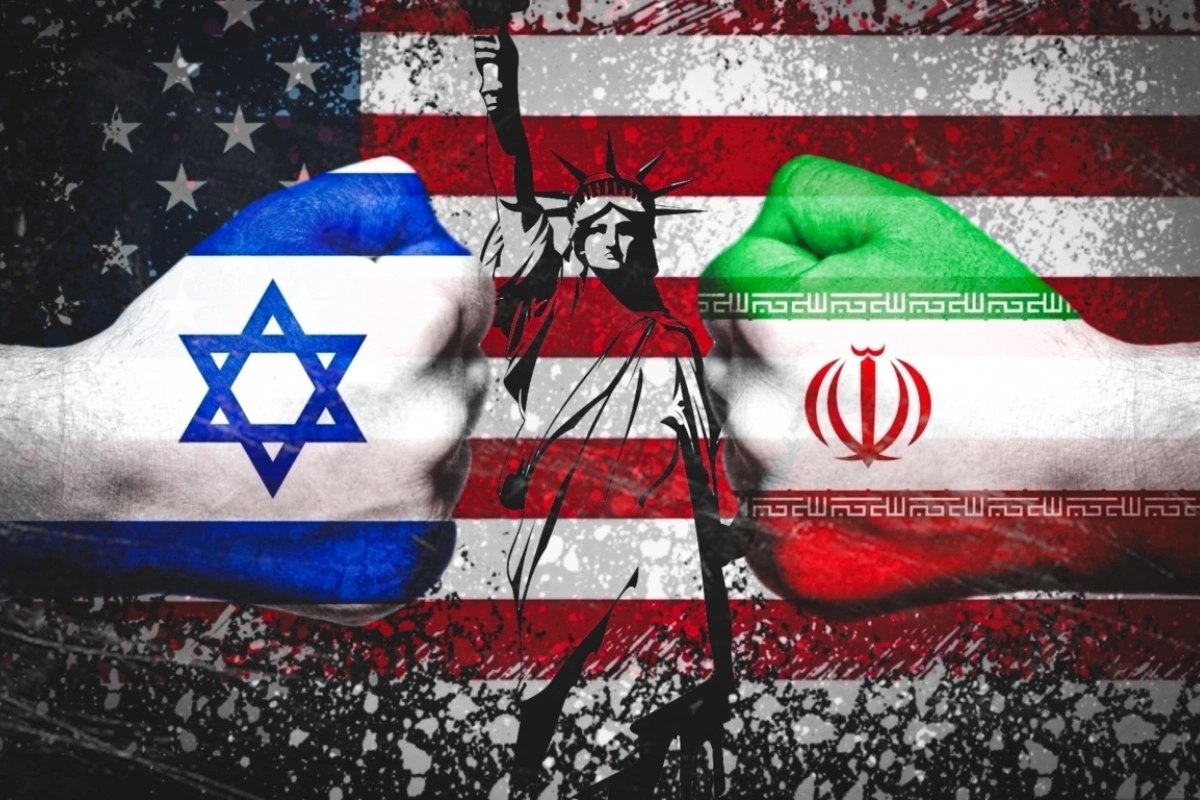
For years the question facing Arab capitals was whether they could afford to act. On 9 June 2026 the question quietly changed. Middle East Eye ran a column arguing that a regional defence pact could deliver the decisive blow to Israeli expansionism — not through confrontation, but through the slow construction of a security architecture that makes the cost of further land-grabs unsustainable. The argument lands at a moment when the Israeli government is openly debating annexation moves in the occupied West Bank, when the Gaza war has entered a grim new phase, and when the United States, distracted by its own domestic politics, has visibly lost the will to mediate.
Monexus finds that the column captures something the wire coverage still struggles to name. The era in which Middle Eastern states subcontracted their security to a single external guarantor is ending, not by rupture but by patient institution-building. The shape of the replacement is becoming visible, and it does not need Washington's permission to function.
The argument the column actually makes
The piece, published on 9 June 2026, does not romanticise the idea of a regional pact. It treats the option as a strategic instrument, the kind of arrangement that becomes viable only when the incentives of several states align against a shared threat. Israeli expansionism, in this reading, has done the work of aligning them. The expansion is no longer rhetorical; it is operational, expressed in settlement outposts, in military operations that have displaced Palestinian populations, and in the implicit message that the post-Oslo settlement map is being redrawn by force rather than negotiation.
The column's contribution is to insist that the response need not be a hot war, and that it need not wait for a change of government in Jerusalem. A defence pact, properly designed, raises the political and economic cost of further expansion to a point at which the calculus inside the Israeli cabinet and the Israeli electorate begins to shift. The mechanism is not new; the same logic animated the Camp David arrangements decades ago, only in the opposite direction.
What the wire coverage is missing
Mainstream wire reporting has framed the regional response almost entirely through the lens of crisis — the latest airstrike, the latest hostage exchange, the latest UN vote. That framing is accurate at the level of events, and it is also incomplete. It treats Arab capitals as reactive, perpetually catching up to Israeli and American initiatives. The Middle East Eye column, by contrast, reads the same facts as evidence of a structural shift: the formation of a bloc with shared interests, shared intelligence, and the slow accumulation of integrated air and missile defences.
That shift has been visible for some time. The Abraham Accords normalised relations between Israel and several Arab states but did not produce a regional security settlement; the accords were a ceiling, not a foundation. What is being built now, in the Gulf, in North Africa, and in conversations between capitals that have historically refused to speak to each other, is the foundation the accords never provided. The column names what the wires have been reluctant to: that Arab publics, exhausted by decades of watching Palestinian dispossession, are no longer a brake on their governments.
The structural frame, in plain prose
The deeper pattern is the patient end of a particular kind of order. For two generations the Middle East security system was organised around a single external patron, and the patron's interest in managing the Israeli-Palestinian conflict was always subordinated to its interest in managing the regional energy market, the regional arms market, and the regional balance against Iran. When those subordinated interests shifted — when American energy producers became competitors rather than allies, when the Iranian threat was contained through other means — the patron's interest in the conflict itself collapsed. The conflict did not. It simply lost its referee.
In the absence of a referee, regional states are doing what states have always done: building the institutions that protect them when no one else will. A regional defence pact is one such institution. It does not require anyone to declare war; it requires only the credible commitment that an attack on one member is a problem for all. That is the architecture, and it is being assembled now.
Stakes, and the part that remains uncertain
If the trajectory continues, the Israeli government faces a future in which its security does not depend solely on American cover, and in which the political cost of expansion is no longer borne by Palestinians alone. That is, by the standards of the current government, an unacceptable future, which is why the response inside Israel is to accelerate now — to create facts on the ground before the new architecture hardens. The Gaza operation, the West Bank settlement announcements, the inflammatory rhetoric from ministers: each of these reads differently once the regional frame is taken seriously.
What remains uncertain is whether the pact can be built fast enough. The column is candid that the architecture is fragile, that Arab capitals have historically trusted each other only as far as they had to, and that the American response to the construction of an autonomous regional security order is itself an open variable. Washington can accept a settlement it did not design, or it can attempt to prevent one. The signals from the current administration are mixed, and the sources reviewed here do not resolve the ambiguity. Monexus finds that the question of the next eighteen months is not whether the pact advances — it will — but whether it advances in time to constrain the next phase of expansion. The answer is being written now, in conversations that are not on the wire, by officials whose names will not appear until the architecture is already standing.
Desk note: Wire coverage of the Middle East has tended to treat Arab states as bit-players in a story written in Washington and Jerusalem. The Middle East Eye column of 9 June 2026 reads as a corrective, naming the slow institutional work happening in the region's own capitals. Monexus has framed this as a structural transition in regional security, not as a forecast of imminent war.
Wire provenance
This editorial synthesis draws on the following public wire/social posts:
- https://t.me/NikkeiAsia
- https://t.me/NikkeiAsia