Knicks coach Mike Brown turns up the volume on Game 3 officiating, putting the NBA Finals' whistle on the front page
After a 24-to-8 second-half free-throw disparity in Game 3, New York's head coach is asking publicly what the box score already showed — and putting the league's last two weeks of refereeing under a different kind of scrutiny.
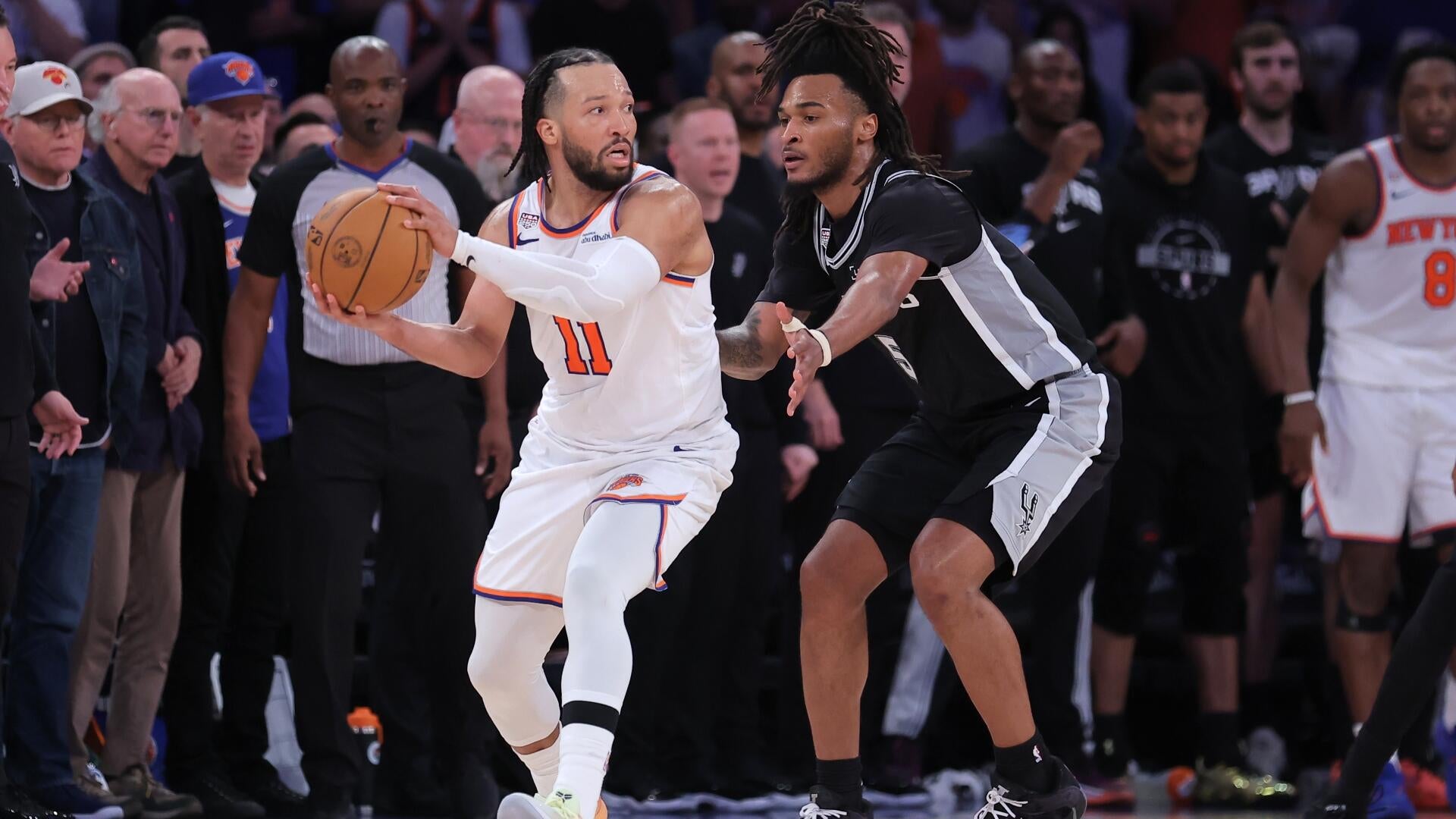
The New York Knicks walked off the floor in San Antonio on the night of 8 June 2026 trailing the Spurs in the NBA Finals, and the number Mike Brown reached for first was not a shooting percentage or a rebounding margin. It was a free-throw count: 24 for San Antonio in the second half, eight for New York. Speaking to reporters the following day, the Knicks' first-year head coach said he had "never thought I'd see" a gap of that size on a Finals stage, framing the disparity as a question about how the game is being officiated rather than a complaint about a single call. The remark, delivered at a 9 June availability and reported across ESPN and CBS Sports, has put the league office in the unaccustomed position of having a Finals coach name the officiating gap before the next tip.
The Knicks' objection is not that they are flawless; their own coach has been clear about that. Their objection is that the same physical play, applied to both uniforms, has not been whistled the same way — and that, in a series this short, a 16-attempt gap in one half is not a rounding error. It is the kind of number that, in a league accustomed to deflecting officiating talk into a referee's-union press release, makes a coach's patience the story.
The box-score case
The arithmetic Brown cited is concrete. According to ESPN's 9 June 2026 reporting, San Antonio shot 24 free throws in the second half of Game 3 to New York's eight. The Knicks, who had been the more aggressive offensive team through the first two games of the series, found their half-court sets stalling in the third and fourth quarters, in part because — Brown's argument — Spurs defenders were permitted to crowd the body on drives to the rim in a way that Knicks defenders were not when the possession ran the other way. CBS Sports's 9 June 2026 write-up makes the same point more bluntly: Brown "does not contend that the Knicks are infallible; rather, he believes decisions have not been equally applied to the Spurs."
That distinction matters. The Knicks are not asking the league to replay a possession. They are asking whether the contact threshold is the same on both sides of the ball — and on a night when one team took 24 free throws in 24 minutes and the other took eight, the question is one the box score answers on its own.
A coach, a centre, and a half-court problem
The officiating argument sits on top of a tactical one, and the two are related. In the same 9 June 2026 ESPN report, Brown described getting Karl-Anthony Towns more involved down the stretch of close games as "extremely important," after the Knicks' late-game offense visibly stalled in the Game 3 loss. Towns is the team's highest-volume interior scorer and its most reliable outlet when the perimeter dries up. That the Knicks went away from him in the game's decisive stretches is a coaching question the staff will answer for itself; that the Spurs were able to play the passing lanes more aggressively without consequence, in Brown's telling, is one the officials will have to.
The two threads — Brown wants his star on the ball more, and Brown wants the same contact called on both ends — point in the same direction. Towns operating in the post invites contact. The Knicks' argument, simply put, is that they have not been getting the benefit of that contact in the whistle.
The counter-read
It is worth saying plainly what the other side of this looks like. San Antonio can reasonably argue that 24 free throws in a half is a product of how the Knicks defended: that New York's rotations were late, that its bigs reached on shot-fakes, and that the Spurs simply did a better job of putting the Knicks' interior defenders in verticality trouble. Officials do not invent fouls; they call the ones in front of them, and a 3-to-1 free-throw disparity in a half can be the symptom of a team losing its discipline at exactly the moment the game tightens. The Spurs, for their part, have not complained about the officiating through three games, which is its own kind of statement.
Brown is aware of this read — his own framing leaves room for it — and the question for the league is not whether San Antonio earned some of those trips. The question is whether all of them were earned at the same rate as the ones New York was denied. That is a question the on-court review process is supposed to answer in real time, and on the evidence of Game 3, the answer was not to the Knicks' satisfaction.
Stakes for the series, and for the office
The next game in the series is the only game that matters to the Knicks' season. A 3-1 deficit is not a series, but it is also not yet the end of one, and New York's path back runs through two adjustments it can control — getting Towns the ball where he can score through contact, and forcing the officials to whistle the contact his defenders are absorbing at the other end. The league's path, in turn, runs through a familiar but uncomfortable choice: defend the officiating publicly, defend it quietly, or say nothing at all. None of those options will make the next 48 minutes easier.
What is also worth watching is what is not yet in the public record. The NBA's two-way communication with officiating crews — the same machinery that produces a Last Two Minute report after close games — is built to handle disputes in private. The moment a Finals coach puts the numbers in front of cameras, the machinery has to decide whether to speed up, slow down, or stay exactly where it is. The Knicks, at minimum, have made that decision a story.
Desk note: Monexus has framed the Game 3 officiating question as a coaching-and-discipline story first and a refereeing story second, on the working assumption that a Finals series should be decided by the players and the schemes. The wire coverage (ESPN, CBS Sports) has largely done the same, with Brown's own framing doing most of the heavy lifting.