Mexico City teachers' strike puts a World Cup halo over a national wage fight
Thousands of teachers blocked the avenue to the Azteca Stadium days before kickoff, turning the world's sporting gaze into leverage in a long-running dispute over wages and pensions.
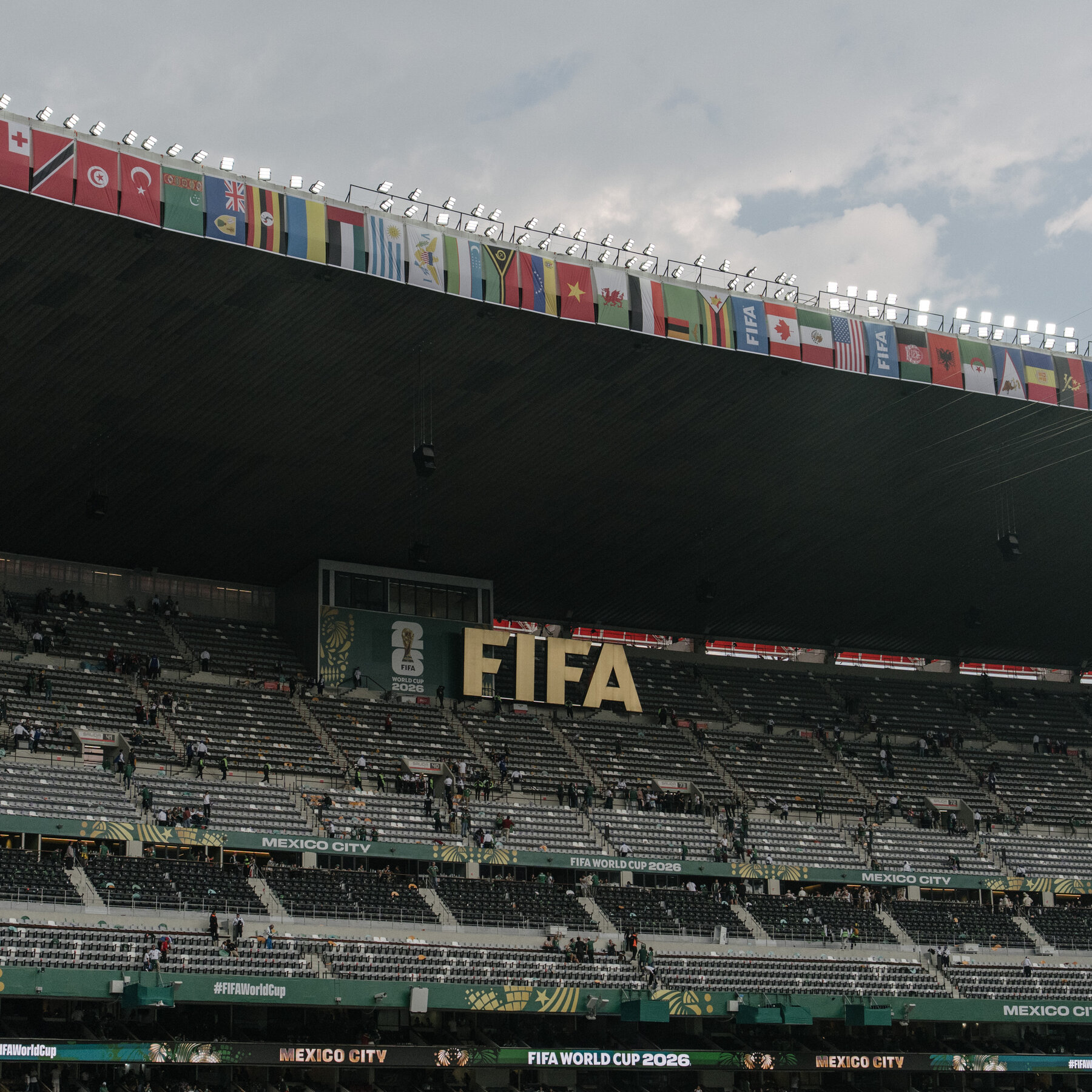
On the afternoon of 9 June 2026, thousands of teachers and their supporters filled the avenue leading to the Estadio Azteca in Mexico City, bringing traffic to a halt in a choreographed show of force timed to the global sporting calendar. The protest, led by dissident sections of the country's largest teachers' union, set up a direct collision between two of Mexico's most visible public stages: a presidential push to put the country's face forward as a World Cup co-host, and a labour dispute over pay, pensions, and the federalisation of the education system that has lingered, in different forms, for the better part of two decades.
The strike is, on its face, a wage dispute. It is also a test of whether the international spotlight that comes with hosting football's flagship tournament can be turned, however briefly, into bargaining power at home. The government of President Claudia Sheinbaum, which took office in October 2024, has tried to draw a clear line between the tournament's logistics and the union's demands. The protesters are betting the line is not as clean as that.
A union with a long memory
The mobilisations on 9 June were organised by breakaway factions of the Coordinadora Nacional de Trabajadores de la Educación (CNTE), a coordinating body that traces its modern form to a 1979 split from the long-dominant Sindicato Nacional de Trabajadores de la Educación. The CNTE has a four-decade history of using the country's busiest political moments — May Day marches, the anniversary of the 1968 Tlatelolco massacre, presidential inaugurations — as platforms for demands that range from back pay to the abrogation of the 2013 education reform and the restoration of a more decentralised, union-run schooling model.
What makes the current moment unusual is the date. The Azteca, a venue that has already hosted two World Cup finals, is once again at the centre of the tournament's opening fixtures. The 2026 edition is being staged across three host nations — the United States, Canada, and Mexico — and Mexico City is one of the marquee locations. The state has spent the better part of a year staging dress-rehearsal matches, refurbishing transit corridors, and rebuilding the avenue leading to the stadium. On 9 June 2026, the dress rehearsal belonged to the teachers.
The federal government has insisted, both publicly and in private messaging to federation officials, that the strike is not connected to the tournament. The union's reply, delivered through megaphones and homemade placards, is the inverse: that the international attention the World Cup is about to bring is precisely the point, and that the state's instinct to keep the two conversations separate is itself a political choice.
The federal line — and its limits
The Sheinbaum administration came to office pledging to rebuild the social pact with organised labour, including with teaching unions. Officials have pointed to incremental salary increases, the gradual restoration of some pension guarantees, and ongoing dialogue with state-level affiliates of the CNTE in Chiapas, Oaxaca, and Guerrero as evidence of good faith. The teachers' federations have acknowledged the steps but argue they are not enough to close the gap between classroom pay and the rising cost of living in the country's largest cities.
What complicates the federal line is structural. Mexico's basic-education workforce is formally employed by the states, but the federal government sets baseline salary floors and absorbs a significant share of the wage bill. That arrangement has produced a recurring pattern: state-level walkouts over arrears, federal-level promises of additional transfers, and a slow grind of negotiation that often runs into the second half of the calendar year. The 9 June action sits inside that pattern. It is neither the first nor the most disruptive teachers' strike of the Sheinbaum era, but it is the first to coincide with a global sporting event of this scale.
There is also an internal-politics layer. The CNTE is not a monolith. Its state affiliates often negotiate separately with local governors, and its national coordinating body speaks for a more radical wing. The decision to escalate at this moment reflects a calculation by at least some of those leaders that the cost of disruption is lower when the cameras are already pointed at the city, and that the cost of standing down is higher when rank-and-file members have watched their wages lag inflation for several cycles in a row.
Why the World Cup halo matters
Hosting a World Cup is, for any government, a tightrope. The state wants to project competence and welcome; it does not want the global feed to carry images of a country in disarray. The 9 June protest offered exactly that risk: aerial shots of a clogged avenue, soundbites of teachers' grievances in the hours before the tournament's opening matches, and a forced equivalence between a labour dispute and the country's ability to host an event that FIFA has spent nearly a decade selling to broadcasters and sponsors.
For the union, the calculus is straightforward. International visibility raises the political cost of a hard line. A government that can absorb a teachers' march in a side street cannot as easily absorb one on the avenue that takes ticket-holders to the stadium. The protesters do not need to stop the matches; they need to make the matches part of the story.
The countervailing risk is the one Mexico's own political class has internalised over decades: that disruption during a high-visibility event produces a backlash that outlasts the strike itself. Public opinion in Mexico City is not monolithic on the CNTE. The union's defenders frame it as the last line of defence for a public education system that has absorbed three decades of reform. Its critics — and they are numerous in the capital — frame recurring walkouts as a form of extortion that punishes the very students the union claims to represent.
The wider pattern, in plain language
The teachers' stand fits a larger pattern across Latin America's public sector: workforces that saw real wage gains in the 2000s commodity cycle have spent the years since watching those gains eroded, while the political space for autonomous collective action has narrowed. In Mexico, the CNTE's staying power comes from its grip on the state-level affiliates in the south, where it has effectively run education policy in defiance of federal reform for years. The 9 June action is a reminder that grip has not loosened, and that the federal government has, at best, partial tools to manage it.
The World Cup will proceed. FIFA does not move tournaments for national labour disputes, and the Azteca is contracted to host its scheduled fixtures. What remains open is the question the protesters have placed at the centre of the agenda: whether the federal government, having absorbed the optic cost of a strike on tournament eve, will respond with movement on wages and pensions, or with a procedural extension of the existing dialogue. The teachers' own history suggests they read the former as possible and the latter as something they can live with — for a few more weeks, at least.
This article cites the two source items available for the event. The wire coverage of the 9 June action is limited to a single FRANCE 24 dispatch and its Telegram republication; the full national and union-side framing, including any federal response beyond the government's general posture, is not yet in the public record at the time of writing.
Wire provenance
This editorial synthesis draws on the following public wire/social posts:
- https://t.me/france24_en
- https://en.wikipedia.org/wiki/Coordinadora_Nacional_de_Trabajadores_de_la_Educaci%C3%B3n
- https://en.wikipedia.org/wiki/Estadio_Azteca