Civilian toll in northern Nigeria puts US counter-terror posture back under scrutiny
Locals in northern Nigeria describe dozens of non-combatant deaths in US-backed airstrikes, reopening a long-running argument about Washington’s counter-terror footprint in the Sahel.
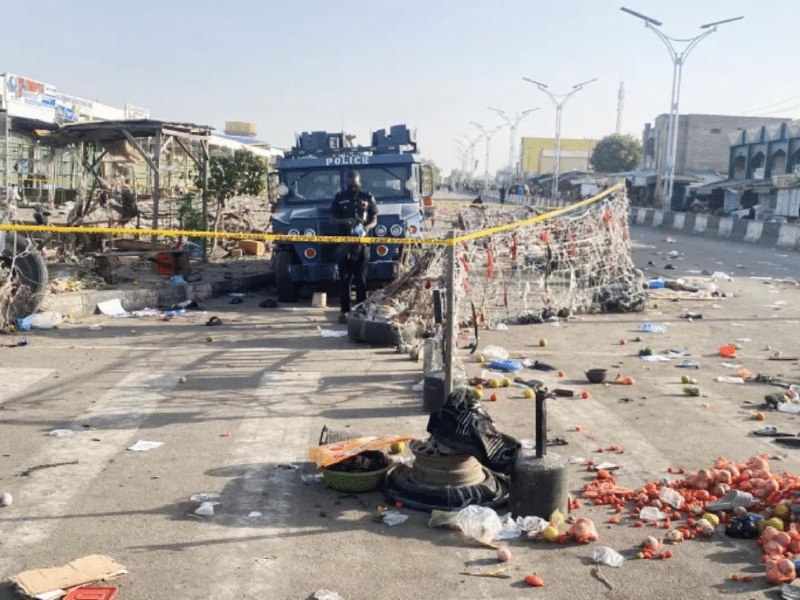
Locals in northern Nigeria say US-backed airstrikes have killed dozens of civilians in recent days, accounts that, if corroborated, would mark one of the most serious single episodes of non-combatant deaths attributed to Washington's Sahel counter-terror campaign in several years. The reporting, surfacing on 9 June 2026 via a UK-based outlet's analysis thread, adds fresh political weight to a question that has trailed US Africa Command (AFRICOM) operations for the better part of a decade: how much oversight exists over a drone-and-fast-jet footprint that operates across the Lake Chad basin with limited on-the-ground press access and few post-strike investigations made public.
The pattern is not new. The civilian-protection record of US airpower in the Sahel has been a recurring point of friction between Washington, host governments, and local communities since the expansion of operations against armed groups in northeastern Nigeria and the wider Chad-basin theatre. What is new is the volume of named witnesses, the consistency of their descriptions, and the timing — arriving as several Western parliaments are reviewing the legal architecture for extraterritorial strikes, and as Nigerian federal authorities face their own domestic pressure over security policy in the run-up to a contested political calendar.
What locals describe
According to the 9 June analysis thread, residents in struck communities in northern Nigeria described airstrikes hitting what they said were residential and market areas, with witness accounts naming multiple dead and injured among people they identified as farmers, traders, and families returning from displacement. The thread's reporting frames the strikes as US-backed rather than purely US-flown — a distinction that matters legally and politically, and that sits at the centre of the long-running dispute between Abuja and Washington over the command-and-control chain for operations in the country's northeast.
The accounts, as relayed, do not yet specify which armed group was allegedly being targeted in the affected localities, nor do they give a verified final casualty figure. The reporting characterises the toll as running into "dozens" of civilians. That figure, on the source material currently available, is a witness-driven estimate rather than a corroborated count, and should be read that way.
The command-and-control question
Nigerian and US officials have spent years publicly disagreeing on the precise architecture of the partnership. Abuja maintains, on the record, that it authorises strikes on its own territory; US spokespeople have at times described their role as advisory, intelligence-fed, or logistical, depending on the venue. That ambiguity has practical consequences: when civilians are reported killed, it is rarely clear in real time which ministry, which general, or which foreign capital is on the legal hook for the strike package, the target nomination, and the collateral-damage assessment that preceded it.
The 9 June accounts sit inside that ambiguity. Residents do not generally distinguish between a US MQ-9 sortie, a Nigerian Air Force fast-jet strike, and a joint engagement; the visible result — destroyed homes, mass casualties, an absence of immediate official communication — is the same. The question of who is accountable to whom, and through what domestic or international mechanism, is precisely what witness accounts like these tend to force into the open.
Counter-narrative and structural read
The Western wire line on US operations in the Sahel has, for most of the post-2017 period, emphasised two things: the threat posed by armed groups operating in the Lake Chad basin and the Sahel more broadly, and the technical sophistication — precision-guided munitions, layered ISR — that US airpower is said to bring to a fight local forces cannot wage alone. The implicit frame is that civilian harm, when it occurs, is the product of intelligence failure or targeting error, not of the underlying model.
The counter-read, voiced in African capitals, in West African civil-society coalitions, and in a growing body of regional parliamentary commentary, runs differently: that the model itself is part of the problem. Light-footprint air campaigns, the argument goes, generate grievance faster than they degrade insurgent networks, and they do so without the on-the-ground political work — governance, services, local legitimacy — that the counter-insurgency literature has long identified as decisive. That argument does not require one to dismiss the threat armed groups pose; it is, properly stated, an argument about whether the chosen instrument is doing more harm than the threat itself.
A second, more structural point belongs in the same frame. The United States is not the only external power with a deepening military footprint in the wider region. France's reconfiguration of its Sahel posture, the growing role of Russian private military entities in several neighbouring states, and the diplomatic capital being spent by Gulf and Asian partners on counter-terror cooperation mean that the political consequences of any single high-casualty strike land on a crowded regional chessboard. Abuja is aware, as is Washington, that public attribution of civilian harm carries costs in parliament, in the press, and in the street.
What remains uncertain
Several things in the 9 June reporting are not yet pinned down, and a sober read of the source material requires saying so. The reporting does not give a final, independently verified death toll; it does not name the specific armed group that the strikes were allegedly aimed at; it does not record an immediate on-record response from either the US embassy in Abuja, AFRICOM, or the Nigerian federal government. It is, in other words, a witness-accounts story at this stage, not a confirmed-casualty figure, and the difference matters.
What the reporting does do is give the civilian-protection question a renewed live audience in the Nigerian press cycle at a moment when Abuja's domestic security narrative is under strain from multiple directions — from the insurgency in the northeast, from banditry in the northwest, and from a series of high-profile abductions that have moved public opinion. That is the terrain on which the next forty-eight hours of official statements, if they come, will play out.
Stakes
If the witness accounts hold up under independent verification, the political fall-out runs in three directions. Inside Nigeria, federal and state authorities will face pressure to publish what they know about target nomination, post-strike assessment, and compensation, and to clarify the legal status of any US involvement on Nigerian soil. Inside the US, Congress will be asked, again, what oversight it actually exercises over AFRICOM strike authorities, and the answer it gives will determine whether the underlying policy framework survives the cycle. Regionally, Nigeria's partners in the Lake Chad Basin Commission and the broader Economic Community of West African States will have to decide whether the Sahel's counter-terror architecture — air campaigns, partnered operations, and the intelligence architecture that feeds them — is producing security or generating the next round of grievance.
The honest position is that none of those questions is settled. What is settled is that the witness accounts now in circulation, whether or not the underlying casualty count moves up or down, will be read by audiences who have heard versions of this story before, and who will be asking, with renewed intensity, why the answers have been so slow in coming.
This publication frames the 9 June reporting as a witness-accounts story pending independent verification, rather than as a confirmed civilian-casualty figure, in line with the source material currently available.
Wire provenance
This editorial synthesis draws on the following public wire/social posts:
- https://t.me/TheCanaryUK