US strike on Sirik hits water infrastructure, Iranian state media reports
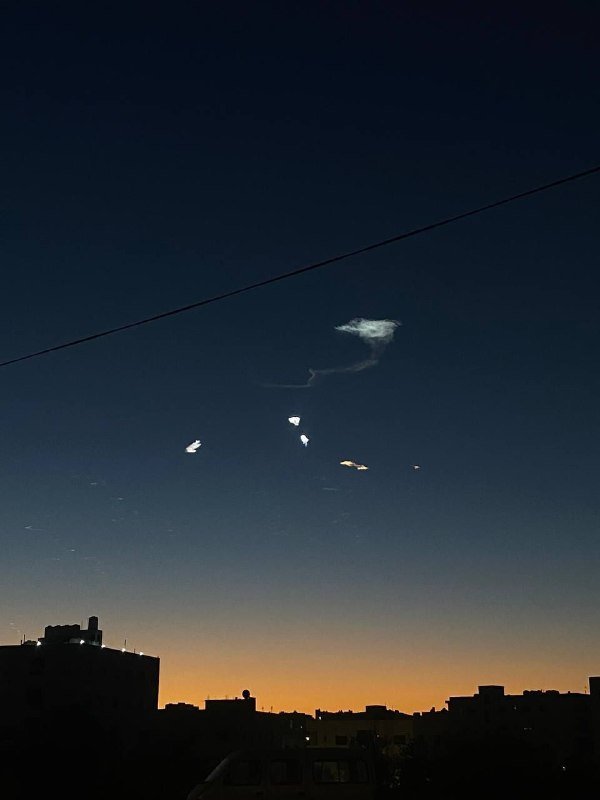
At approximately 22:39 UTC on 9 June 2026, four explosions were heard in the southern Iranian port city of Sirik, in Hormozgan province, according to a Telegram post by GeoPolitical Watch citing an IRIB reporter on the ground. The reporter said two water storage tanks in the Bamani district were struck in what IRIB attributed to US operations, cutting off drinking water to the area. The account was echoed within minutes by Clash Report, which cited the same IRIB reporting, and by The Cradle Media, which described the targets as "primary water storage tanks" of critical civilian infrastructure on Iran's strategic southern coastline.
All four accounts surfaced in a 17-minute window between 22:39 and 22:56 UTC on 9 June 2026, and all four trace back to the same upstream source: IRIB, the Islamic Republic of Iran Broadcasting. The Cradle and Clash Report both flag their provenance explicitly. The version of events now circulating through opposition-friendly and Tehran-aligned channels is, in effect, a single Iranian-state-media bulletin passed through different Telegram amplifiers.
What Iranian state media is reporting
The consistent claim across the four Telegram items is narrow. Two water reservoirs in the Bamani area of Sirik were struck. The strikes cut drinking water to the surrounding district. The attacks are attributed to the United States. GeoPolitical Watch recorded four explosions audible in the city. None of the items name a specific military unit, weapon system, or intended target category beyond "water storage tanks," and none provide a casualty count or an assessment of damage to other infrastructure. The Cradle frames the strikes as part of a US attack that "targeted critical civilian infrastructure along Iran's strategic southern coastline" — a framing that editorialises well past what the underlying IRIB bulletin establishes. The plain reading of the source chain is that two reservoirs were hit, water service is disrupted, and the event is being attributed to US forces by Iranian state media.
Sirik sits on Iran's southern coast in Hormozgan province, roughly 160 kilometres east of Bandar Abbas, the provincial capital. The district's position on the Strait of Hormuz makes any strike in the area — whether on military radar sites, missile storage, port infrastructure, or a municipal water facility — a story about the world's most sensitive energy chokepoint, regardless of what was actually hit. That context is doing as much work in the framing as the underlying IRIB claim.
What we cannot verify from these sources
The thread context provides no independent confirmation that US forces conducted the strike, that the struck objects were water reservoirs rather than an adjacent military or industrial site, or that civilian water service has actually been interrupted as a result. There is no US Central Command statement in the four items, no imagery of the damaged tanks, no local governor's office readout, and no humanitarian-agency assessment. There is no casualty figure and no timeline for the restoration of service. The IRIB origin of the reporting is consistent with how Iranian state media has framed earlier strikes in the exchange, but provenance alone does not resolve factual disputes.
It is also worth noting what the thread does not contain. None of the four items refer to an Iranian retaliatory action, an Iranian official statement beyond IRIB, or a US administration statement. There is no Reuters, Associated Press, BBC, or Al Jazeera English item in the cluster, and there is no confirmation from the Pentagon, the Iranian foreign ministry, or the United Nations. For a story of this magnitude — a US strike on a third country's water infrastructure during an active US–Iran confrontation — the sourcing base assembled here is thin in absolute terms, even though it is consistent in direction.
The structural frame
What the bulletin captures, on its own terms, is a recurring pattern in the public face of US–Iran confrontations: the burden of first reporting falls on Iranian state-aligned channels, which then propagate through opposition-friendly regional outlets that share a common editorial hostility to US policy in the Gulf. The structural effect is that the first version of a strike, its target, and its civilian impact is shaped almost entirely by the side that was hit. Independent verification tends to follow hours or days later, if at all. The pattern does not by itself make the IRIB claim false — Iranian state media has, on multiple documented occasions, accurately reported strikes against its own territory — but it does mean the dominant narrative in the first hours is the one Iran chooses to tell.
The second pattern worth naming is the target category. Strikes on water storage, electrical substations, and fuel depots are reported as a distinct escalation category from strikes on radar sites, missile launchers, or command centres, both because of the civilian impact and because of the legal framework around attacks on objects indispensable to the survival of the civilian population. The four Telegram items, taken together, claim exactly that category of strike. Whether the framing holds depends on facts the public Telegram record, as it stands, does not establish.
What the next 24 hours should resolve
The pressure points are clear. The Iranian foreign ministry is likely to file the claim with the UN secretary-general and to brief the Non-Aligned Movement, framing the strike as a violation of sovereignty and a potential war crime. Iranian state media will, by morning Tehran time, release footage from Bamani that may or may not match the Telegram reporting. The US side will, in the absence of a formal acknowledgement, face renewed questions about target packages and civilian-impact assessments; if the strike is confirmed, a CENTCOM or Pentagon readout naming the intended target will be the single most consequential piece of information in the public ledger. Independent journalists and the United Nations Office for the Coordination of Humanitarian Affairs will, if access is granted, produce the assessments that the Telegram chain cannot.
For now, the operational record is short: four explosions, two reservoirs, no independent confirmation, and a single state-media origin point amplified through four Telegram channels. The claim is large. The verification base, as of 22:56 UTC on 9 June 2026, is small. This publication will treat the IRIB-originated reporting as an Iranian state-media claim, not as established fact, and will update when corroborating material arrives.
Desk note: Monexus treats the Telegram-sourced reporting above as Iranian state-media claims, traced to IRIB. Wire confirmation from Reuters, the Associated Press, or independent on-the-ground reporting in Sirik is not in the cluster and would materially change the framing.
Wire provenance
This editorial synthesis draws on the following public wire/social posts:
- https://t.me/thecradlemedia
- https://t.me/TheCradleMedia
- https://t.me/ClashReport
- https://t.me/GeoPWatch