US strikes hit Iranian naval and air-defence sites on the Gulf coast: what is and is not confirmed
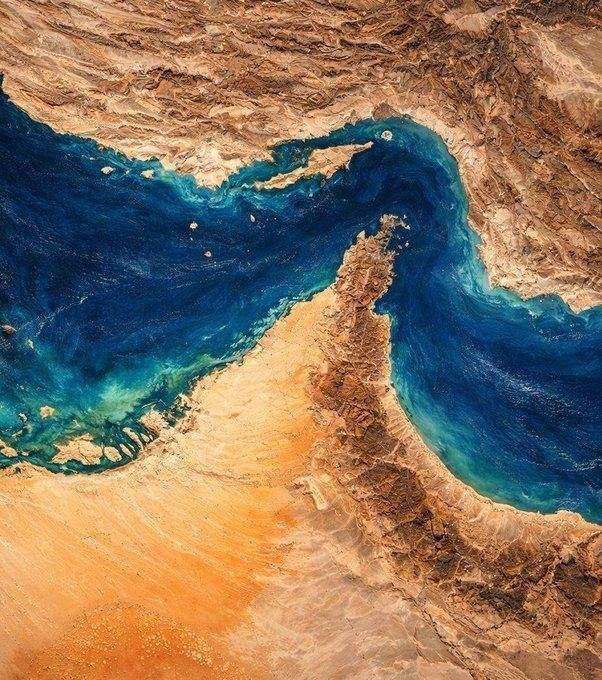
On the evening of 9 June 2026, regional and Iranian state-linked channels reported a coordinated US strike package against targets on Iran's southern Gulf coast, framed in Washington as a direct response to the Iranian military's downing of a US Army Apache attack helicopter earlier in the day. According to posts carried by The Cradle Media and the Fotros Resistancee Telegram channel, the reported target set includes the Sirik Naval Base, the Jask Naval Base, and an air-def defence site in the Bandar Abbas area — the same coastal stretch that guards the Strait of Hormuz. IRIB, Iran's state broadcaster, has publicly denied reports of hits, a denial that, in the early reporting window, sits uneasily with the corroborating accounts of witnesses on the ground.
What is currently known is thin and contested. What it points to — a direct US-Iran kinetic exchange on Iranian soil, with energy chokepoint infrastructure inside the cross-hairs — is not.
What the regional wires report
The Cradle Media, citing the breaking ticker, said at 21:48 UTC that the US is carrying out attacks on Iran in response to the loss of the Apache, and that explosions have been reported across southern Iran in Bandar Abbas, Sirik, and Qeshm. The outlet, which is Beirut-based and broadly sympathetic to the Iranian-aligned "axis of resistance" framing, added that there are reported strikes at the three named locations on the Gulf coast. A second account, posted by the Fotros Resistancee channel at 22:51 UTC, lists the same target set: the Sirik and Jask naval bases and a Bandar Abbas air-defence site, with the additional detail that Iran's IRIB has denied hits.
Both accounts are from outlets with a clear editorial line on the US-Iran relationship. The Cradle consistently frames US moves in the Gulf as reckless escalation; Fotros is a channel with documented ties to the Iranian opposition movement of the same name. Neither, on its own, would meet the sourcing bar a Western reader would expect for a story of this magnitude. The picture changes only marginally when they are read against each other: the convergence of target names, geography, and timing across two ideologically distinct feeds is, at minimum, evidence that the claim is in circulation inside the region and that witnesses are reporting what they hear and see.
The structural claim is straightforward. Sirik and Jask are small IRGC Navy bases on the Gulf of Oman, flanking the Strait of Hormuz from the east. Bandar Abbas is home to the IRGC Navy's main headquarters, the bulk of its fast-attack craft fleet, and a constellation of air-defence sites covering the strait. A strike package hitting all three, in the same operational window, would be a qualitatively different event from the tit-for-tat exchanges that have punctuated 2025 and early 2026: it would mark a deliberate US operation against the infrastructure that enforces Tehran's grip on one-fifth of the world's seaborne oil flows.
The Iranian framing, in plain language
Tehran's public posture, as filtered through IRIB and amplified by the regional channels, is to deny hits and to frame the incident as a US provocation. That posture is consistent with a long-standing pattern in which Iran controls information about damage to military infrastructure more tightly than it does about civilian casualties — the former is treated as a security matter, the latter as a mobilisation tool. Denial of hits at the moment of impact, followed by partial confirmation days later when satellite imagery becomes unavoidable, has been the rhythm of every previous exchange, from the 2020 killing of Qassem Soleimani through the April 2024 missile-and-drone exchange and the discrete incidents of 2025.
The helicopter itself is the trigger. The US framing, as paraphrased in The Cradle's ticker, is that the strikes are a response to the downing of an Apache. That framing does two things at once: it gives Washington a casus belli that is legible to a domestic and allied audience already primed to read Iranian behaviour as escalatory, and it narrows the optics from a wider operation to a discrete act of retaliation. Whether the Apache was downed by Iranian air-defence fire, by a man-portable system, or by some combination, is not in the reporting. The sources do not specify, and this publication will not infer it.
What the dominant framing leaves out
The wire narrative — Apache down, US retaliates, Iranian sites hit — is clean and time-stamped. It also elides the structural question that has been open since at least the early months of 2026: what is the operational theory behind US force posture in the Gulf, and what is it intended to deter?
The Strait of Hormuz is the world's most consequential energy chokepoint. Roughly a fifth of global petroleum liquids and a third of seaborne LNG transits the strait; insurance, freight, and downstream refining pricing all price in the risk premium that flows from any active exchange in the corridor. A US strike package hitting the IRGC Navy's home-ported infrastructure is, in plain terms, a move against the instrument that has given Tehran its most reliable leverage in a decade of maximum-pressure economics. The dominant framing presents this as a discrete act of retaliation; the structural read is that it is the next step in a slow-rolling test of whether the IRGC Navy can continue to deny the strait to commercial traffic, or whether the US is willing to degrade that capacity directly.
There is a counter-read worth taking seriously. The Iranian denial, if it holds, would suggest the strikes either did not land or landed on hardened sites that absorbed the package. In that case, the political signal — that Washington is willing to put weapons into Iranian territory at a tempo not seen since 1988 — would travel further than the military effect. The opposite read is that hits did land, the denial is performative, and the next 48 to 72 hours will be defined by Tehran's choice of response: a retaliatory strike, a closure of the strait, a mobilisation of Iraqi Shia militias, or a calibrated missile-and-drone package aimed at a US forward base. The sources, at the time of writing, do not allow this publication to choose between those reads.
What is not yet known, and what to watch
The information environment around the strike package is, by design, narrow. The US has not, in the early reporting, released strike-package confirmation or target-set specifics. Iran has denied hits. The regional channels naming Sirik, Jask, and Bandar Abbas are reporting from the same witness pool, with the same source network, in a market where the same images and videos recycle quickly. The next 24 to 48 hours are the load-bearing window: commercial satellite imagery of the named sites will resolve the question of hits; Iranian state media, once the security screen lifts, will confirm or contradict the IRIB denial; and the IRGC's public posture — communiqués from its public-facing outlets, statements to Tasnim and Fars, the tone of IRIB's rolling coverage — will telegraph the next move.
Three signals will tell readers which way this goes. First, whether oil futures open higher in Asian trade and by how much: a credible strike on Hormuz-coast infrastructure re-prices the chokepoint risk premium within hours. Second, whether the IRGC Navy moves fast-attack craft or anti-ship missile batteries, which it would do before any public confirmation. Third, whether Iraqi Shia militias, Houthi media, or Hezbollah channels break news of secondary activations, which would be the first indicator that Tehran has chosen escalation across the axis rather than a direct, contained response. None of these signals has yet been sourced; this publication will update as they appear.
This piece was written from two regional Telegram feeds reporting on the same incident. Where the two accounts converge on target names and geography, the reporting is taken at face value; where one outlet amplifies the other, that is noted. The US strike package itself has not yet been confirmed by wire services, and Iranian state media is in active denial mode. Monexus will update this story as either of those conditions changes.
Wire provenance
This editorial synthesis draws on the following public wire/social posts:
- https://t.me/TheCradleMedia
- https://t.me/FotrosResistancee
- https://t.me/thecradlemedia