Reports of impacts at US naval base in Bahrain as Iran-linked channels claim strikes
A burst of Telegram channels reported impacts and air alerts at the US Naval Support Activity base in Bahrain overnight, with Iran-tagged accounts claiming responsibility. The Pentagon has not publicly confirmed damage, and Bahraini authorities have not issued a statement.
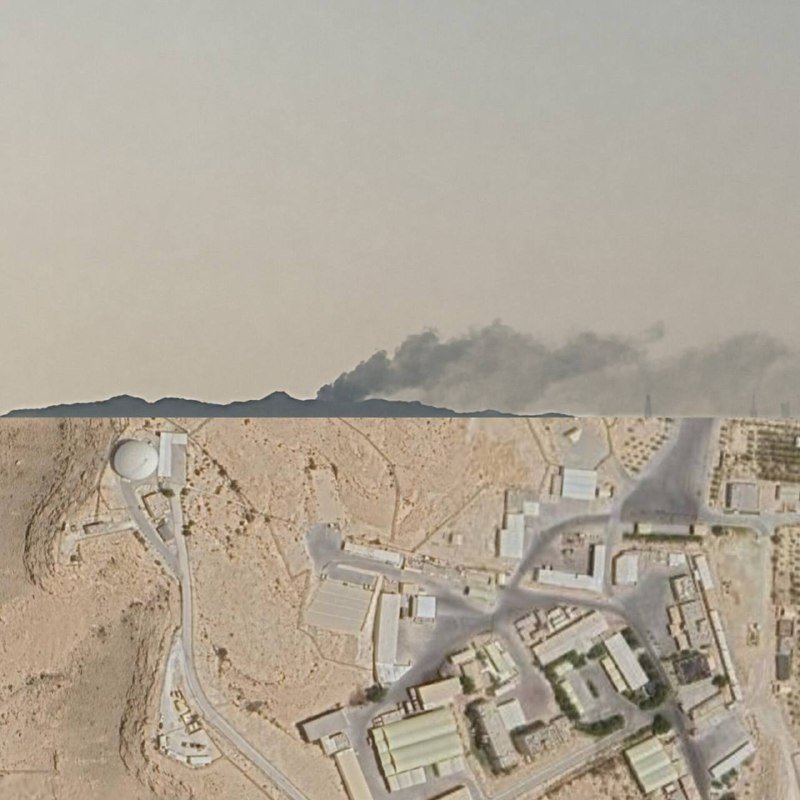
A cluster of Telegram channels flagged air alerts and reported impacts at the US Naval Support Activity Bahrain in the early hours of 10 June 2026, with several Iran-tagged accounts asserting that Tehran-linked forces had struck the facility. The first alerts appeared at 01:28 UTC, with fresh rounds of activity continuing through 02:49 UTC. As of publication, neither the Pentagon, US Central Command, nor the government of Bahrain has issued a public statement confirming damage, casualties, or the origin of incoming fire.
The reporting gap is the story. Telegram channels running on a wartime news cycle have already drawn a conclusion the official record has not yet caught up to — and the gap between those two speeds is itself the operating environment of any Gulf security story in 2026.
What the Telegram traffic actually says
The first item of note, at 01:28 UTC on 10 June, came from the channel rnintel, which reported "alerts in Bahrain" and cited local accounts gathered by the Rerum Novarum network. Within a minute, wfwitness had reposted the alert in all-caps ("ALERTS BAHRAIN"), and AMK_Mapping, a channel known for geolocating Middle East events, confirmed. At 01:33 UTC, the channel Middle_East_Spectator escalated, posting what it described as "impacts at a U.S. base in Bahrain," with a flag pairing Iran, Bahrain, and the United States.
GeoPWatch followed at 01:34 UTC with the more specific claim — "an impact at the U.S. NSA Bahrain base" — again attributing the account to Rerum Novarum's local contacts. The pattern repeated roughly 75 minutes later: a second wave of alerts at 02:12 UTC in Kuwait, then fresh Bahrain alerts at 02:43 and 02:49 UTC, with intelslava and wfwitness both reposting. Several posts were tagged with an Iran-cross-US-and-Bahrain visual, signalling that the channels were treating the events as part of a single Iran-directed action rather than a coincidental alert cycle.
What the Telegram traffic does not contain is any video or photographic evidence of impact craters, damaged structures, or defensive firings from the base. The reports are uniformly second-hand — locals tell Rerum Novarum, channels repost, and the claim hardens by repetition rather than by primary documentation.
Why the Bahrain base, and why now
Naval Support Activity Bahrain is the home port of the US Navy's Fifth Fleet and the combined US Naval Forces Central Command. It sits in the same complex as the headquarters of the UK Maritime Component Command and is the principal forward naval hub for US operations across the Persian Gulf, the Strait of Hormuz, the Red Sea, and the wider Indian Ocean. The base has been a permanent US military fixture in the Gulf since 1948 and was designated the home of the Fifth Fleet in 1995.
Its strategic value to Tehran, in any contingency, is therefore not symbolic. Disruption to the base degrades the US ability to project power into the approaches to the Strait of Hormuz — the chokepoint through which a substantial share of seaborne oil moves — and complicates coordination with Gulf state partners operating under the US Central Command umbrella. A strike, or a credible threat of one, also forces US and Gulf air defences into a posture that consumes interceptor stocks and political capital.
That calculation sits inside a broader Gulf security picture that has tightened visibly through 2026. Houthi attacks on shipping in the Red Sea, intermittent exchanges between Iran-linked forces and US assets in Iraq and Syria, and the long-running shadow war between Israel and Iran's regional axis have all raised the temperature of the Gulf. Bahrain — small, Shia-majority in demographic terms, ruled by a Sunni monarchy and a key US partner — sits at the hinge of those pressures.
The official record, and the silence
The notable feature of the 10 June reports is what is missing. The Bahraini Ministry of Interior, normally a reliable first-stop for any incident in the country, had not posted to its verified channels by the time the second wave of alerts came through at 02:49 UTC. The US Embassy in Manama had not issued a security notice. Pentagon press operations in Washington, in the middle of the US overnight, were not yet on the record. The absence is consistent with how these events have typically unfolded in past cycles: initial Telegram traffic, a window of ambiguity lasting one to several hours, then a slow drip of confirmation or denial from official spokespeople.
For readers, the practical upshot is that anything attributed to "alerts in Bahrain" in the next 12 to 24 hours should be treated as a claim, not a finding, until a wire service — Reuters, the Associated Press, the BBC, or Al Jazeera — has independently confirmed impact location, weapon type, and attribution.
Counter-narrative and what the channels are likely to be wrong about
Two counter-reads deserve space. First, the US military operates multiple bases and listening sites across Bahrain, Saudi Arabia, Qatar, Kuwait, and the UAE; some alerts in Bahrain can originate from activity at a partner-state facility or from training events that trigger civilian notification systems. Second, Iran-linked channels have a documented history of claiming credit for strikes they did not conduct, or of amplifying regional incidents into a Tehran-centred narrative for domestic and allied-consumption reasons. The fact that several of the channels in this cluster are openly tagged as Iran-aligned does not by itself disprove their claim — but it does mean the claims should clear a higher evidentiary bar than they currently do.
What the Telegram traffic is most likely correct about is the timing and the approximate geography. A burst of alerts inside Bahrain in a 90-minute window, picked up by multiple independent channels running on different reporting networks, is not the kind of pattern that an OSINT community typically fabricates. What it is unlikely to be able to substantiate on its own is the weapon system used, the specific target within the base, and the chain of command that ordered the strike.
What changes if the reports are confirmed
If the Pentagon or Bahraini authorities confirm an impact at NSA Bahrain, the regional geometry shifts on three axes. First, it would represent the most direct Iranian strike on a permanent US naval installation in the Gulf since the early days of the Iran-Iraq war, after decades of Iranian signalling that such facilities were off-limits to direct attack. That is a doctrinal shift, not just an operational one. Second, it would almost certainly trigger a US response that goes beyond the tit-for-tat strikes of the past 18 months, with consequences for the Strait of Hormuz that would, in turn, hit Gulf oil markets within hours. Third, it would push Bahrain's domestic politics — already strained by Shia grievances and a security state that has weathered years of protest — into a more difficult place, with the population sitting between an Iranian narrative and a US partner whose base sits on its soil.
What remains unresolved
As of 02:49 UTC on 10 June 2026, three questions are open. The first is whether impacts actually occurred at NSA Bahrain or at another facility nearby, and whether any damage is structural or limited to a perimeter event. The second is attribution: even if an impact is confirmed, the claim of an Iran-directed strike requires either a US intelligence finding, an Iranian admission, or forensic evidence from the impact site, none of which is currently public. The third is whether the alerts in Kuwait at 02:12 UTC and the second Bahrain wave at 02:43 UTC are part of the same action or separate events, and what the relationship between them is.
Until wire services close those gaps, the Telegram cluster is a credible early signal but not a confirmed event. The story will resolve in the next 12 to 24 hours — and the way it resolves will say as much about the state of Gulf deterrence as the strike itself would.
— Desk note: Monexus is running this as an early wire on the Telegram reports, with the explicit caveat that no official source has yet confirmed impact, attribution, or damage. We will update as Reuters, the Associated Press, the BBC, Al Jazeera, or US Central Command publish a verified account, and we will treat any further Telegram claims as leads to verify, not as facts to relay.
Wire provenance
This editorial synthesis draws on the following public wire/social posts:
- https://t.me/rnintel
- https://t.me/Middle_East_Spectator
- https://t.me/GeoPWatch
- https://t.me/wfwitness
- https://t.me/intelslava
- https://t.me/AMK_Mapping