Bandar Abbas Under Fire: A Night of Strikes, Two Narratives, and the Geometry of Escalation
Across roughly forty minutes on the night of 9–10 June 2026, Iranian state outlets confirmed repeated explosions at the strategic port of Bandar Abbas and the adjacent coastal town of Jask — a sequence whose military authorship, casualty footprint, and strategic intent remain contested.
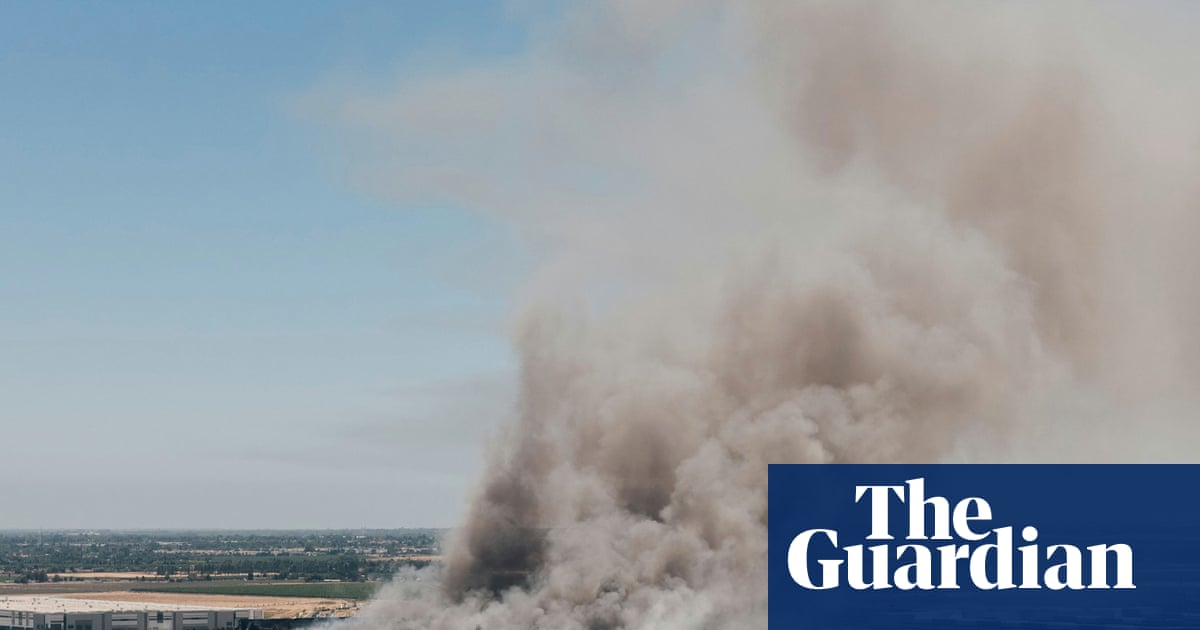
For a stretch of about forty minutes on the night of 9–10 June 2026, the southern Iranian coast became the loudest piece of geography in the world. At 23:37 UTC on 9 June, the Telegram channel intelslava reported another explosion near Bandar Abbas. By 23:51 UTC, the channel GeoPolitical Watch had logged an initial blast in the same area, and by 23:54 UTC, two large explosions in quick succession. In the first six minutes of 10 June, the Iranian state agencies IRNA and Mehr — both cited by the Telegram channel wfwitness, which aggregates Farsi-language state output — confirmed renewed explosions in Bandar Abbas, with Mehr adding that blasts were being heard at Jask, a smaller coastal town roughly 170 kilometres to the east along the Strait of Hormuz. The same Telegram feed also carried a reference to N12 — the Israeli broadcaster Channel 12 — reporting a third wave of U.S. strikes.
What follows below is not a reconstruction of the night. The available reporting, all of it filtered through either Iranian state media or channels citing those outlets, does not yet permit one. It is a reading of the structural fact — that the U.S.–Iran confrontation has, in the early hours of 10 June 2026, produced a kinetic event on Iranian soil at a site of singular strategic value — and an attempt to set that fact inside the geometry of escalation that has been building for the better part of a year.
A port city built to be hit
Bandar Abbas is not a generic target. It is the largest container port in Iran, the operational hub of the country's merchant marine, and the southern terminus of the north–south transport corridor that connects the Persian Gulf to the Caspian Sea and onward, in principle, to Russia. Roughly 90% of Iran's containerised trade and a majority of its non-oil imports pass through it. The adjacent Shahid Rajaee complex handles the bulk of the port's throughput, and the petrochemical cluster at Bandar-e Emam Khomeini, a short drive to the west, hosts refineries and storage that have, in previous rounds of tension, been identified by Western analysts as among the most economically significant single assets in the Iranian economy.
Jask, where Mehr reported explosions being heard in the same window, is smaller and almost the inverse: a stretch of coast purpose-built since 2020 as the loading terminal for the Goreh–Jask pipeline, an Iranian project explicitly designed to give Tehran a maritime fuel-export outlet outside the Strait of Hormuz. The pipeline carries crude to a pair of mooring buoys offshore, allowing tankers to load in the Sea of Oman rather than transiting the strait. Strategically, the facility exists to give Iran a way to keep exporting oil under conditions of Hormuz chokepoint pressure. The fact that explosions were reported in its vicinity, in the same hour as strikes on Bandar Abbas itself, is the kind of coincidence that rarely is one.
None of this is to assert a target set. The Iranian state agencies that confirmed the blasts — IRNA, the official state news agency, and Mehr, affiliated with the country's judiciary — did not, in the snippets carried by wfwitness, attribute the strikes or describe specific installations. The reporting is consistent with the known template: Iranian outlets confirming kinetic events on Iranian soil while withholding detail that would help an outside observer map the targeting.
Two sources, one night, two readings
The night produced two distinct narratives, each with a different source architecture and a different political job.
The first narrative is the Iranian one. IRNA and Mehr, working through the aggregator wfwitness, confirmed the explosions and the geographic spread. That confirmation is, in itself, a signal: in earlier rounds of covert action against Iran, Tehran has often preferred silence, denial, or a minimal acknowledgement designed to avoid revealing the precise footprint of the strike. The decision to confirm, even partially, suggests either that the events were too loud and too widely observed to suppress, or that Iranian authorities calculate it useful for the domestic audience to know that the coast was hit. The Mehr reference to Jask, in particular, expands the acknowledged geography of the night in a way that is hard to square with routine concealment.
The second narrative is the Israeli one. The N12 reference carried by wfwitness — a third wave of U.S. strikes, attributed to an Israeli broadcaster — is not an Israeli claim of authorship. It is a report, by an Israeli outlet, of what N12 understood the United States to be doing. The distinction matters. Israel, on past form, has been the most willing of Washington's partners to read out U.S. operational movement in real time, in part because the Israeli press treats American strikes in the region as a matter of legitimate public interest, and in part because the Israeli security establishment has used such readouts to shape regional perceptions of the U.S. commitment. The framing of a "third wave" implies prior waves — strikes earlier in the day or in the days before that have not surfaced in the thread's evidence base — and situates the current event inside a sustained campaign rather than a single exchange.
Between the two narratives lies a gap that the available reporting cannot yet bridge. The thread sources do not name a specific U.S. Central Command statement, do not quote a Pentagon spokesperson, and do not cite a Reuters, Associated Press, or wire-service confirmation. For the moment, the events of the night are anchored by Iranian confirmation on one side and Israeli secondhand characterisation on the other. That is a thin evidentiary base on which to declare a war, and a serviceable one on which to declare an escalation.
Why the Strait of Hormuz, why now
A structural reading of the night is the part of this story that the wire wires cannot give you, because it requires standing back from the immediate event and looking at the geometry.
The Strait of Hormuz carries roughly a fifth of global seaborne oil. Roughly 20% of the world's liquefied natural gas transits the same waterway. Any sustained disruption — whether by Iranian mining, fast-attack craft, or anti-ship missile batteries arrayed along the Iranian coast — produces, within hours, a price signal in Brent crude and, within days, a re-routing of insurance and tanker movement that pushes effective freight rates into double digits. The market does not need a blockade. It needs a credible threat of a blockade, and the credible threat is constructed, in large part, by the geography of the southern Iranian coast.
The U.S. position in that geometry is, and has been for the better part of two decades, the ability to project air power into the strait from carriers in the Arabian Sea, from land-based aircraft in the Gulf, and from regional bases. Strikes on Bandar Abbas and Jask, if that is what the night contained, sit inside a logic of pre-emptive attrition: degrade the Iranian capacity to threaten the strait, accept the political cost of strikes on Iranian soil, and hope the calculus changes before the next round. The logic is not novel. The targeting list is, in places, very close to the targeting list that has circulated in Washington think tanks for years.
The Iranian counter-logic is the inverse. Tehran has spent the last decade building distributed capabilities — small craft, shore-based missiles, mines, and the asymmetric geography of the strait itself — precisely so that it does not need a single high-value target that, if destroyed, collapses the deterrent. The Goreh–Jask pipeline is one expression of that logic: an export outlet that is hard to put out of action in a single strike. A coastal radar network is another. A network of fast-attack craft bases along the shoreline of the Persian Gulf and the Sea of Oman is a third. Strikes on a port and a pipeline terminal are, from the Iranian point of view, an attack on a small slice of a deliberately distributed system. They change the cost-benefit calculation; they do not end it.
The wider pattern in which this night sits is the slow, visible drift of the U.S.–Iran confrontation from a sanctions-and-diplomacy frame into a military frame. The trigger, in this reading, is not the night of 9–10 June itself but the months behind it: the collapse of the diplomatic track, the steady expansion of sanctions, the signalling around Israeli action against Iranian assets in adjacent theatres, and the visible hardening of positions in Washington and Tehran. The night is the shape of the trend breaking the surface, not the trend itself.
What the evidence does and does not support
It is worth being precise about what the thread materials can and cannot tell a reader.
They can tell a reader that Iranian state media confirmed explosions in Bandar Abbas across two distinct outlets — IRNA and Mehr — in the early minutes of 10 June 2026. They can tell a reader that the geographic spread included Jask, a separate coastal location to the east. They can tell a reader that the Israeli broadcaster N12, as relayed by wfwitness, characterised the events as a third wave of U.S. strikes. They can tell a reader that the events arrived on the back of two earlier reports on the intelslava and GeoPolitical Watch channels, in the same general area, within roughly forty minutes.
They cannot tell a reader the specific targets struck. They cannot tell a reader the weapon system used, the ordnance delivered, or the military effect. They cannot tell a reader the casualty footprint, even at the level of "none reported" or "several wounded." They cannot tell a reader whether the U.S. government has, as of the time of writing, acknowledged the strikes in any form, or whether Washington and Tehran have opened any channel to manage the night. They cannot tell a reader whether the night produced a single set of strikes or a multi-axis attack. Each of these gaps is, in the Monexus reading, more important than the confirmation itself, because each of them is the question a reader will need answered in the next twenty-four hours to know whether the night is the start of a campaign or a particularly loud single round.
The competing framing is also worth naming. A reader who takes the Israeli read at face value sees a deliberate, multi-wave U.S. operation on Iranian strategic infrastructure, signalling escalation and a willingness to strike the Hormuz coast. A reader who treats the Iranian state confirmation as the operative fact sees an unprovoked attack on Iranian soil, with the political purpose, in Tehran's framing, of forcing a regime already under severe economic strain into a corner from which the only exits are humiliation or further escalation. Both readings can be true at once. The structural question — whether the night represents the U.S. choosing escalation as a method, or a single tactical round inside an already-escalating frame — is the one that the next forty-eight hours of reporting will, or will not, resolve.
Stakes, across the water and on it
The stakes of the night are not difficult to read once the geography is held in view.
For Iran, the immediate stakes are the credibility of a deterrent that is, by design, distributed across the southern coast. Strikes on Bandar Abbas and Jask, if confirmed in the days ahead, are an attempt to break a piece of that distribution. The political stakes, inside Iran, depend on whether the regime can frame the events as a sovereign affront that consolidates domestic support, or whether the events accelerate the elite and street-level fragmentation that has been visible in fits and starts since the autumn of 2022. The economic stakes are more direct: a credible degradation of the Bandar Abbas–Jask axis would, over weeks, push insurance and freight rates up, complicate Iran's remaining export channels, and tighten the sanctions frame that already constrains the country's hard-currency access.
For the United States, the stakes are the price of escalation. A single night of strikes, if contained, is absorbable. A sustained campaign, running for weeks and producing visible Iranian retaliation in the strait, is a different proposition — one that would push oil and gas prices, test the cohesion of the Gulf states, and force a public reckoning inside a U.S. electorate that has, since 2024, shown limited patience for new entanglements. The Israeli characterisation of a "third wave" is, on the face of it, a description of a campaign already underway. If that characterisation holds, the question of the next forty-eight hours is whether Iran responds, and how.
For the global economy, the stakes are crude and gas prices, and the signal they send to every other regional actor with a stake in the strait. For the wider Middle East, the stakes are the regional order: whether the U.S.–Iran confrontation becomes the central organising axis of the next phase of regional politics, or whether it remains one pressure among several. For the readers of this publication, the stakes are clear — that a sequence of events already in motion has, in the early hours of 10 June 2026, produced a kinetic event that cannot be unstaged, and that the next reporting cycle will determine whether the night of 9–10 June is read, in hindsight, as a turning point or a tremor.
The thread's evidence base is narrow, and the framing above has been written to honour that narrowness. The facts confirmed by the sources are the Iranian state confirmation of explosions at Bandar Abbas and Jask, the Israeli characterisation of a third wave of U.S. strikes, and the prior reports on the intelslava and GeoPolitical Watch channels that bracket the night. The structural reading is this publication's, and is offered as analysis, not as reporting. Where the sources do not specify, this article has not invented. Where the competing narratives disagree, this article has named both and let the reader weigh them. The next forty-eight hours will, with any luck, do the rest.
Desk note: Monexus's Iran coverage treats Iranian state media as a primary source for facts on Iranian soil, attributes the N12 characterisation precisely, and separates the structural reading from the reported events. The piece does not name a U.S. government source because the thread does not provide one.
Wire provenance
This editorial synthesis draws on the following public wire/social posts:
- https://t.me/wfwitness
- https://t.me/wfwitness
- https://t.me/GeoPWatch
- https://t.me/GeoPWatch
- https://t.me/intelslava
- https://en.wikipedia.org/wiki/Bandar_Abbas
- https://en.wikipedia.org/wiki/Goreh%E2%80%93Jask_pipeline
- https://en.wikipedia.org/wiki/Strait_of_Hormuz