Explosions reported across southern Iran as Mehr describes renewed strikes on Qeshm, Bandar Abbas and Jask
A late-night cascade of blasts across three southern Iranian cities — Qeshm, Bandar Abbas, Ahvaz and Jask — is being attributed by state-linked outlets to renewed US action, with no immediate confirmation from Washington.
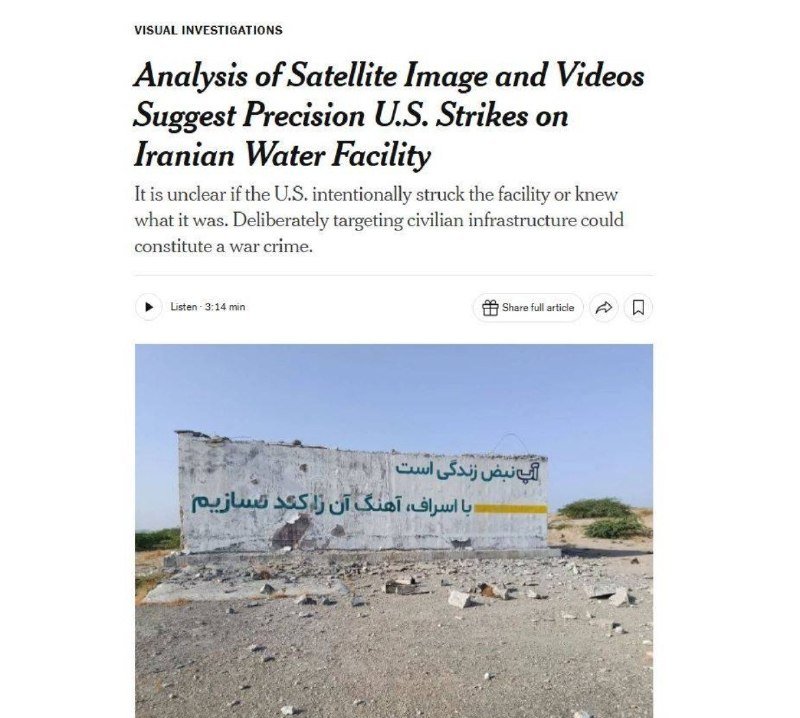
A burst of explosions was reported across southern Iran in the final hour of 9 June and the first hour of 10 June (UTC), with Iranian state-linked outlets naming Qeshm Island, the port city of Bandar Abbas, the southern town of Jask and — further north — the city of Ahvaz as the affected sites. Reporting from Mehr News Agency, surfaced via Telegram channels including @intelslava, @wfwitness and @DDGeopolitics, describes the blasts as fresh strikes, with @wfwitness citing @wfwitnessIRIB as the source for renewed action on Qeshm and a large explosion in Ahvaz. No US or Israeli confirmation had appeared in the Telegram traffic reviewed at 00:48 UTC on 10 June 2026.
The pattern is what matters. Four separate Iranian locations — three of them on or adjacent to the Strait of Hormuz, the narrow waterway through which a significant share of seaborne oil passes — were named in the space of roughly an hour. That is consistent with a coordinated strike package rather than the kind of single-site incident that has punctuated the US-Iran shadow war in past months. It is also consistent with the kind of messaging operation in which one side wants the other, and global oil markets, to assume a coordinated strike package.
What was reported, and by whom
The earliest of the seven items in the cluster, timestamped 09 June 2026 at 23:40 UTC, came from @DDGeopolitics and cited Mehr News Agency on explosions in Jask County, southern Iran, and reported blasts in the vicinity of Bandar Abbas. By 00:03 UTC on 10 June the same chain had been picked up by @GeoPWatch, which attributed to Mehr the "renewed explosions heard near Qeshm Island and Bandar Abbas," and by @intelslava, which carried a separate Mehr line on the city of Jask. By 00:25 UTC @wfwitness reported "renewed strikes on Qeshm" alongside a large explosion in Ahvaz, sourcing the Qeshm line to @wfwitnessIRIB — the IRIB branding signalling Iran's state broadcaster. By 00:40 and 00:48 UTC @intelslava had added Qeshm and then Ahvaz as separate Mehr-attributed items.
Read across the items, four distinct locations are named: Qeshm, Bandar Abbas, Jask and Ahvaz. Three of the four sit in Hormozgan province or on the eastern coast of the Persian Gulf. Ahvaz, the outlier, lies further north in Khuzestan, near the Iraqi border, and is associated with Iran's domestic oil industry rather than maritime traffic. The geographic spread matters: it points to either a multi-site package, or to a deliberate Iranian effort to spread the impression of a multi-site package, or — and this is the under-reported possibility — to attacks being claimed as strikes on the basis of unexplained but possibly unrelated blasts at industrial sites, including petrochemical facilities in a country that has had a poor domestic industrial-safety record for years. The cluster as published does not distinguish between these readings.
The counter-narrative that the cluster is not surfacing
Every line in the cluster is Iranian-sourced. Mehr News is an outlet with deep ties to the Iranian state. @wfwitnessIRIB is IRIB, the Iranian state broadcaster. The Telegram channels circulating the lines — @intelslava, @wfwitness, @DDGeopolitics, @GeoPWatch — are open-source intelligence aggregators; they relay the wire but they do not, in this cluster, add independent verification. That does not make the reports false. It does mean a reader is being asked to accept, on the strength of a single government's information environment, that a regional military escalation is in motion. The same cluster carries no US Central Command statement, no Israeli briefing, no flight-tracker evidence of a strike package entering Iranian airspace, no satellite imagery of impact craters or damage plumes. None of those would be hard to obtain in real time if a strike of this scale had occurred; their absence is itself information.
The plausible alternative reading is that Iran is pre-positioning a narrative. The Hormuz coastline is Iran's most sensitive strategic terrain; a series of public, attributable reports of strikes on Qeshm, Bandar Abbas and Jask serves Iranian interests by signalling to Tehran's domestic audience that the country is under sustained attack, and by signalling to foreign observers — particularly oil traders — that the Strait itself is no longer safe. Either reading — kinetic action or information action — has consequences. Treating the cluster as confirmed fact on Tehran's word alone is the easiest mistake to make in a fast-moving Telegram news cycle, and it is the one this publication will not make.
The structural frame, in plain terms
What the cluster sits inside is a long-running, low-visibility war between Israel and the United States on one side and Iran's network of regional allies on the other, with the Strait of Hormuz as the perennial pressure point. When the temperature rises, the most reliable signal is rarely the first Telegram post; it is the second-day pattern — whether commercial shipping reroutes, whether insurance war-risk premia spike, whether Iranian or American naval movements are independently tracked. None of that has yet filtered into the present cluster. The reporting style of the cluster — short, attributed, identical template across multiple channels within minutes — is characteristic of a coordinated information push rather than of breaking, on-the-ground journalism.
The wider frame is that any kinetic action around Hormuz moves the oil market before it moves the policy debate. Even the perception of a strike package can move Brent crude and push war-risk insurance rates; the perception alone is enough to extract a price from the global economy. That is a feature of the corridor, not a bug, and it is the reason both Washington and Tehran treat information about Hormuz as a weapon in its own right.
Stakes and what to watch
The immediate stakes are (a) the security of commercial shipping through Hormuz, on which Iran's own exports and those of several Gulf neighbours depend, (b) the price of crude and refined products over the next 24 to 72 hours, and (c) Iran's domestic political positioning in the wake of a year in which its regional network has been badly degraded. For Gulf states — particularly the UAE and Saudi Arabia, whose east-bound pipelines offer a partial bypass of Hormuz — the upside is the same as it has been for a decade: any sustained disruption to the Strait validates the multi-billion-dollar pipeline and refining investments that have been the central strategic bet of the region's hydrocarbon diplomacy. The downside, for the same states, is that a closure or sustained disruption damages the global economy that those pipelines exist to feed.
What to watch: independent satellite imagery of the named locations within 24 hours; flight-tracking data for tanker and military aviation in the Gulf; the next Mehr and IRIB cycles to see whether the Iranian state maintains, qualifies or quietly walks back the strike framing; and any US or Israeli official statement. Until at least two of those four signals arrive, the cluster should be read as Iran's account of its own situation, not as confirmation of a kinetic event.
Desk note: Monexus is publishing this as Iranian-sourced reporting, not as a confirmed strike. The seven items in the cluster all originate with or trace to Iranian state-linked outlets; the cluster contains no independent corroboration. The article distinguishes the report of strikes from any occurrence of strikes and flags the structural reasons Hormuz is the world's most consequential information battlefield.
Wire provenance
This editorial synthesis draws on the following public wire/social posts:
- https://t.me/intelslava
- https://t.me/intelslava
- https://t.me/wfwitness
- https://t.me/wfwitness
- https://t.me/GeoPWatch
- https://t.me/intelslava
- https://t.me/DDGeopolitics