The NBA's Last Two-Minute Report just told Knicks fans what their eyes already knew
The league's review confirmed contact to the head and neck area. It declined to call it a flagrant. That is the part the Knicks will spend the offseason arguing about.
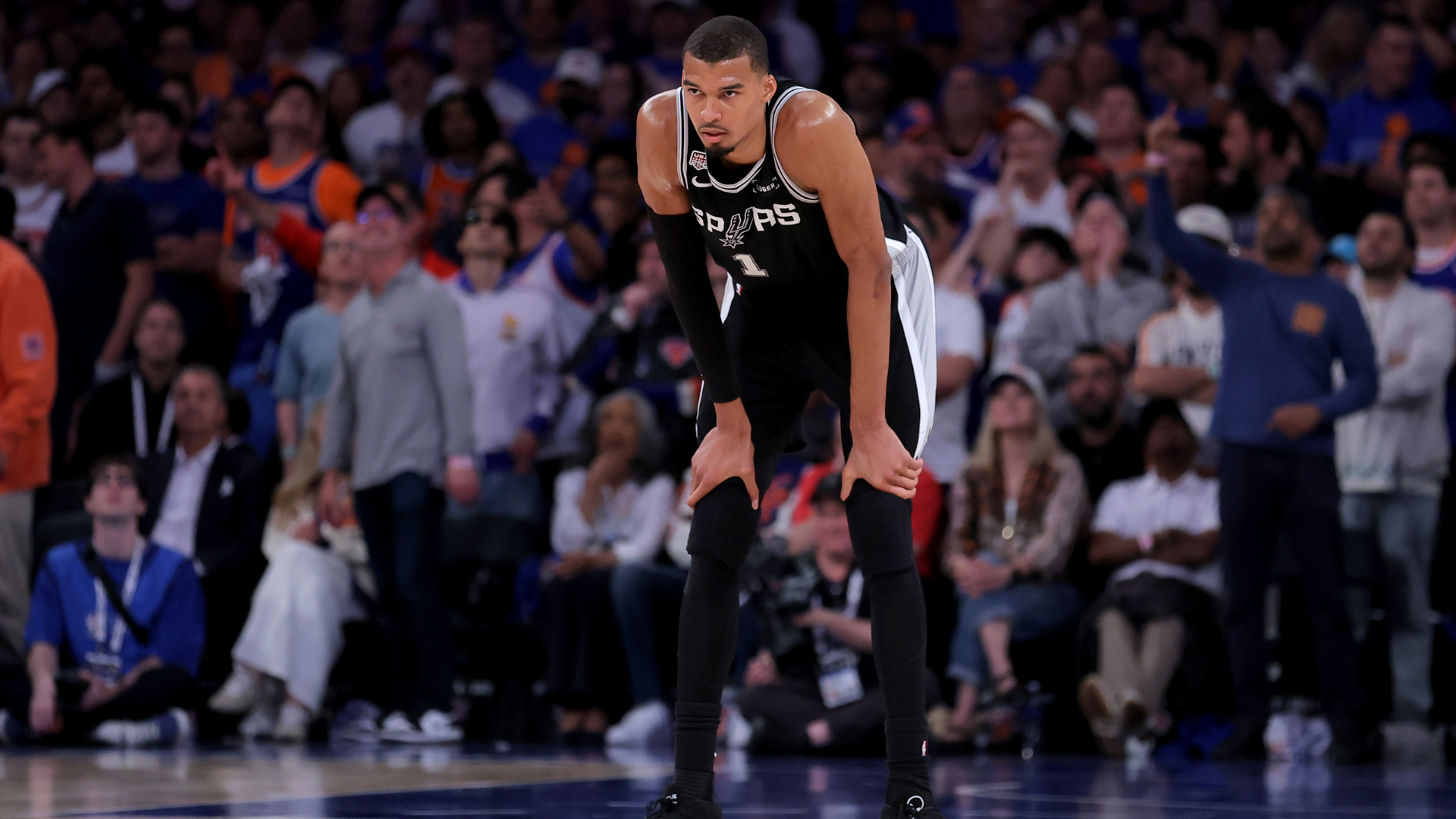
The NBA's Last Two-Minute Report, released on 10 June 2026, did something unusual for a league that tends to grade its own officiating in the small print: it agreed with the losing team. Officials, the report said, missed a common foul on Victor Wembanyama's fourth-quarter shove to the upper body of Jalen Brunson during the San Antonio Spurs' 110-104 win over the New York Knicks in Game 3 of the Finals at Madison Square Garden. It declined, however, to upgrade the play to a flagrant foul, a distinction that will define the Knicks' side of the argument long after the final buzzer of the series.
Game 3 was already an outlier before the review dropped. The road team has now won all three games of the 2026 Finals — the Knicks took the first two in San Antonio, the Spurs answered on the road on 9 June — a small-sample pattern that the league office has noticed and will not be rushing to explain. What the league has explained, line by line, is the foul that briefly turned the Garden into a one-possession game with under four minutes to play.
What the league admitted, and what it didn't
Per CBS Sports' reading of the 10 June review, the contact between Wembanyama and Brunson met the threshold for a common foul and the play should have been called. The league did not say the contact was incidental; it said the whistle should have blown. What it refused to do was retroactively label the shove a flagrant-1, the tier of foul that would have awarded the Knicks two free throws and possession, and would also have pushed Wembanyama closer to the suspension line had a pattern developed across the series.
The split between "missed common foul" and "not a flagrant" is the part that will not sit well in New York. The two categories are not interchangeable. A flagrant-1 requires contact that is "unnecessary"; a common foul requires contact that is simply illegal. The review's authors concluded Wembanyama's shove cleared the first bar but not the second, a judgment that turns on intent and escalation rather than on impact, and one that the Knicks — and a sizeable slice of the league's television audience — read differently in real time.
The on-floor backdrop, per the same CBS Sports recap, is that the Spurs held a late lead and were fighting through a Brunson-led Knicks push. Wembanyama, 22, finished with 32 points and, per the league's statistical service, became the youngest player to score 30-plus in a Finals game since Magic Johnson in 1980. The shove arrived in the same window in which the Knicks' offence began to stall around Karl-Anthony Towns — a problem head coach Tom Thibodeau publicly flagged after the loss, telling reporters on 9 June that getting Towns more involved late is "extremely important."
The counter-narrative the Spurs will live with
San Antonio's read is straightforward and, on the available evidence, defensible. Wembanyama's night had already been a referendum on his supposed softness in playoff physicality, a storyline that has followed him since the 2023 draft. A 32-point road performance in a Finals game, in his first championship series, is the kind of data point that retires a question for a week. The shove, in that telling, was a frustration foul in a game the Spurs were winning — the kind that gets a star labelled "competitive" when his team is up and "dirty" when his team is down.
The Knicks' counter, articulated in MSG body language and post-game pressers, is that a 7-foot-4 player shoving a 6-foot-2 guard in the upper body is, by any reasonable physical description, unnecessary contact. ESPN's reporting on 10 June carries the league's view that no flagrant is warranted, but it also notes that the contact area — upper body, near the head and neck — is the precise zone the rules were tightened to protect. Reasonable viewers can hold both readings at once. The league's review is asking them to.
There is also the matter of the series ledger. The road team has taken all three games, which means the next two will be played, at minimum, in San Antonio for Game 4 and back in New York for a possible Game 5. The Spurs have now banked the away win they needed to neutralise the 2-0 hole they dug themselves into at home. Game 4, scheduled for 12 June 2026, is the swing game of the series in a way that is rare for a 2-1 series — the winner takes a 3-1 lead and the loser's margin for error shrinks to a single game.
What the officiating record actually says
The Last Two-Minute Report is, structurally, a transparency mechanism: the league grades the last two minutes of any game decided by five points or fewer, and admits to mistakes that, in a pre-internet era, would have been buried in officials' locker rooms. Its limits are well known. It grades process, not outcomes. It cannot un-take a free throw, un-award a possession, or unsuspend a player. It can only say, in a quiet PDF, that a referee who earned a seven-figure salary and a private jet to Game 3 missed a call that a child in the third row of section 211 saw clearly.
The Knicks' grievance, then, is not really about the missed common foul. It is about the gap between the league's willingness to acknowledge the miss and the league's refusal to attach a consequence. A common foul, in a four-point game with three minutes left, can be the difference between a tied series and a 3-1 hole. The review confirms the miss. The series clock does not turn back.
What this series is actually about
Strip the officiating subplot away and the 2026 Finals are doing something the league has not had on offer for a while: a real, live, two-team argument about how to win a championship. The Knicks' bet is on Brunson's late-game shot-making, Towns' half-court rebounding, and a defence that has held opponents under 50% from the field in two of the three games. The Spurs' bet is on Wembanyama's gravity, a deeper bench that has outscored New York's reserves in all three games, and a coaching staff willing to play the percentages on every possession. The road team winning all three games is not a fluke; it is the product of two evenly matched systems, and the team that protects home court last will be the one that wins the trophy.
The officiating story will not go away. It will resurface on Thursday, when the Spurs have the ball and the Garden's crowd has the memory. But the larger story is that the league has, in this series, the thing it spends hundreds of millions of marketing dollars trying to manufacture: genuine uncertainty, with the trophy on the line, going the distance. Whether the Last Two-Minute Report helps or hurts that product is a question the league office will not be asked publicly and will not answer honestly if it is.
What remains uncertain
The L2M report covers only the final two minutes. It does not grade the first 46, and it does not speak to the cumulative physical toll the series has already extracted from both rosters. The Knicks will want the league to address a handful of second-half sequences that did not fall inside the review window. The Spurs will want the league to keep doing exactly what it did on 10 June: admit the obvious, decline to escalate, and let the next game be played. The honest answer is that both teams are right about something, and that the Finals will not be decided in a PDF.
Desk note: Monexus treats the Last Two-Minute Report as a primary document on officiating, not as the final word on the game. The on-floor result, the series ledger, and the road-team pattern are the story; the L2M is a footnote the Knicks will spend the summer citing.
Wire provenance
This editorial synthesis draws on the following public wire/social posts:
- https://t.me/NBALive/12345
- https://t.me/NBALive/12344