Explosions on the Strait: What Iran's Southern Coastline Tells Us About US-Iran Signalling
Iranian state-linked outlets report renewed blasts across the Hormuz coast. The pattern looks less like a war and more like a pressure campaign — and that ambiguity is itself the message.
Explosions were heard overnight in the coastal Iranian cities of Qeshm, Bandar Abbas, Sirik and Jask, according to Mehr News Agency, the country's official state wire, in posts carried by Al-Alam Arabic and republished through regional Telegram channels between 23:13 UTC on 9 June 2026 and 00:17 UTC on 10 June. Fars News, an outlet close to the Islamic Revolutionary Guard Corps, reported multiple blasts in Bandar Abbas whose exact location was not yet known. The same string of accounts reached Western feeds via Iran-watch aggregators, with DDGeopolitics and GeoP Watch explicitly framing the explosions in the context of the United States and Iran.
What is striking is not the volume of the reporting but the orchestration of it. Mehr and Fars — institutional voices in Tehran — published first. Regional Arabic-language channels amplified. Western-facing monitors added the US-Iran frame. The result is a near-synchronous public signal, in which the most likely outcome is that the explosions were either an Iranian exercise, an Iranian-engineered event staged for US consumption, or a genuine act of force, and that no one outside the relevant capitals is yet in a position to know which. That uncertainty is the point.
The on-the-ground record is thin and Iranian-shaped
The wire-level facts are narrow. Mehr reports two distinct waves of blasts inside roughly two hours, with Qeshm Island — the largest island in the Persian Gulf and a strategic chokepoint just off the coast — hit twice. Fars describes "several loud explosions" in Bandar Abbas, the port city that hosts much of the Iranian Navy's southern fleet and the IRGC Navy's main base, while saying the precise site was unknown. Jask sits east of Bandar Abbas, on the Gulf of Oman side of the strait, and is the terminus of a pipeline that allows Iran to bypass the Strait of Hormuz for some of its oil exports.
What the sources do not contain is equally important. There is no confirmed casualty count, no named Iranian ministry statement, no claim of responsibility from any state or non-state actor, and no independent satellite, radar, or shipping-tracker verification visible in the open record. The reporting is what Iran has chosen to put out about Iran — a point worth holding while assessing it.
Washington says the strikes are a "warning shot," not a war
Roughly half an hour before the first Iranian reports surfaced, a US official told CNN that fresh American strikes on Iran were intended to serve as a "warning shot" to Tehran, and that Washington hoped they would not derail ongoing negotiations. The framing is precise: coercive, not punitive, and subordinate to a diplomatic track. That is consistent with how the United States has managed its escalations against Iran since 2019 — calibrated, telegraphed, reversible — and it complicates the read that the blasts on the southern coast represent a hot war.
It also gives both sides deniability. Washington can claim it is talking while striking. Tehran can claim victimhood while choosing not to escalate. Neither side benefits from a wider conflagration in the Gulf right now: the United States is two years into a Middle East reshuffle whose centre of gravity is Gaza, Lebanon and the Red Sea, and Iran is in the middle of a serious internal legitimacy contest after the unrest of 2022 and the visible succession politics around the supreme leader's office.
What the structural pattern looks like
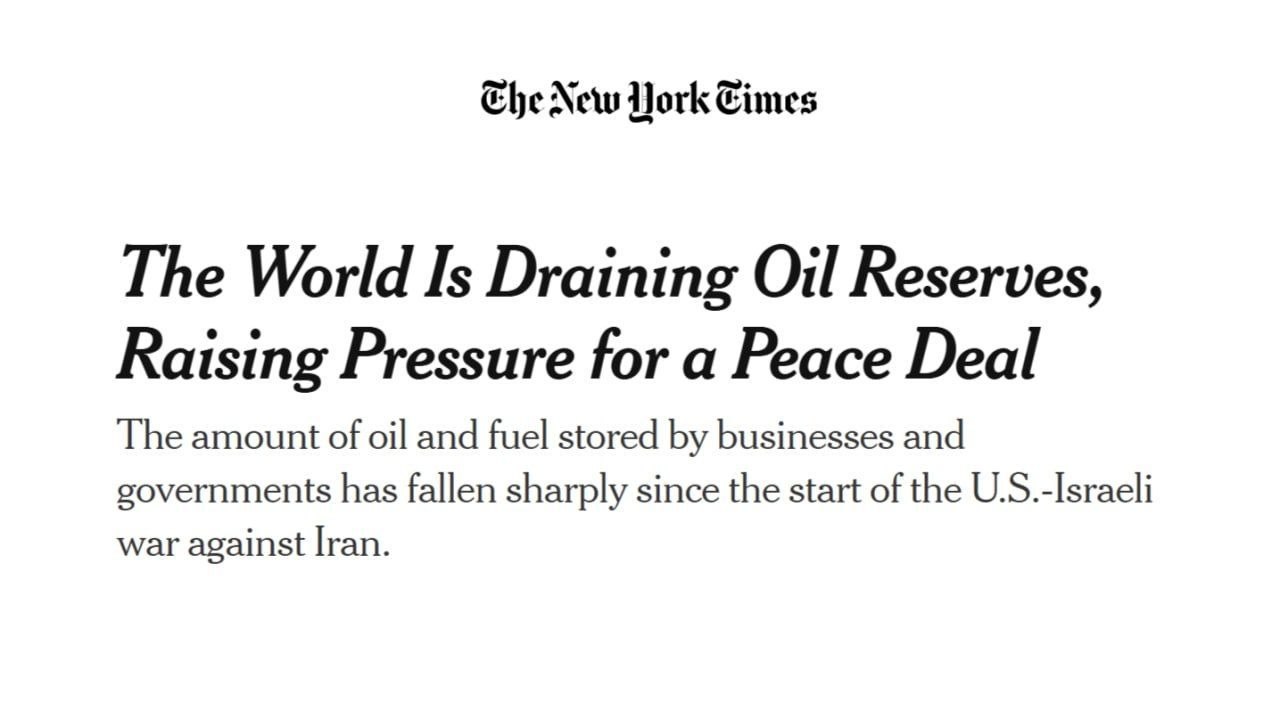
Strip out the present-tense noise, and what is being tested is control of the Strait of Hormuz without paying the price of actually closing it. Roughly a fifth of the world's seaborne oil transits that corridor. Iran has spent two decades developing layered options for disrupting it — IRGC Navy fast boats, anti-ship missiles along the coast, mining capability, and proxy threats to shipping from the Houthis in the Red Sea. The Qeshm-Bandar Abbas-Jask triangle is the operational backbone of that posture. Any demonstrative use of force on those locations carries signalling value to the Gulf monarchies, to China and India as Iran's two largest oil customers, and to the global insurance markets that price tanker risk.
The deeper pattern is the collapse of the post-2015 bargain. The Joint Comprehensive Plan of Action, with its inspections and sanctions architecture, used to give both Washington and Tehran a shared reference point. It is gone. In its place is a transactional relationship in which the question each side is constantly asking is whether the other side is about to escalate. The southern coast explosions are a node in that permanent test.
The alternate read, taken seriously
The dominant Western framing is that the United States is signalling and Iran is absorbing. The plausible alternative is the reverse: that Iran, having concluded that the post-assassination landscape favours a posture of controlled crisis, is the actor engineering the noise, and the CNN sourcing of a "warning shot" is the response, not the cause. The two readings are not mutually exclusive. They are, however, politically different — and the diplomatic stakes depend on which one the Gulf monarchies, the IAEA, and the European signatories to the old JCPOA end up believing.
What remains genuinely uncertain
The sources do not specify the cause of the blasts. They do not name a responsible party. They do not establish whether maritime traffic through the strait has been diverted, whether any foreign vessel was approached, or whether the IAEA has been formally notified. Until at least one of those questions is answered by a source that is not Iranian state media or a single anonymous US official, the responsible working assumption is that this is a signalling exchange between Washington and Tehran playing out on the Iranian coast, with the world's most important energy corridor as its stage.
Desk note: Monexus is publishing this on a thin wire — three Telegram channels republishing Mehr and Fars, plus a single CNN-sourced line on US intent. The shape of the story is bigger than the sourcing supports, and we are flagging that plainly rather than dressing it up.
Wire provenance
This editorial synthesis draws on the following public wire/social posts:
- https://t.me/mehrnews
- https://t.me/alalamarabic
- https://t.me/farsna
- https://t.me/DDGeopolitics
- https://t.me/GeoPWatch