Explosions Near Qeshm: What the Contradictory First Reports Actually Tell Us
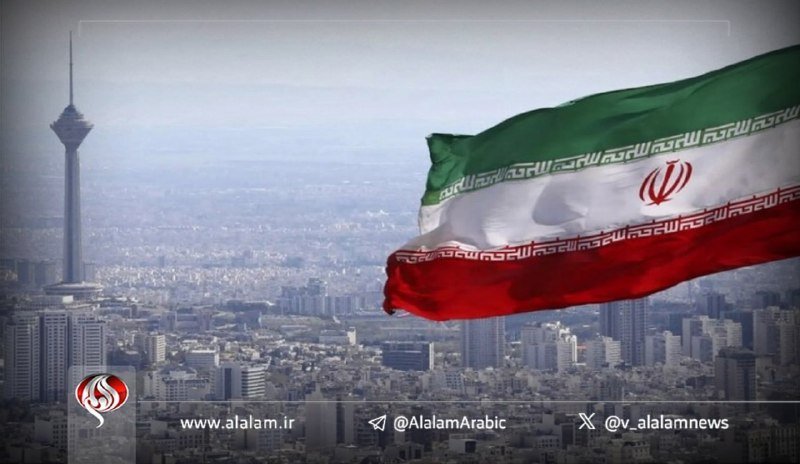
At 07:49 UTC on 10 June 2026, the Iranian outlet Mehr News reported explosions heard near Qeshm Island, the country's largest landmass in the Persian Gulf, sitting astride the Strait of Hormuz. Within an hour, the same channel carried a denial from the Qeshm governor — broadcast via state television IRIB — that no explosion had occurred on the island. By 08:55 UTC, the wfwitness Telegram channel was publishing both the original claim and the rebuttal in adjacent lines, a microcosm of the information environment that now greets any incident on the Iranian side of the Gulf.
The pattern is familiar. A strike, blast, or military movement is reported by one channel, denied or downplayed by an official body hours later, and the public is left to triangulate between sources with no obvious hierarchy of trust. What is unusual this time is the speed and the visibility of the contradiction: Mehr News and IRIB, both state-adjacent, were not aligned in their first-cycle reporting, and a third Telegram account, BRICSNews, was amplifying the original claim to an English-language audience before the Iranian state had settled on a single line.
What the sources actually say
The raw material is thin. The wfwitness Telegram channel, at 07:49 UTC, carried Mehr's unverified report of explosions near the island. At 07:58 UTC, BRICSNews — a channel that aggregates geopolitical flashpoints for a non-Western audience — republished the same Mehr framing in English. Just under an hour later, at 08:55 UTC, wfwitness added the IRIB-attributed denial from the Qeshm governor. There is no third corroboration, no imagery, no official statement from the Iranian military or the Revolutionary Guards, and no foreign-government readout. The story, as of writing, is two Iranian outlets disagreeing inside a single Telegram window.
That matters more than the substance of the disagreement. Qeshm is not a peripheral location. It sits in the Strait of Hormuz, through which roughly a fifth of the world's traded oil passes, and it hosts a Special Economic Zone with petrochemical and shipbuilding infrastructure. A real incident there would have immediate implications for tanker traffic, insurance premiums, and the already-fragile de-escalation between Tehran and Washington. A false report would, in the current climate, do the same work — a half-day of speculation is enough to move freight rates and force diplomatic phone calls. The first cycle of any Gulf incident now functions as a market event in its own right, regardless of whether anything detonated.
The information war runs ahead of the event
The asymmetry between the original report and the denial is itself the story. Mehr is a wire service with journalistic reach inside Iran; IRIB is the state broadcaster. In a coordinated system, the second would never contradict the first on an active security matter. The fact that they did — visibly, on the same Telegram feed, within an hour — suggests either that the initial report was an unverified relay, that the governor's office moved faster than the wire, or that the contradiction is itself the message. None of those readings is provable from the current evidence. All three should be on the table.
Western wires have not, as of the timestamps in this thread, picked up the story at all. Reuters, AP, and Bloomberg typically wait for a foreign-affairs ministry statement, a major-agency correspondent, or satellite imagery before publishing on Iranian security incidents. That delay creates a window in which Telegram channels and Iranian state-aligned outlets define the frame, and a subsequent Western correction is read as either catching up or, depending on the political climate, suppressing.
What the contradiction tells readers
A sensible reader should treat any report of an incident on the Iranian side of the Gulf as unverified until at least three conditions are met: an Iranian official statement consistent across Mehr, IRIB, and the foreign ministry; corroboration from a wire service with a correspondent in the region; and either imagery or a secondary source in a neighbouring state. None of those conditions is satisfied here. The most defensible read of the available evidence is that some kind of loud noise occurred near Qeshm — explosions, ordnance disposal, a sonar event, a sonic boom from military aircraft — and that the Iranian state is unwilling, at this hour, to confirm or characterise it.
That ambiguity is not nothing. Iran has, in recent years, used denials of military activity near the Strait as a default posture — neither confirming nor refuting until a foreign government leaks first. The pattern tends to be: deny; wait; if caught on satellite, reframe; if not, move on. The Qeshm denial fits that template. So does the original Mehr report, which has the texture of a wire picking up local chatter and pushing it nationally before the relevant security authorities were consulted. Both can be true at once: a noise happened, and the Iranian state has chosen not to confirm it.
Stakes, and what to watch
The forward signals are narrow and concrete. First, does the Iranian foreign ministry issue a statement by end-of-day on 10 June? Silence past 18:00 UTC would push the story toward the "noise, not strike" read. Second, does any Western agency — Reuters, AP, the UK Maritime Trade Operations desk — file a transit warning for the eastern Strait? UKMTO advisories, when they appear, are usually issued within six to twelve hours of a confirmed incident. Third, do insurance markets for Strait of Hormuz transits move on 11 June? War-risk premia are the cleanest real-time indicator of how seriously professional shipping is treating the claim.
Until then, the honest answer is that we do not know what happened near Qeshm on the morning of 10 June 2026. The two strongest reads are that a minor military event occurred and is being managed out of the news cycle, or that an unverified local report was pushed too quickly by Mehr and corrected by the governor. A third, less likely read is that a real strike took place and Tehran is buying time before a foreign source obliges it to comment. All three are consistent with the contradictory first reports now sitting in the public record.
Wire provenance
This editorial synthesis draws on the following public wire/social posts:
- https://t.me/wfwitness
- https://t.me/BRICSNews
- https://en.wikipedia.org/wiki/Qeshm_Island