SpaceX's orbital AI bet lands on a market that just lost $2 trillion in two hours
On the same day Reuters reported SpaceX plans orbital AI tests by late 2027, U.S. equities shed nearly $2 trillion in two hours — and a private-rocket IPO the market cannot price is suddenly the most-watched listing of the cycle.
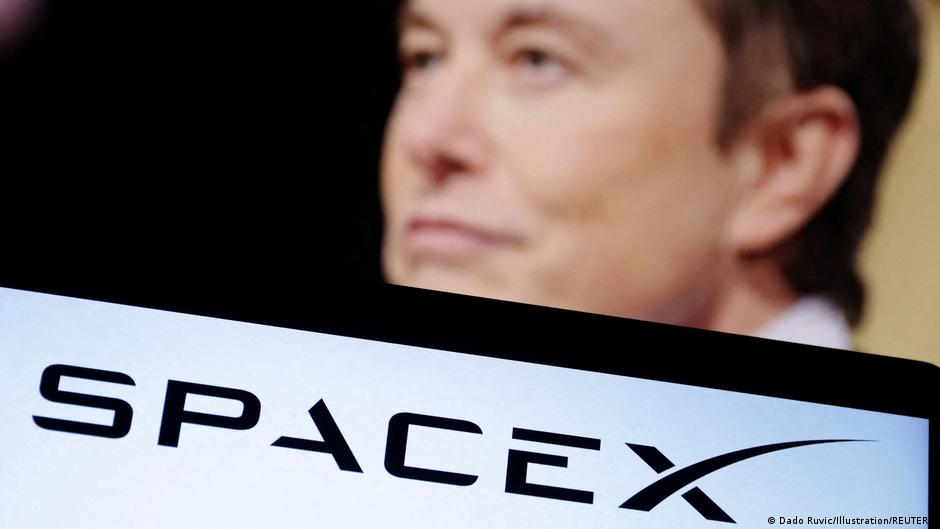
At 03:40 UTC on 10 June 2026, Reuters dropped a single sentence that will dominate the next quarter of capital-markets conversation: SpaceX, Elon Musk's private launch and satellite operator, is preparing to launch orbital artificial-intelligence computing tests by the end of next year. The wire, citing people familiar with the plans, framed the move as a bet that low-Earth orbit can host a new tier of compute infrastructure sitting between terrestrial hyperscale data centres and the deep-space systems Musk has long gestured toward. The market, already twitchy, flinched in unrelated markets within hours. By 17:00 UTC on 9 June — thirteen hours before the Reuters scoop landed in full — a Cointelegraph wire alert had already flagged that U.S. equities lost nearly $2 trillion in market value over a two-hour stretch, a flash move with no obvious single trigger that, in retrospect, looks like the market sniffing the air before the news.
The structural point is not that SpaceX is launching GPUs into space, or even that the orbital-AI thesis has merit on engineering grounds. The point is that the most richly valued private company on Earth is now openly pitching investors on a compute architecture that does not yet have a customer base, a regulatory perimeter, or a working reference design — and that the public market is being asked, in real time, to absorb the spillover.
The Reuters scoop, in plain terms
The Reuters report, carried across the wire at 03:40 UTC on 10 June, describes a phased plan: initial orbital AI demonstrations by late 2027, with subsequent scale-up depending on results. The reporting relies on unnamed sources familiar with SpaceX's internal plans — a standard formulation when a private company is signalling strategic intent without committing to a press release. Within minutes, Cointelegraph's markets desk amplified the headline, and a Polymarket account tracking the listing noted the IPO was reportedly expected to mint 4,000 new millionaires "from engineers to cafeteria workers." An X account associated with the Unusual Whales trading desk reported at 21:58 UTC on 9 June that the SpaceX IPO was already four times oversubscribed, again per Reuters.
What the wires are describing is the early choreography of a transaction, not the transaction itself. The orbital-AI test is the story — the narrative that lets a private placement and a retail-accessible listing get priced at a multiple that the underlying launch and broadband businesses could not carry on their own. For a company long valued on a combination of launch cadence, Starlink subscriber economics, and the option value of Mars, adding an orbital-compute line of business is the cleanest possible justification for a step-change in valuation. The Reuters scoop is, in effect, a soft marketing document dressed as enterprise reporting.
The $2 trillion in two hours
The other half of the day's tape is harder. At 17:00 UTC on 9 June, Cointelegraph's markets channel reported a near-$2 trillion drawdown in U.S. equities over a roughly two-hour window. The thread did not name a single catalyst, and the reporting carried no direct attribution to a wire of record. The closest contemporaneous anchor was Bitcoin — which, per the same channel at 15:59 UTC on 9 June, prompted Changpeng Zhao, the former Binance chief executive, to publicly urge the market to stay calm and insist Bitcoin would not stay "dead" for long. The market action is therefore best read as a risk-off tremor that began in crypto, spread into equities, and resolved before U.S. cash markets opened in earnest.
The temptation is to stitch these threads into a single narrative: a fragile market, a richly valued private issuer, and an AI-capex story being told to justify the next leg up. That is the frame, and it is plausible. It is also incomplete. The sources do not specify whether the drawdown was concentrated in mega-cap technology names — the same cohort that would, in theory, benefit from an orbital-AI thesis — or whether it was a broad-based de-risking that, if anything, weakens the IPO pricing case. The Reuters scoop, the Polymarket chatter, and the equity flash move are three separate wires carrying three separate signals; the pattern is suggestive, but the linkage is not yet in the public record.
The counter-read: why this is a normal capital cycle
The case for scepticism is real. Private companies file confidential registration statements, sound out anchor investors, and leak strategic pivots to a wire of record as a controlled disclosure mechanism; this is how the system is meant to work, and the most aggressively-leaked pre-IPO signals of the last cycle — Facebook in 2012, Alibaba in 2014, Saudi Aramco in 2019 — also produced overheated tape and then settled into the public market at a level that was, in retrospect, less extreme than the pre-listing chatter implied. A four-times-oversubscribed order book is a feature of demand, not a verdict on price. And a $2 trillion two-hour drawdown in a market with $50 trillion-plus of total capitalisation is, in percentage terms, a 4% move — painful, but inside the historical envelope of an ordinary correction.
The orbital-AI thesis itself also has a sober reading. Compute in low-Earth orbit is, in principle, attractive for three reasons: proximity to the satellite broadband customers SpaceX already serves, access to continuous solar power outside the terrestrial day-night cycle, and the ability to push inference to the edge of a constellation that is, in effect, a global content-delivery network. Each of these has a real engineering literature behind it, and several of the orbital-data-centre concepts now circulating in the trade press trace back to work that pre-dates the current AI build-out. The risk is not that the technology is impossible; it is that the unit economics are unproven at any price point the public market has ever seen.
The structural frame: a private issuer selling the AI build-out narrative
What is unusual about the present moment is the alignment of three forces. First, the AI capex story is now the dominant justification for elevated equity multiples across the Magnificent Seven and a widening second tier of hardware and infrastructure names. Second, public-market investors are starved for any listed vehicle that gives them clean exposure to a frontier-compute thesis without paying the full multiple of a hyperscale cloud incumbent. Third, the most valuable private company in the world, with a track record of operational cadence unmatched in its peer set, is preparing a listing window.
The Reuters scoop, the Polymarket chatter, and the oversubscription reports are all symptoms of the same underlying condition: a market that has decided, in advance, that the next major listing will be priced as an AI-infrastructure play, with the legacy launch and broadband businesses treated as a yield-bearing foundation rather than the main event. That is the structural frame. The orbital-AI demonstration timeline is the narrative; the multiple expansion that the listing is being engineered to capture is the substance.
There is a longer-cycle read as well. For two decades, the public market has been progressively priced out of the most ambitious frontier technology — first the consumer-internet platforms, then the cloud layer, then the model layer. Orbital compute, if it scales, would be the next tier of infrastructure to migrate from public balance sheets into private ones, with a brief public-market window at the moment of listing. The political economy of that migration is its own story: who gets the listing pop, who anchors the book, who is locked out of the pre-IPO secondary, and which retail brokers end up distributing the retail tranche. None of that is in the wire reporting yet, but the order-of-magnitude economics of the listing make it a near-certainty that the question will dominate the second half of 2026.
The stakes, and what is not yet in the record
The cleanest way to think about the next 90 days is in three nested time horizons. In the short term — through the end of the current quarter — the wire reporting will thicken around the orbital-AI demonstration timeline, the IPO order book, and the anchor-investor composition. In the medium term, the listing itself will set a benchmark for how public markets price frontier-compute optionality, and that benchmark will propagate through the secondary valuations of every private AI-infrastructure peer. In the long term, the question is whether orbital compute is a real category or a narrative — and the answer will not be visible in the prospectus, only in the unit economics of the first deployed clusters in 2027 and 2028.
What the sources do not yet establish, and what the desk will be tracking, is straightforward. The Reuters reporting does not name SpaceX's customers for orbital AI compute, does not specify the satellite bus or the compute payload, and does not disclose the capex envelope or the per-kilowatt economics. The Polymarket and Unusual Whales posts are derivative of the Reuters scoop and add no independent verification. The $2 trillion drawdown is uncorroborated by a primary wire of record in the material available, and the Bitcoin "dead" framing in the CZ comment is rhetorical, not a price call. Any of these threads could resolve in ways that meaningfully change the picture by the end of the month.
For now, the most defensible read is also the most boring. SpaceX is preparing a listing. The listing will be priced as an AI-infrastructure play, with an orbital-compute narrative layered on top of a real launch and broadband franchise. The public market is willing to pay a premium for clean exposure to that narrative. The risks — technical, regulatory, and macroeconomic — are real, and the public record is still thin on the specifics that would let an outside investor price them. The next 30 days of disclosure will do most of the work of separating the engineering from the marketing.
This publication treats the Reuters scoop as a primary-source signal of corporate intent, not as a guarantee of execution. The Polymarket and Unusual Whales posts are tracked as sentiment indicators around the listing window, and the $2 trillion drawdown is logged as a market-condition data point pending corroboration from a tier-one wire.
Wire provenance
This editorial synthesis draws on the following public wire/social posts:
- http://reut.rs/4eiXcsZ
- https://t.me/cointelegraph
- https://t.me/cointelegraph
- https://t.me/cointelegraph
- https://t.me/cointelegraph