Stokes weighs his future as England confront another off-field crisis
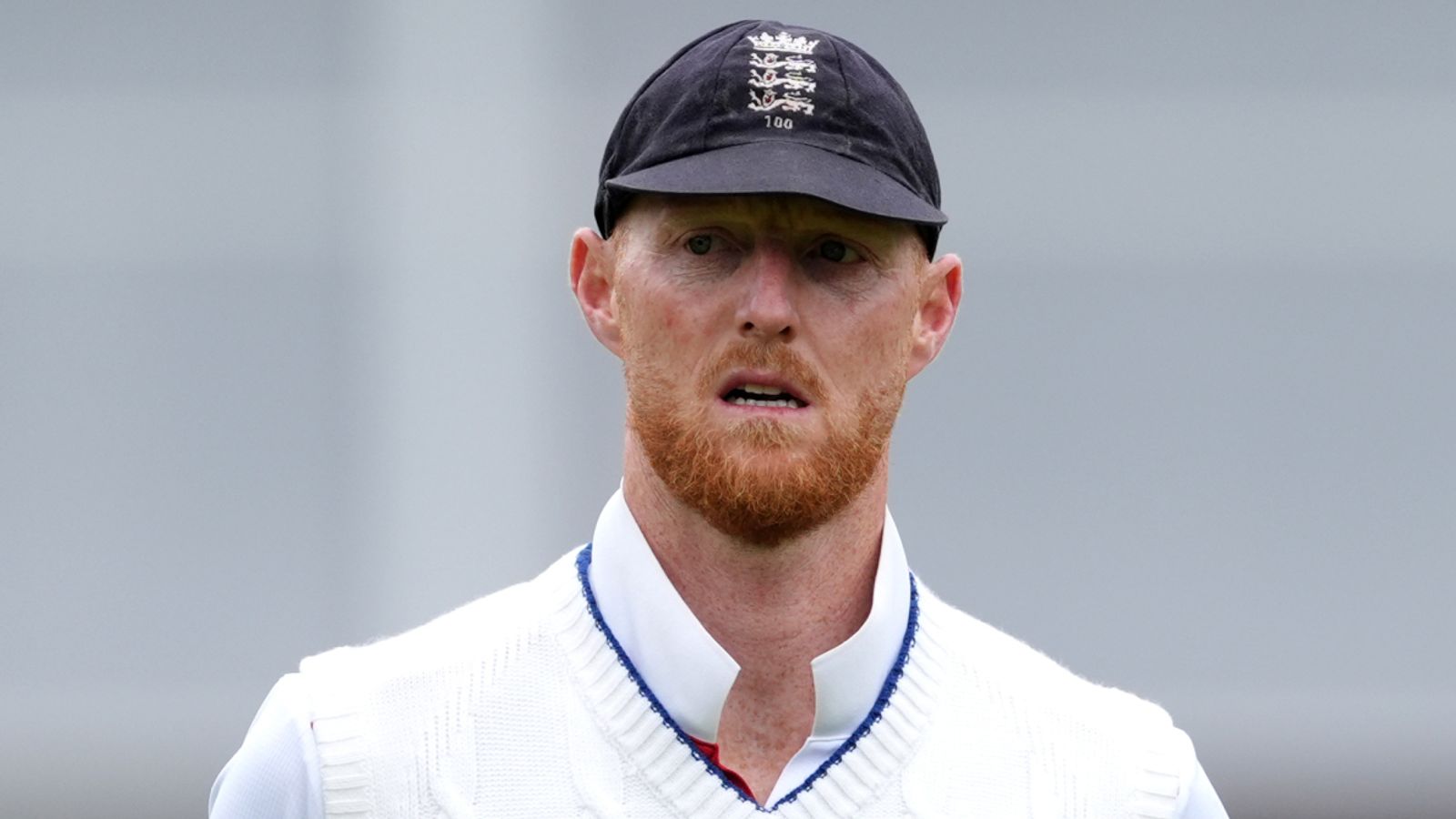
The night was supposed to be quiet. England had been dismissed for 165 on the second morning of the Lord's Test against South Africa, beaten by 39 runs inside two days, and the squad was back in central London by 18:00 UTC on 9 June 2026. By the early hours of Tuesday, the team's new midnight curfew had been breached, two players were at a nightclub where an altercation took place with a Saracens rugby player, and the captaincy of the Test side was suddenly an open question.
What looked like a routine post-match wind-down has, by Tuesday morning, metastasised into the most serious challenge to Ben Stokes's leadership since he took the job in 2022. Sky Sports reported on 9 June that Stokes is considering his future as England Test captain in the wake of the incident, which also involved all-rounder Gus Atkinson. By 16:27 UTC, BBC Sport's chief cricket commentator Jonathan Agnew had gone on record to say the episode is "not on" and that the team has to take accountability for the drinking culture that produced it.
A captain already under pressure
Stokes had arrived at the Lord's Test in depleted form. He has managed a modest return with the bat this summer, and the broader England set-up is in the kind of transition that exposes any off-field lapse. The squad is young, the management has rotated resources heavily, and the next assignment — a tour of India in early 2027 — is the kind of series that defines or ends tenures. Into that brittle context, a captain caught near a nightclub altercation hours after a home defeat is not just a personal embarrassment; it is a structural one.
The team's response, in its first 24 hours, has been to huddle. Stokes and Atkinson have reportedly apologised to senior staff; head coach Brendon McCullum, the long-time enforcer of the so-called "Bazball" culture, is understood to be livid. Selection for the second Test at Edgbaston, which begins on 17 June, was already complicated by the all-rounder's fitness and a tail that has been averaging under 20 this series. The nightclub incident does not simplify any of it.
The standards argument, restarted
This is the argument England cricket has been having on a loop since the Ashes winter of 2022–23, when a series of off-field incidents in Hobart and Melbourne prompted a root-and-branch review of the team's professional standards. Out of that review came a formal midnight curfew on tour and, in practice, a much tighter leash at home. The 9 June breach is therefore not a free-standing event; it is a stress test of a regime the ECB has spent two years building.
Agnew's intervention matters because it is the first senior voice from the BBC commentary box to publicly name the problem in those terms. The corporation's cricket correspondent has, in the past, been careful to keep editorial commentary distinct from selection politics. By choosing to call for accountability, Agnew is signalling that the crisis is no longer containable inside the dressing room. Sky's parallel report — that Stokes is "considering his future" — is the commercial broadcaster's equivalent of the same message: this is a story now, not a private matter.
The structural frame
Cricket, more than any other major team sport, runs on a moral economy. The county system, the central contract, the captain's press conference, the post-match pint — all of it is bound together by a culture of restraint that has been eroding for a decade. Twenty franchise leagues, the Hundred, and the IPL auction have lifted player earnings to the point where a Test cap is no longer the apex financial prize. When the cap stops being the apex cultural prize, captains lose the soft power they used to wield for free.
The 9 June incident is, in that sense, a small visible symptom of a much larger re-pricing. Stokes's value to England is not in doubt — he remains, on his day, the most complete all-round cricketer the country has produced since Andrew Flintoff. But value and authority are different currencies. If the players around him now see the rules as optional, the rules need a captain who can re-mint them. The question for the ECB, the selectors, and McCullum over the next 72 hours is whether Stokes is still that captain.
What happens next
Three concrete decisions are coming fast. First, the ECB's managing director of cricket, Rob Key, will need to make a public statement — silence past Wednesday would be read as institutional paralysis. Second, the second Test squad at Edgbaston will either retain Atkinson (a vote of confidence in the dressing room) or drop him (a vote of confidence in the standard). Third, Stokes himself has to decide whether the role is still one he wants; the Sky report frames that as a live question, not a settled fact.
It is worth saying plainly what is not yet known. The full account of the Saracens altercation has not been disclosed; the metropolitan police have not, as of 10 June 2026, confirmed any arrests or charges. It is not clear whether alcohol was consumed before or after the team curfew. The ECB has not yet commented on the record. The story, in other words, is a sketch, not a portrait. But sketches, in English cricket, have a habit of being filled in quickly and to the detriment of the people they depict.
For Stokes, the calculation is intimate. He has spoken openly about his mental-health struggles, about the cost of captaincy, about the absence that follows a Test summer. To stay on after an incident like this is to absorb a public verdict that the job is too big. To walk away is to confirm the verdict. Neither option is costless. The most likely outcome — given the precedents set by Alastair Cook, Joe Root, and Flintoff before him — is a controlled statement of intent to continue, a quiet internal sanction, and a return at Edgbaston with the spotlight a good deal hotter than before. But the Stokes future is, for the first time in four years, a question the captain himself is asking.
This publication will update this story as the ECB, the metropolitan police, and the players' representatives publish further statements.