Strait of Hormuz at flashpoint: Trump claims Iran downed US Apache, Tehran denies, deal clock ticks
Two competing accounts of a US Army Apache downing near Hormuz collided on 9 June 2026, even as President Trump insisted a deal with Tehran was two or three days away and that the chokepoint would reopen immediately.
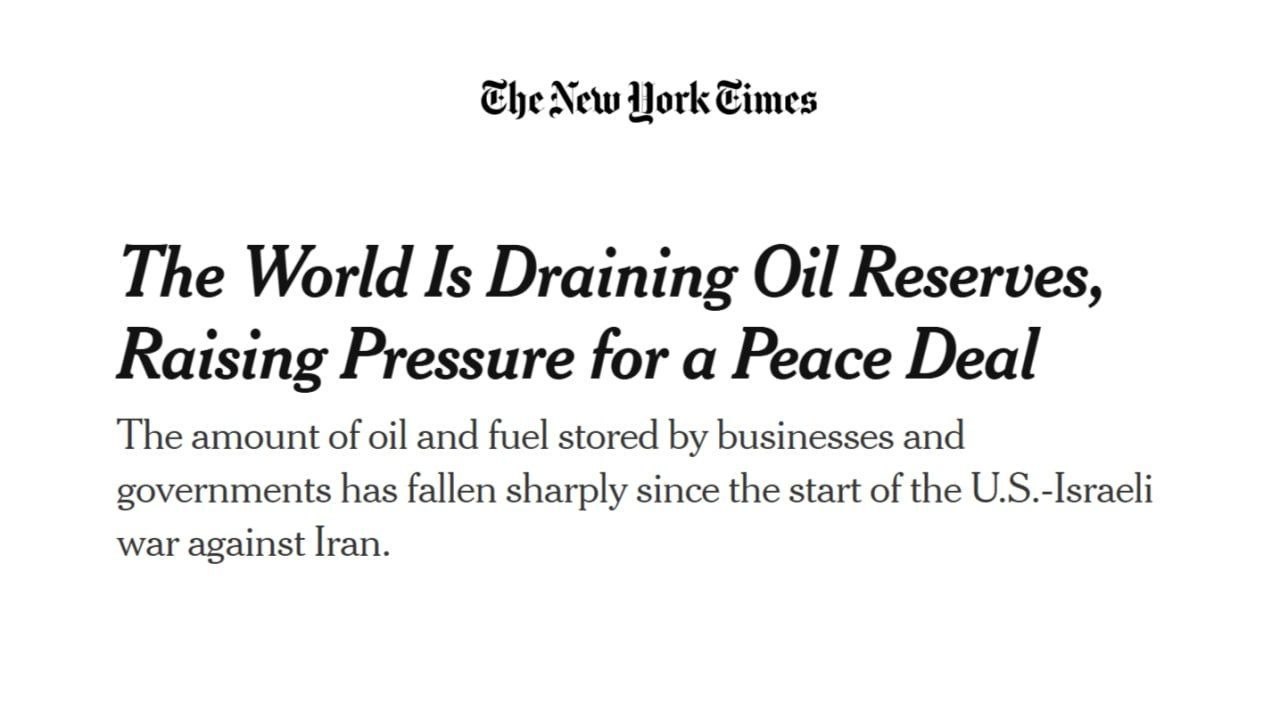
Two stories about the same stretch of water landed within hours of each other on 9 June 2026, and the world is being asked to hold both at once. President Donald Trump confirmed publicly that Iranian forces had shot down a US Army Apache helicopter operating above the Strait of Hormuz. Tehran, through state-linked channels, rejected the claim outright and signalled it would retaliate against the latest US strikes near the waterway. In the same news cycle, the president told reporters a deal with Iran could be reached in "two or three days" and that the strait would reopen "immediately." The result is a textbook mismatch between the kinetic record of the last 48 hours and the diplomatic script both sides are reading from, with energy markets and roughly a fifth of global seaborne crude caught in the middle.
What is actually known is narrow, and the gap between it and what is being claimed is itself the story. The narrowness matters because the Strait of Hormuz is not a symbolic frontier. It is the chokepoint through which the bulk of Gulf crude reaches open water, and any sustained disruption is felt in refining margins from Singapore to Rotterdam within days. A single downed airframe is not a closure. It is, however, the kind of incident that has historically served as the predicate for the strikes that have already begun — and for the ones being signalled on both sides.
What the two sides are saying
The US account, as conveyed by the president on 9 June 2026, is that Iranian forces shot down a US Army AH-64 Apache helicopter operating near the Strait of Hormuz and that Washington "must" respond. LiveMint, summarising the president's remarks, reported the framing in declarative terms. A separate account, surfaced the same day on the prediction-market feed Polymarket, described a US Navy drone reportedly rescuing the helicopter's crew — a detail that, if accurate, suggests the airframe came down in waters accessible to American unmanned systems and that the crew survived. Trump separately told reporters, per a post on X by @unusual_whales, that an Iran deal could be reached in "two or three days" and that the strait would reopen "immediately."
The Iranian account, as relayed by the Telegram channel Palestine Chronicle, is a flat rejection. Tehran's line is that Iranian forces did not down the helicopter, that the US framing is fabricated, and that any further US action will meet a "decisive response." A separate Bloomberg-sourced item, redistributed by the @wfwitness channel, said Iran is signalling retaliation against the latest US strikes near the strait. The two statements are not necessarily contradictory — Tehran can deny the downing while promising retaliation for the strikes — but the order in which they were issued leaves the downing itself as the contested fact.
Why the downing claim matters even if the deal holds
Diplomatic deadlines in US–Iran confrontations have a habit of moving with the airspace, not the calendar. The president's two-to-three-day window and the "immediate" reopening language are aimed at a market and an electorate, not at the Iranian negotiating team in Muscat or Doha. They also pre-empt the most acute risk premium: the possibility that tanker insurance rates spike, that VLCC operators reroute around the Cape of Good Hope, and that Gulf producers are forced to draw on storage or cut output by default. Even a deal-in-three-days story does not unwind that premium in three days. War-risk surcharges, once posted, persist until owners and charterers are convinced the threat envelope has actually closed.
The structural problem is that the two tracks are running on different clocks. The diplomatic track rewards ambiguity; both sides can claim the other's latest move as the provocation that forced them to the table. The military track rewards clarity; each strike, each intercept, each downing, narrows the room for the foreign ministers to operate in. A helicopter loss is small in tactical terms. It is large in signalling terms precisely because it allows each side to portray the other as the escalator.
The counter-reads
The Western wire read, in line with the Trump remarks circulated on 9 June, is that Iran is testing the new administration's red lines and that a kinetic answer is overdue. The structural argument behind that read is that restraint, after a helicopter loss, would be misread in Tehran as acquiescence, and that deterrence in the Gulf is maintained only by cost imposition. The energy-market corollary is that a forceful response tightens the security umbrella over the strait and, paradoxically, supports the "immediate reopening" narrative because it removes the specific threat that had closed it.
The counter-read, more common in non-Western and Global-South commentary, is that the Apache claim and the deal-claim are being run together to manufacture a market-friendly headline while the underlying strike tempo continues. Under that framing, the diplomatic language is cover for an air campaign, and the downing attribution is being used to justify an escalation that was already scheduled. The structural argument is that the United States has an interest in keeping the chokepoint in a state of managed tension — tense enough to justify a forward naval presence and arms sales to Gulf clients, controlled enough not to spike its own consumer fuel prices into a midterm cycle. Tehran's interests map imperfectly onto either side of that frame: it benefits from the legitimacy of self-defence, but it also bears the cost of being cast as the closing party in the world's most important oil lane.
Stakes over the next 72 hours
If a deal is announced inside the two-to-three-day window the president described, the most likely shape is a sequenced arrangement: an Iranian de-escalation around US naval assets, a US quietening of the strike tempo, a humanitarian or sanctions-easing confidence-building measure, and a longer-term framework deferred to a later round. The Apache incident, in that scenario, becomes a contested footnote — denied by Tehran, asserted by Washington, and absorbed into a written understanding that neither side is required to disambiguate. The strait reopens in name; the war-risk premium partially recedes; and the structural arrangement, in which both sides retain the option of renewed pressure, remains intact.
If no deal lands in that window, the next data points are the Iranian retaliation Bloomberg's sources flagged, the US response Trump has already pre-positioned, and the first tanker-pricing tape out of Fujairah and Singapore. The downing claim will harden into either an established fact or a known disputed one. Either outcome is more dangerous than the present ambiguity, because the present ambiguity is what the oil market is currently pricing. Removal of ambiguity — in either direction — reprices the same barrels.
What the sources do not yet settle
Three things remain genuinely unresolved. First, the cause of the airframe loss: Iranian action, as the US account holds, or a non-combat incident that the political environment is now forcing into the downing frame, as Iran's denial implies. Second, the precise status of the US strike campaign near the strait that Iran's retaliation threat is responding to — the Telegram-circulated Bloomberg line describes a signalling posture, not a confirmed target list. Third, the fate and condition of the aircrew beyond the Polymarket-sourced claim of a drone rescue, which has not yet been corroborated in a wire-confirmed report. Until those three are nailed down, the two-to-three-day deal clock is running on top of a kinetic record that neither side has fully disclosed.
This article draws on Telegram- and X-circulated wire summaries dated 9 June 2026. Where US and Iranian accounts diverge, both are reported in full. The Monexus desk treats the prediction-market feed as a secondary signal, not a primary source.
Wire provenance
This editorial synthesis draws on the following public wire/social posts:
- https://x.com/unusual_whales/status/
- https://x.com/polymarket/status/
- https://t.me/wfwitness