Strikes on Iranian oil country raise a question the cables rarely ask
Reports from Bushehr, Khuzestan and Zahedan on 10 June 2026 put a US air campaign inside Iran’s energy heartland — and reopen a debate the wire desks keep closing.
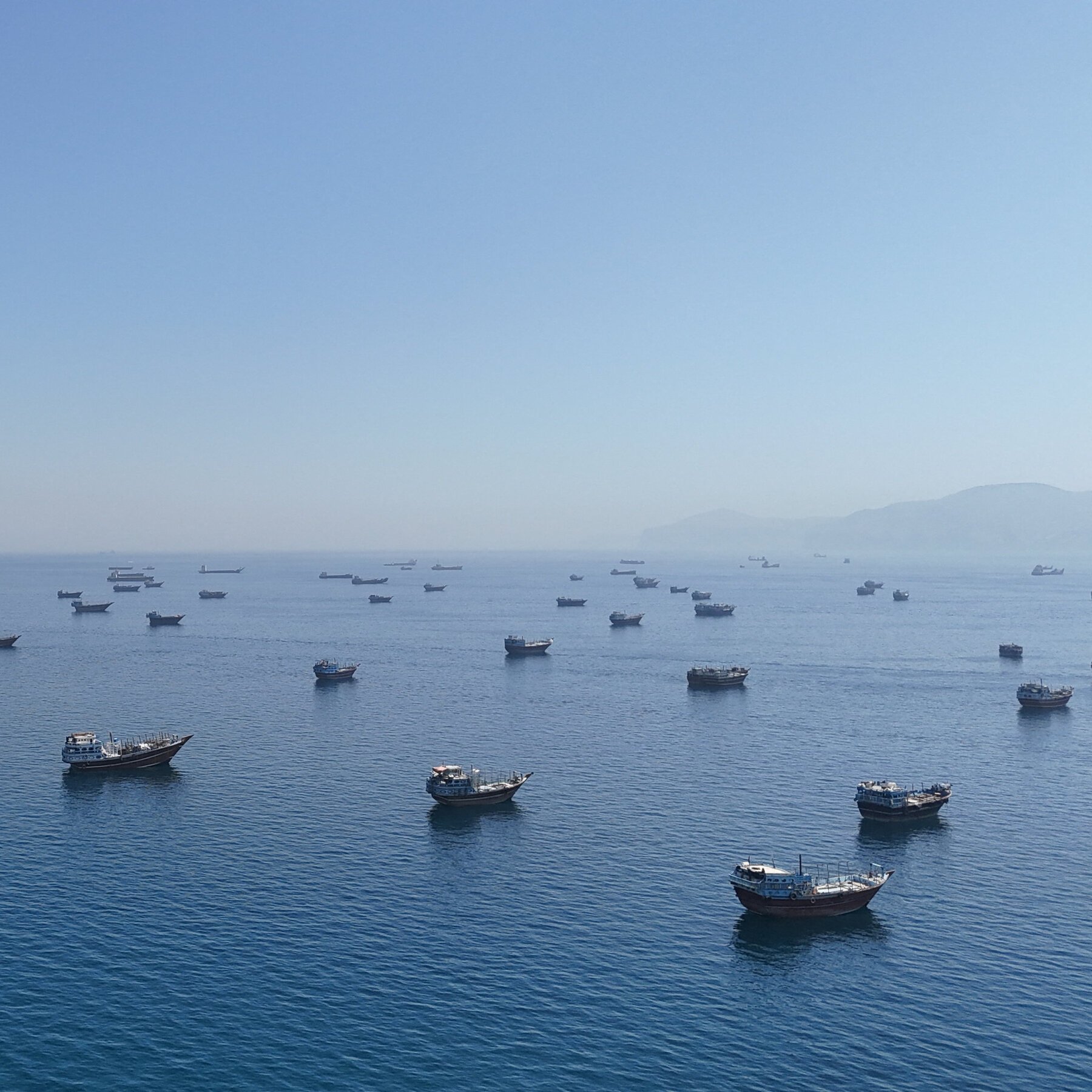
Reports circulating through OSINT channels in the early UTC hours of 10 June 2026 place a US air campaign on Iranian soil for the first time in a generation — and the geography is unmistakable. At 00:09 UTC, GeoPWatch logged an explosion in Jam, in Bushehr Province on the Persian Gulf coast. Three minutes later, the same channel reported that an Iranian air-defence unit had engaged and shot down a hostile drone over the city. By 00:14 UTC, the intelslava feed carried a corroborating account: a US unmanned aerial vehicle was downed over Jam. By 00:25 UTC, rnintel was reporting US airstrikes on Zahedan, in Iran's far southeast, alongside initial accounts of an explosion in Ahvaz, the capital of Khuzestan — the province that hosts the bulk of Iran's onshore oil production.
The thread is not a confirmation. It is, at this writing, a cluster of Telegram-based OSINT reports describing activity across three provinces in a single overnight window: strikes on Jam in Bushehr, a strike package over Zahedan in Sistan-Baluchestan, and a reported detonation in oil-rich Khuzestan. None of the items has been matched, as of publication, to a Pentagon readout, a US Central Command statement, or a Tehran briefing carried by a wire service. What they do is draw a map — and the map lands on Iran's energy and nuclear geography.
What is actually being reported
The clearest thread runs through Bushehr. An explosion in Jam city is logged at 00:09 UTC and again at 00:35 UTC, with intelslava describing persistent activity over the area six minutes after the second report. The intervening item — a hostile drone shot down by Iranian air defence over Jam — is the most specific operational detail in the cluster, naming a weapons system that fired and a target it engaged. Whether the drone was the cause of the earlier explosion, the consequence of a wider package, or a separate incident is not specified in any of the source items. A second, parallel thread runs through Khuzestan, where a loud explosion was reported in Ahvaz at 00:26 UTC. The third thread is the loneliest: US strikes reported over Zahedan, the capital of Sistan-Baluchestan on the Pakistani border, more than 1,400 kilometres from Jam. Three sites, two coasts, one night.
A reasonable reader will ask the obvious question: which side is firing? The OSINT accounts that originate with channels covering the Iran file routinely attribute the air activity to the United States and the air-defence response to Iran. Iranian state media are not yet part of this source set; the framing is therefore the framing of channels that monitor the region from outside it. That asymmetry should be marked, not buried.
Why the geography matters more than the headlines
If the early accounts hold, the targeting choice is the story. Bushehr is home not only to the Bushehr Nuclear Power Plant — Iran's only operating commercial reactor, built with Russian assistance — but to a coastline opposite the Gulf states that host US Central Command's Fifth Fleet. A strike package against Jam puts a US air campaign in the same province as a Russian-built nuclear facility, inside a maritime theatre that is, on any honest reading, the most over-militarised stretch of water on earth. Zahedan is a logistics hub on the corridor that runs from the Iranian interior down to Chabahar, the Indian-backed port that has become the operational answer to a Sino-Pakistani Gwadar and the heart of Iran's east-of-Hormuz trade strategy. Ahvaz, the Khuzestan capital, sits inside the province that produces the great majority of Iran's crude. None of those three sites is accidental. Together they form a triangle: nuclear infrastructure on the Gulf coast, eastern trade-and-logistics, and the oilfields of the southwest.
The structural reading is not subtle. The pattern of target selection in a first-night air campaign usually tells you what the campaign is actually for. When the geography of night one is nuclear infrastructure, regional logistics, and energy export capacity, the campaign is not narrowly about weapons-of-mass-destruction verification or about a discrete retaliatory act. It is, whether its architects admit it or not, a campaign aimed at Iran's capacity to project and to earn.
The framing the wire desks will reach for
Coverage of any US strike on Iran tends to settle, within a news cycle, into a small number of grooves. The first is the proportionality groove: a measured response to a discrete Iranian provocation, calibrated, rules-of-engagement-respecting, with civilian harm as a regret rather than a feature. The second is the real-estate groove: a story about the Strait of Hormuz, the oil price, and what a barrel of Brent might do on Monday morning. The third is the all-in cost groove: a debate about what a sustained air campaign would cost the US defence budget, the Iranian state, and the regional order. All three are legitimate angles. None of them is the most important one. The most important question is whether a US air campaign that begins by hitting the energy and logistics spine of the Iranian state can be honestly described as a discrete, proportional act — or whether the framing of proportionality is doing work the evidence has not earned.
A more serious reading sits alongside the conventional one. There is a counter-story in which the OSINT accounts are partial, the attribution is premature, and the rounds that fell on Jam and Zahedan in the early hours of 10 June belong to an older and grimmer pattern: a covert action amplified by open-source channels into something that looks like a declared war without any of the legal or political architecture of one. The credibility of that counter-story is not zero. Telegram is not a wire service, GeoPWatch and intelslava are not Reuters, and the absence — as of this writing — of an Iranian state-media confirmation or a US military readout leaves the operational record underdetermined. A staff writer is meant to mark the evidence, not to vault it.
Stakes, and the part that gets edited out
The stakes of a first-night pattern that targets nuclear, energy and logistics infrastructure in a single window are not abstract. Iran is a sovereign state; the war powers of the United States are governed by domestic statute; and the civilian populations of Bushehr, Khuzestan and Sistan-Baluchestan are not abstractions. A strike package that puts a nuclear facility, an oil capital, and a trade corridor inside the same operational night is, in plain language, an attempt to set the terms of a successor arrangement for the Iranian state. The most useful service this publication can perform tonight is to name that plainly, while also naming what it cannot yet verify. The sources do not specify casualty figures. They do not specify whether the Bushehr nuclear plant was affected. They do not name the platform type, the ordinance used, or the rules of engagement under which the strikes were authorised. Those gaps are the gaps. They belong in the article, not in a footnote.
What remains uncertain is also the most consequential. The most plausible alternative reading is that what looks like a coordinated three-site package is, in fact, two or three unrelated incidents compressed by OSINT timing into a single apparent campaign. The opposite reading is that the geography is the message and the pattern is the policy. The honest answer is that the next twelve hours — Iranian state-media confirmation or denial, a US Central Command statement, satellite imagery of the impact sites — will determine which reading survives the morning.
Desk note: the wire frame for this story is still underdetermined; Monexus is publishing against an OSINT cluster, not a confirmed US or Iranian readout. The piece foregrounds geography, framing and stakes, and marks the evidence boundary in line.
Wire provenance
This editorial synthesis draws on the following public wire/social posts:
- https://t.me/intelslava
- https://t.me/GeoPWatch
- https://t.me/rnintel
- https://t.me/intelslava
- https://t.me/intelslava
- https://t.me/GeoPWatch
- https://t.me/GeoPWatch