US Strikes Reopen Iran Risk Premium as World Cup Reversal Adds Political Layer
Oil ticked higher on 10 June 2026 after the US launched fresh strikes against Iranian targets, even as Tehran's allocation of fan tickets for the World Cup was revoked days before kick-off.
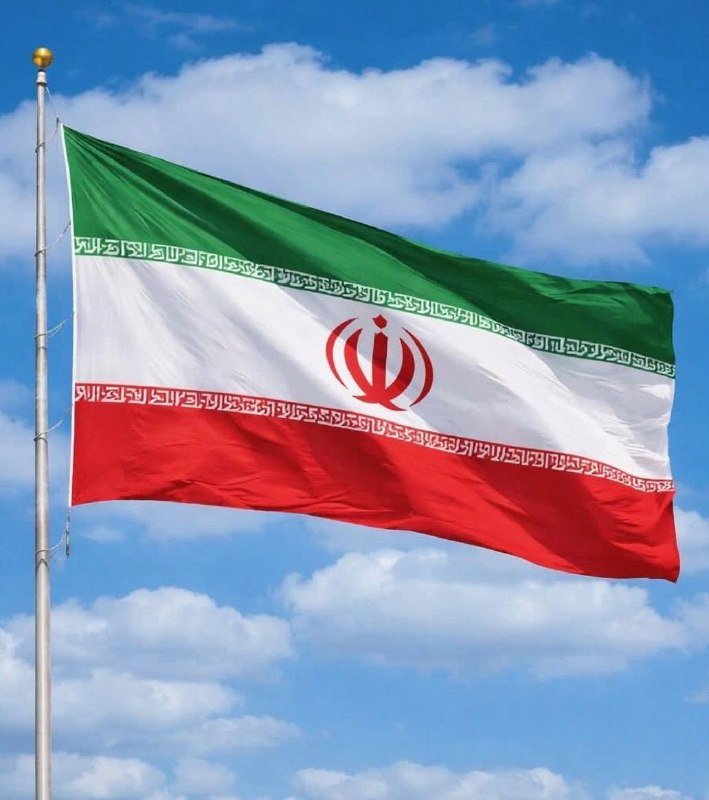
Oil prices rose by nearly one percent in early Asian trade on 10 June 2026 after the United States carried out fresh strikes against Iranian targets, with traders pointing to tightening supply across a Gulf corridor that already carries a heavy geopolitical premium. Brent and WTI benchmarks both ticked higher in the hours after Reuters first reported the new US action at 04:20 UTC, the latest in a sequence of escalations that has compressed the gap between military signalling and market reaction to little more than minutes.
The strike narrative is unfolding alongside a smaller but politically resonant story out of Zurich. Iran's football federation confirmed on 9 June 2026 that FIFA had revoked Tehran's allocation of fan tickets for the group stage of the World Cup, just days before the tournament is due to begin in the United States. The federation framed the decision as politically motivated; FIFA has not publicly detailed its reasoning in the materials reviewed. The twin stories — kinetic in the Gulf, symbolic in the world of sport — sketch the two registers on which Iran's relationship with the West is now being contested.
What the market is pricing
According to Reuters, oil rose "nearly 1%" as the strikes were announced, with the move attributed to supply concerns rather than to a specific disruption of named infrastructure. The pricing action is consistent with a market that has already absorbed a sequence of similar episodes over the past several years and is now trading on a baseline probability of disruption rather than on a single event. The Strait of Hormuz remains the structural pivot: a relatively narrow chokepoint through which a large share of Gulf crude reaches Asian and European buyers, and a route that any sustained Iranian retaliation would directly threaten.
The "Middle East Spectator" channel, which tracks regional military signalling closely, wrote on 10 June 2026 at 03:15 UTC that "Iran's retaliation seems to be over" — a reading that, if it holds, would explain the relatively measured one-percent move. A full retaliatory cycle would normally have produced a sharper price reaction. The market is, in effect, discounting a contained exchange rather than an open escalation.
The sporting front
The ticket revocation, first flagged on X by Unusual Whales at 15:17 UTC on 9 June 2026, sits on a different plane but inside the same political geometry. Iran had been allocated a contingent of supporter tickets for the group stage; that allocation has now been pulled, according to the Iranian federation and reporting carried by the BBC. The federation's complaint — that the decision is political — is the kind of framing a host of states, including Western ones, have used when sporting access is restricted on security or diplomatic grounds.
The sporting story matters less for its direct economic impact, which is essentially nil, than for what it signals about the diplomatic weather. A World Cup hosted by the United States is, in effect, a piece of soft-power infrastructure that Washington controls. Decisions over allocations, accreditation, and stadium access are made through FIFA, but the political environment in which those decisions are made is set by the host. The revocation reads, on the evidence available, as a calibrated signal that Iran's standing in the Western-led sporting order is now contingent on its behaviour in arenas where the language is less metaphorical.
The structural frame
Two tracks, one direction. The US is signalling in two registers at once — kinetic through the strikes, normative through its effective veto on Iran's participation in a tournament it hosts. Both moves tighten the noose on Tehran's access to the international system, and both do so through institutions the United States either controls directly (NATO-aligned air power, dollar-denominated oil markets) or shapes decisively (FIFA in this World Cup cycle, by virtue of being host).
The Iranian counter-narrative, as carried by the federation statement and by sympathetic regional outlets, frames both moves as proof that engagement with the existing global architecture is structurally rigged against the Islamic Republic. That framing is not new — it has been a staple of Iranian commentary since at least the reimposition of broad US sanctions — but the World Cup element gives it an unusually broad audience. The structural argument is straightforward: a state that wants to participate in the international system must do so on terms set by the system's principal architect, and those terms can be revised at short notice.
The counterpoint is that the architecture is not monolithic. China, Russia, and a widening circle of non-Western states continue to do significant energy business with Iran, and Iran's diplomatic footprint in the Gulf and the wider Global South remains substantial. The ticket revocation will cost Iran visibility, not sovereignty; the strikes will tighten the risk premium, not close the export tap.
What remains uncertain
The evidence reviewed does not specify the scale or target set of the US strikes reported on 10 June 2026, nor the casualty picture on either side. Reuters' framing — supply concerns, tightening — is consistent with attacks on energy infrastructure or on military assets that would, in turn, threaten energy infrastructure, but the specific target set has not been confirmed in the materials available to this publication. The Iranian federation's account of the ticket decision is, by its nature, one-sided; FIFA's silence in the materials reviewed leaves the official rationale unstated.
The "Middle East Spectator" reading that Iran's retaliation cycle has run its course is a real-time judgment from a channel with a particular vantage point on regional signalling, and it should be treated as such rather than as a confirmed ceasefire. A second cycle, slower in building and harder to attribute, would not be unusual. The market's one-percent move suggests traders are pricing the first interpretation; the structural risk premium suggests they have not yet priced the second.
This piece sits closer to the Western wire framing than the typical Monexus desk product: the strike reporting follows Reuters' lead, and the Iranian federation's complaint is reported rather than endorsed. The publication's editorial line on the Islamic Republic is sceptical of its regional posture but equally sceptical of escalation that does not produce verifiable outcomes.
Wire provenance
This editorial synthesis draws on the following public wire/social posts:
- https://x.com/unusual_whales/status/2062546092105908224
- http://reut.rs/4ofL5kV
- https://t.me/Middle_East_Spectator