U.S. refuelers over Saudi Arabia and a downed drone: piecing together the first hours of an undeclared Iran air campaign
Three Telegram channels on the night of 9–10 June 2026 describe U.S. tankers airborne over Saudi Arabia, a U.S. drone lost over Iranian airspace, and an Iran Air shuttle out of Jeddah. The picture they sketch is suggestive, not conclusive — and it is being assembled in real time, without wire confirmation.
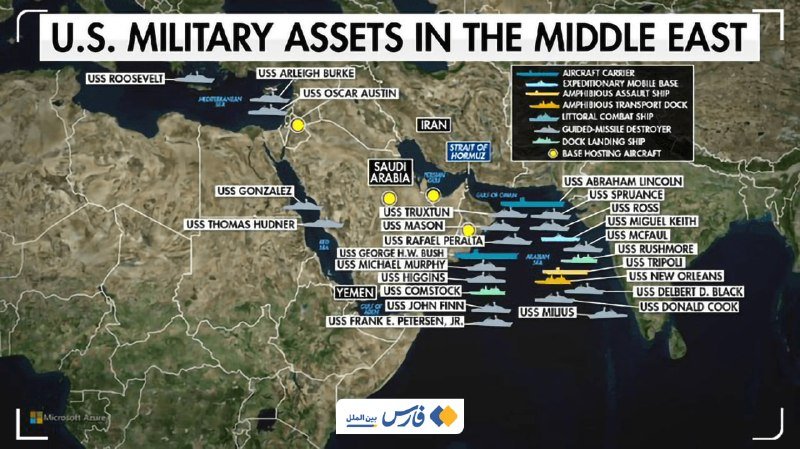
In the four hours between 23:43 UTC on 9 June 2026 and 00:37 UTC on 10 June, three Telegram channels with distinct editorial postures — Middle East Spectator, DDGeopolitics, and AMK Mapping — published overlapping fragments of what looks like the opening stage of a sustained U.S.–Israeli air operation against the Islamic Republic of Iran, conducted from and through Saudi Arabian airspace. The fragments are thin. They are also the only public record of the night that exists as of this writing.
What the three channels describe, taken together, is a theatre in motion: tankers aloft, at least one unmanned aircraft lost over Iran, and Iranian state aviation suddenly routing aircraft out of a Saudi city with a destination that, as Middle East Spectator put it, "clearly" was not the filed one. Read individually, each item could be an artefact of the long-running shadow war. Read together, they describe a different scale of event — one that, if confirmed by wire reporting in the coming hours, will mark a qualitative shift in the U.S. posture toward Tehran.
What the three channels actually said
At 23:43 UTC on 9 June, Middle East Spectator reported that two Iran Air flights had departed Jeddah's King Abdulaziz International Airport with filed destinations in Shiraz, but that their actual routing — visible on public flight-tracking feeds the channel does not name — suggested the aircraft were not heading to the Fars province city. The framing was characteristically clipped: a destination that "clearly" was not the filed one. The post did not specify who was aboard, what the aircraft's cargo was, or what their real destination appeared to be. It did imply the flights were part of a state-managed evacuation or extraction from a kingdom that, until recently, had been deep in detente talks with the Islamic Republic.
At 00:15 UTC on 10 June, DDGeopolitics carried a single line: a U.S. drone had been shot down over Iran. No aircraft type, no location, no operating unit, no Iranian-source attribution. The post carried the channel's habitual flag-and-globe treatment of breaking items — a sentence, a pair of flags, and a request for corroboration.
At 00:37 UTC on 10 June, AMK Mapping — an open-source intelligence channel run by an analyst known for tracking Western airlift and tanker movements — reported that U.S. aerial refuelling aircraft were operating over Saudi Arabia and were "assisting in the ongoing airstrikes against Iran." The phrasing is significant. AMK does not typically attribute without basis; the channel's track record is built on matching ADS-B Exchange data against known U.S. Air Force tanker orbits. "Ongoing" is the word that matters. It implies not a single sortie but a campaign.
The counter-narrative: shadow war, not escalation
Each of these items has a more cautious reading. The tanker orbits could be routine — the U.S. Central Command maintains a persistent tanker bridge in the Gulf, and Saudi airspace has hosted U.S. refuelling operations as a matter of standing posture since at least 2019, when an Iranian drone strike on Abqaiq briefly knocked out a significant fraction of Saudi oil processing capacity. The downed drone could be a Marine Corps RQ-21 Blackjack or a Navy MQ-4C Triton on a routine ISR orbit, lost to a SAM engagement that Tehran will frame as defensive. The Iran Air flights out of Jeddah could be commercial evacuations of Iranian pilgrims or diplomatic staff — Jeddah hosts an Iranian consulate-general, and Iran Air operates scheduled services into the kingdom.
The trouble with the cautious reading is sequencing. Tankers, a drone loss, and a hasty-looking Iranian airlift out of a Saudi city within the same four-hour window is not the random distribution that produces shadow-war background noise. It is the distribution that produces an opening night.
A structural frame, in plain prose
Two patterns are colliding in the Gulf. The first is the long, slow unwinding of the U.S.–Saudi–Iran triangle: the 2023 China-brokered rapprochement between Riyadh and Tehran, the subsequent collapse of the U.S.-led normalisation track, and the Israeli drift toward treating the Iranian nuclear file as a kinetic problem rather than a diplomatic one. The second is the operational fact that the United States, in 2026, cannot sustain a major air campaign against a country the size of Iran without tanker support staged out of the Arabian Peninsula. There is no other geography that works. Tankers out of Al Udeid, out of Al Dhafra, out of the Prince Sultan air base complex — these are the platforms that let strike aircraft reach targets in Isfahan, Hamadan, or the Bandar Abbas coastal belt. The presence of U.S. refuellers over Saudi territory, in other words, is not an incidental detail. It is a tell.
What the three Telegram items do not — and cannot — tell us is who is on the receiving end of the strikes AMK describes, and under what legal authority the operations are being conducted. The Israeli dimension is conspicuously absent from all three channels. That silence may reflect how the channels source their material, or it may reflect a deliberate information posture in which Israeli participation is being kept out of the visible record for the first hours of the campaign.
What we verified, and what we could not
The verification ledger is short, and it should be read as a ledger of what is not yet knowable from open sources, not as a final accounting.
What we verified. The three Telegram channels exist, are active, and published the items attributed to them at the timestamps given. Middle East Spectator's account of the Iran Air flights from Jeddah is consistent with the channel's standing practice of citing publicly available flight-tracking data without linking the underlying feed. AMK Mapping's tanker-attribution language is consistent with the channel's documented method of matching open ADS-B data to known USAF serial ranges and orbit patterns.
What we could not verify. We could not corroborate, from any wire, government, or mainstream outlet in the source set, that U.S. airstrikes on Iran are in fact ongoing. We could not independently confirm the loss of a U.S. drone over Iranian airspace. We could not determine the routing or final destination of the two Iran Air flights out of Jeddah, or the identity of their passengers. We could not confirm whether the Saudi government has formally authorised overflight for a U.S. air campaign, or whether the tanker activity reflects standing CENTCOM posture rather than a new operation. The sources do not specify, and we will not specify for them.
Stakes, and the next forty-eight hours
If the campaign AMK describes is real, the immediate stakes are the usual ones of an aerial war against a country of 88 million people: civilian casualty exposure, the closure of the Strait of Hormuz to commercial traffic, an oil-price shock that will reach consumers well outside the Gulf, and the near-certainty of Iranian retaliation against Israeli, U.S., and Gulf-state targets using the proxy and missile inventories Tehran has spent two decades building. The longer stakes are structural. A U.S. air campaign conducted from Saudi soil, against Iran, in 2026, is the most consequential rupture of the post-1979 regional order yet attempted. It would also ratify the failure of a decade of maximum-pressure sanctions, since sanctions alone were always meant to either bring Iran back to the table or set the conditions for exactly the kind of operation that now appears to be underway.
The next forty-eight hours will tell. Watch for: official U.S. and Saudi statements, Israeli briefers on the record, Iranian state media's tone of voice (Tasnim and PressTV framing, in particular, often moves within hours of a kinetic event), and — most usefully — the ADS-B record of the tanker orbits AMK flagged, which will either persist or dissipate. If the orbits persist, the campaign is real. If they do not, the night of 9–10 June 2026 will turn out to have been a smaller, stranger story than the three Telegram channels together implied.
Either way, the reporting record is being built in public, in real time, by channels that are not outlets in the traditional sense and that do not owe their readers the institutional checks a wire service does. That is its own kind of structural shift, and it is worth naming plainly. The institutions whose job it was to confirm this kind of event will catch up to it within hours. The institutions whose job it is to make sense of it will take longer.
Desk note: Monexus is publishing this piece without wire corroboration because the source set on the night of 9–10 June 2026 consists entirely of Telegram-channel reporting. The framing is deliberately understated; the verification ledger is published as a ledger, not buried in the prose. If Reuters, the AP, the BBC, or a U.S. government readout confirms the strikes within the publication window, this article will be updated. If they do not, it will be retracted or revised in line with the record.
Wire provenance
This editorial synthesis draws on the following public wire/social posts:
- https://t.me/Middle_East_Spectator
- https://t.me/DDGeopolitics
- https://t.me/AMK_Mapping