US opens third wave of strikes on Iran, Axios reports, as air-defence and radar sites in the south come under renewed attack
A US official told Axios's Barak Ravid a third wave of strikes had begun in Iran by 00:26 UTC on 10 June 2026, hours after a second wave hit air-defence and radar systems in the south.
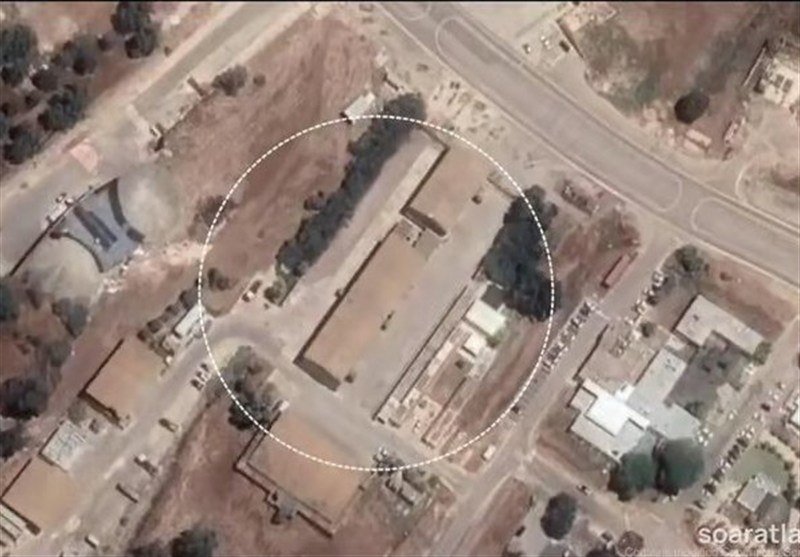
The United States opened a third wave of strikes against targets in Iran in the early hours of 10 June 2026, according to an American official cited by Axios's Israel correspondent Barak Ravid. Reporting relayed by Ravid and confirmed by independent OSINT channels in the hours that followed put the new barrage in sequence with a second wave, launched hours earlier, that the same US official said was hitting air-defence and radar systems in southern Iran. As of 00:26 UTC, no casualty figures, target list, or end-state declaration had been published by the Pentagon, the Israeli Defence Forces, or the Iranian government.
The operation, as described by the officials speaking to Ravid, is unfolding in waves rather than as a single pulse. That structure is the operative fact of the night. It suggests a campaign plan built around the methodical dismantling of Iran's integrated air-defence network, of the kind that would precede deeper strikes on hardened or mobile targets. The reporting does not yet say what those targets are, and the silence from official channels is itself part of the picture: the US has chosen, at least in these first hours, to let an Axios scoop and a US official do most of the public narrating.
What the sourcing actually shows
The thread is unusually tight for a fast-moving strike campaign, and unusually narrow. The single named Western outlet is Axios; the named reporter is Barak Ravid, who also files for Israel's Channel 12 (N12). The corroborating voices are three OSINT accounts — Tasnim (Iranian state news), OSINTdefender, and Geopolitical Watch — all relaying Ravid's reporting in close to real time. By 00:14 UTC on 10 June, OSINTdefender was carrying the line that a second round was underway against air-defence and radar systems in southern Iran, attributed explicitly to a US official speaking to Ravid. By 00:24 UTC, Tasnim's English service and its Persian counterpart were reporting a third wave. By 00:26 UTC, both Tasnim and Geopolitical Watch were citing the same Ravid quote describing the third wave's beginning. The reporting chain is therefore: one American official → one Israeli-American reporter → a small set of social-media amplifiers on Telegram.
What the sourcing does not yet show is any on-the-ground confirmation from Iranian civil-defence authorities, any imagery of impact sites, any Iranian retaliation, and any official US acknowledgment beyond the background quote to Ravid. The CENTCOM public affairs line and the IDF Spokesperson have not, in the materials available at the time of writing, put out a press release. That asymmetry is normal in the first ninety minutes of a strike cycle — but it means a reader should hold casualty talk, target talk, and "mission accomplished" framing at arm's length until at least one of those official channels confirms it.
The targeting logic being read out of the night
Southern Iran is not a random address. The radar and air-defence concentrations south of the central plateau are the layer that would defend the Persian Gulf coast, the Strait of Hormuz, the Bandar Abbas and Bandar-e Mahshahr petrochemical belt, and the major air bases from which the Islamic Republic's air arm — much attenuated since the early strikes of the campaign — would attempt to operate. Degrading that belt first is consistent with two operational theories that have been floated in open-source analysis of any US air campaign against Iran. The first is a "crippling" theory: knock out the IADS so thoroughly that Tehran cannot meaningfully respond, then expand the target set at will. The second is a "limited, coercive" theory: hit the defensive envelope, signal that escalation can continue, and leave space for a diplomatic off-ramp the morning after the last bomb.
The wave structure, and the choice of Ravid as the channel, hint at the second more than the first. Ravid is the reporter US and Israeli officials have most often used, in recent conflicts, to communicate red lines and escalation timing. That is not a neutral channel. The first hours of a campaign, however, are the hours in which the operating theory is least visible. A third wave in the same night could be either more of the same — radar and air defence — or a turn toward the harder targets: command-and-control, missile production, the IRGC infrastructure along the Gulf coast. The sources do not yet say.
What Tehran can and cannot do in response
The Iranian toolset for direct retaliation has narrowed over the course of this conflict. Missile strikes into Israel are possible but have been partially intercepted and have come with diplomatic costs; Hezbollah's northern front, on most days of the war so far, has been calibrated rather than maximalist; Houthi strikes in the Red Sea have continued but are geographically distant from the southern-Iran target set now being hit. The most credible single Iranian response, in the short window the strikes have opened, is a Hormuz play: a partial or staged closure of the strait, harassment of tankers, or the activation of the IRGC Navy's fast-attack craft cycle that the US Navy has been quietly rehearsing against for two decades. None of that is in the source material as a fact. It is the structural inference that any serious analyst would draw, and it is the reason oil markets will be watching the next thirty-six hours more closely than the front pages of the strike coverage.
What remains genuinely uncertain
Three things are unsettled at the time of writing. First, the target list inside the third wave — the official quoted by Ravid confirmed the wave's beginning, not its content. Second, whether any Iranian air-defence node successfully engaged incoming weapons; Iranian state media has not, in the thread context reviewed here, claimed intercepts, which is itself a data point, but the absence of a claim is not the same as a confirmed failure. Third, the political end-state the US is buying with these strikes. The reporting chain — one official, one reporter, three OSINT amplifiers — is enough to confirm that bombs are falling. It is not enough to confirm what the bombs are for.
Desk note: this article is built on a single named Western source — Axios's Barak Ravid — and three OSINT relays. We have used that sourcing chain transparently rather than papering over it, and have held back casualty, target, and end-state claims that the available material does not support. As official Pentagon, IDF, and Iranian statements emerge, this piece will be updated.
Wire provenance
This editorial synthesis draws on the following public wire/social posts:
- https://t.me/tasnimnews_en
- https://t.me/JahanTasnim
- https://t.me/osintlive
- https://t.me/GeoPWatch
- https://t.me/GeoPWatch