Turner's revival forces a goalkeeper question the USMNT cannot dodge past Friday
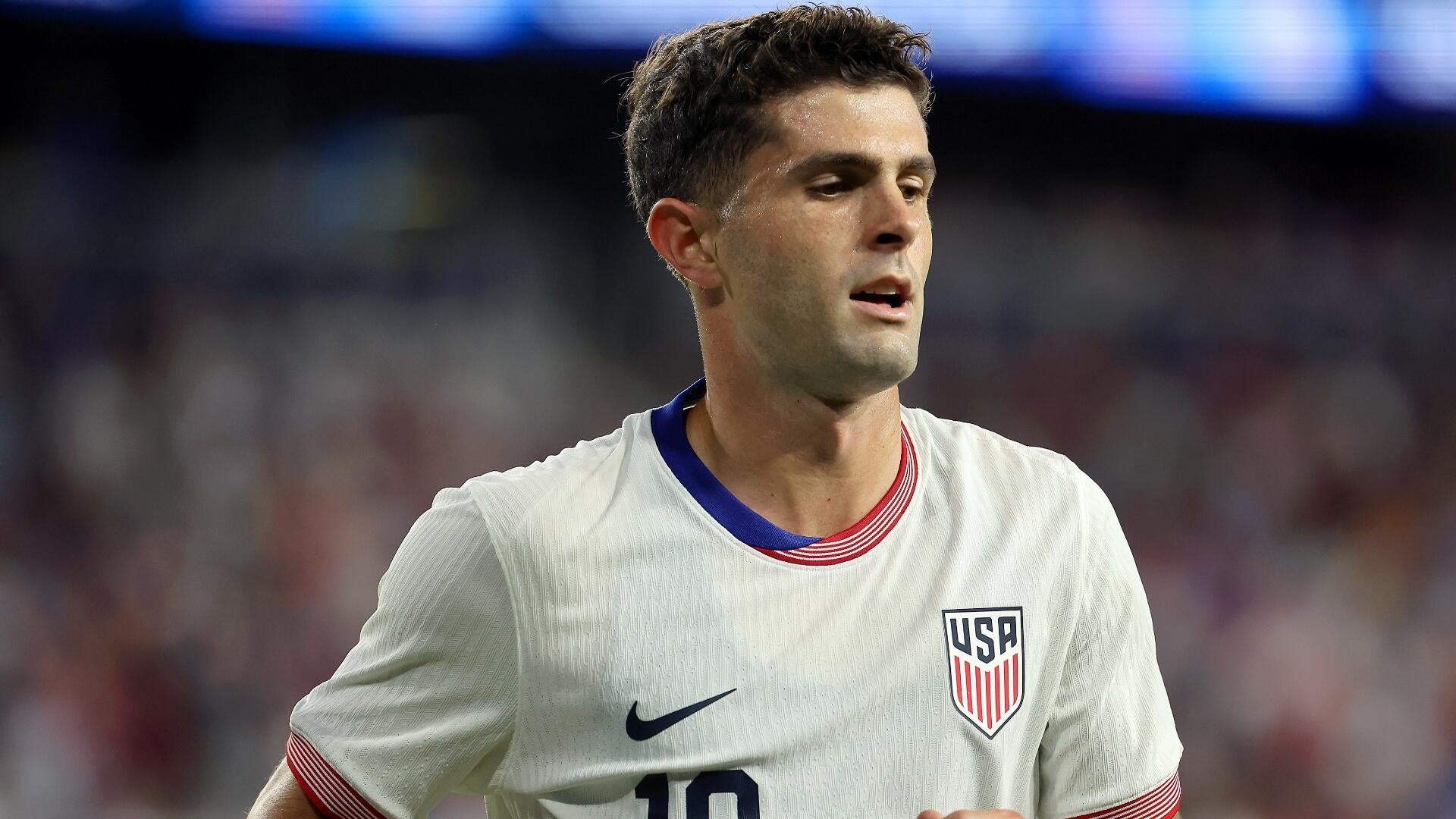
The most consequential decision facing the United States men's national team before Friday's 2026 World Cup opener against Paraguay in Houston is not a tactical shape or a starting winger. It is the 18-yard box. Matt Turner, the 31-year-old who held the U.S. No. 1 shirt through the 2022 World Cup in Qatar, has made a late and unusually public case to reclaim it, telling reporters on Tuesday, 9 June 2026, that "the door is always cracked," per CBS Sports. Matt Freese, the 26-year-old who has worn the jersey for the last year under head coach Mauricio Pochettino, knows it.
For a co-host nation that has spent three years auditioning its squad in public, the goalkeeper question is a fitting opening act. The squad is deep, the fixtures are forgiving, and the alternatives to the Freese–Turner axis are thin. But in a knockout tournament played on home soil, the last line is the last line, and the gap between the two candidates is narrower than the rotation suggests.
What the rotation has actually shown
Freese has held the starting role across the past twelve months, the period in which Pochettino's staff installed the identity they intend to take into the tournament. The sample is small by club standards but coherent: a New York City FC product whose distribution fits the high-line, build-from-the-back template the Argentine coach has imported from his European stops. ESPN's 9 June 2026 pre-tournament brief frames Freese as the incumbent and the choice that requires no justification.
Turner's case is positional and circumstantial. The veteran moved in the winter window to a starting role in the Premier League after a loan that had him on the margins at Arsenal and then at Nottingham Forest. Match minutes in a top league do not automatically translate to international form, but they do reset the comparison. CBS Sports reports that Turner's recent run of starts has produced the kind of shot-stopping numbers that the U.S. staff previously cited when they made him the starter for Qatar.
The Pochettino staff has, to its credit, refused to declare the position closed. Publicly endorsing a starter would only narrow a coach's options and inflate the price of a bad night. The result is a merit contest the federation can plausibly describe as a strength rather than a problem.
The counter-narrative: continuity over sentiment
The argument for Freese is not glamorous. He has played every competitive minute the U.S. has contested under the current cycle's intensity. He knows the centre-backs in front of him. The defensive set-pieces, the press triggers, the rest-defence shape — all of it has been rehearsed with him in goal. CBS Sports notes that Freese has been the team's starter "for the last year," a phrase that does a lot of work in a federation that prizes process.
Switching to Turner two days before a World Cup opener, on the other hand, would import a goalkeeper who has not faced live competitive action with this defensive unit into the single most scrutinised match of the cycle. The risk calculus is obvious: a possible upgrade in shot-stopping offset by a real cost in coherence. Continuity, in this reading, is the conservative but defensible choice.
The structural frame: thin pools at the top
What the Freese–Turner contest quietly exposes is the depth chart underneath. The U.S. goalkeeper pool for this cycle is two names deep at the senior level, with a third-choice who has not started a competitive club match in months. That is not unusual for mid-tier federations; it is unusual for a co-host of a 48-team World Cup, where the expectation is that depth, not just a first XI, will decide results across four to seven matches.
The federation's pathway investments in recent years have flowed toward outfield positions, particularly the wide attacking roles and the No. 6 that Pochettino has rotated heavily. The goalkeeper file has been treated as a solved problem, in part because Turner and the now-departed Ethan Horvath carried the 2022 cycle without major incident. Treating a position as solved and finding it contested three days before kick-off is a familiar sports-governance lesson: the talent you assume is institutional often turns out to be situational.
Stakes and a forward view
The first decision Pochettino will be judged on is not the tactical plan against Paraguay. It is the name on the teamsheet in goal. If Turner starts and produces a clean sheet, the rotation will look like prescient competition. If he concedes and the defence looks uncalibrated, the same choice will be read as sentimentality. If Freese starts, the inverse holds: continuity rewarded, or the better in-form player kept out for reasons of process.
Either way, the question is a useful one for a federation that has tended to announce its choices rather than argue them. The 2026 tournament will be played in the U.S., in front of U.S. fans, under U.S. broadcast scrutiny. The first selection call of the tournament, made on Wednesday or Thursday, will set the tone for every one that follows.
What remains genuinely uncertain, even after Tuesday's reporting, is whether Pochettino has already decided. The public framing — a competition that the staff is happy to discuss — is consistent with either outcome. The sources do not specify a timeline for the announcement, and the federation has historically released its lineups inside 24 hours of kickoff. Until then, the door is, as Turner said, cracked.
This article drew on CBS Sports and ESPN reporting from 9 June 2026. Wire outlets have framed the choice as a battle of incumbency versus form; Monexus reads it as a depth-chart problem that has finally surfaced at the worst possible moment — three days before the tournament the federation spent three years preparing for.