Israeli airstrike hits Nusirat power station in central Gaza
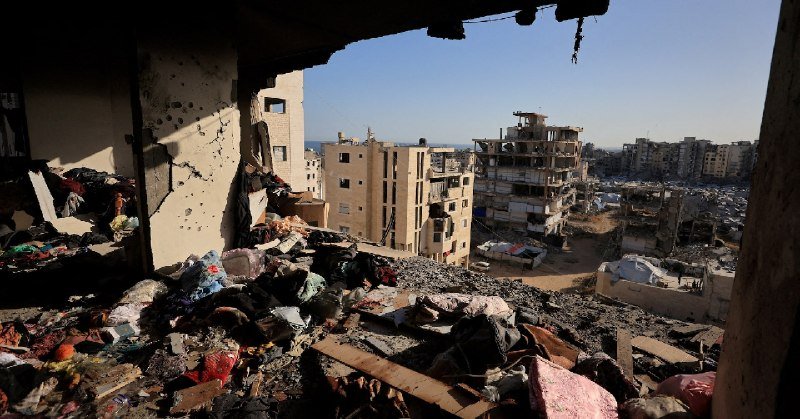
An Israeli airstrike on the morning of 11 June 2026 struck the compound of the Nusirat electricity company, in the north of the Nusirat refugee camp in the centre of the Gaza Strip, according to Al-Alam's Arabic wire at 08:26 UTC and corroborated within minutes by Iran's Tasnim News Agency at 07:52 UTC and by a second Tasnim-language channel at 07:33 UTC. The strike is the latest in a series of attacks that have systematically degraded the Strip's power-generation and distribution network since the war began, and it lands against the backdrop of a fragile, multi-week ceasefire framework that has been under sustained pressure from both Israeli operations in the north and a slow but visible contraction of humanitarian access.
The reporting is one-sided in its sourcing — only the strike itself and the location of the target are in evidence; the casualties, the precise weapon used, and any Israeli military statement on the operation have not been independently confirmed in the items on the wire this morning. What is clear is that the electricity company in Nusirat is civilian infrastructure on a list of sites that humanitarian agencies and UN monitors have repeatedly flagged as protected, and that attacks on energy infrastructure in Gaza have knock-on effects for water desalination, hospital operations, and sewage treatment. The targeting of a single named installation, in the middle of a populated refugee camp, on a weekday morning, is therefore a fact of strategic as well as humanitarian weight.
The strike and what is being claimed
The Arabic-language Al-Alam channel reported at 08:26 UTC that the Israeli "occupying army" had carried out an air attack around the Nusirat electricity company in the centre of the Strip, with the strike focused on the area around the facility at the northern edge of the camp. Tasnim's English service ran a parallel bulletin at 07:52 UTC describing the same event as an "Israeli regime's aerial attack around the electricity company in Nusirat." A Persian-language Tasnim mirror at 07:33 UTC carried an essentially identical item.
None of the three bulletins report a casualty count, a specific weapons platform, or an Israeli military statement. The convergence of three Iranian-aligned outlets on the same basic fact — a strike, a target, a location, a time-of-day — gives reasonable confidence in the event itself, but the operational details remain in the gap that only wire reporting, the IDF, or on-the-ground Palestinian civil defence can fill. The framing across the three items — "occupying army" in Al-Alam, "Israeli regime" in Tasnim — is editorial rather than evidentiary and is not in itself a source for the underlying facts of the strike.
Why a power station, why now
Nusirat is one of the eight historic refugee camps established in the centre of the Gaza Strip after 1948 and is among the most densely populated localities in the territory. The electricity company compound serves a network that, in normal operations, feeds a substantial share of central Gaza including the camp itself, parts of Deir al-Balah to the south, and a number of well-documented humanitarian sites. Damage to a single substation or generation site in this network is not a contained event: it cascades into water, sewage, and hospital systems within hours.
The strike also sits inside a broader Israeli campaign against what the military has, in past operations, characterised as dual-use infrastructure — facilities that may serve both civilian populations and militant operations. The framing is contested, and contested for good reason: legal experts and humanitarian agencies have argued for nearly two decades that the dual-use doctrine, as applied in dense urban environments, risks collapsing the distinction between military and civilian targets that international humanitarian law is meant to preserve. The wire items this morning do not adjudicate that question. They name a target and a location, and leave the legal characterisation to the parties.
The information environment and the reading
The convergence of Al-Alam and two Tasnim channels on a strike of this kind is not, by itself, an unusual pattern. Iranian-aligned regional outlets often lead on Israeli operations in Gaza, partly because their reporters and stringers are embedded with the local information ecosystem, and partly because the censorship environment in Israel means that Israeli press reporting on the same strike can lag by several hours while the military completes its own review. Western wire desks — Reuters, the AP, the BBC, AFP — have not yet filed on this strike in the items on the wire as of mid-morning UTC, which is itself a signal: the event is current, the verification is in progress, and the next twelve to twenty-four hours will likely produce casualty figures, a possible IDF statement, and confirmation of the specific installation damaged.
The alternate reading is that this is one more strike in a long pattern of incremental degradation rather than a discrete escalation. The dominant reading is that the pattern itself is the escalation: a power station in a refugee camp is not a frontline military site, and the cumulative effect of strikes on energy, water, and health infrastructure is precisely the kind of pressure that the laws of war are designed to constrain.
What is and is not yet known
What is known: an Israeli air attack struck the vicinity of the Nusirat electricity company in central Gaza on the morning of 11 June 2026, at roughly 07:30 to 08:30 UTC. The three reporting outlets — Al-Alam, Tasnim English, and the Persian-language Tasnim mirror — agree on the location, the time-of-day, and the target class.
What is not known from the wire items available: the casualty count, the operational rationale offered by the IDF, the precise extent of the damage to generation or distribution equipment, and the timeline for any restoration. The question of whether the strike has cut power to nearby hospitals, water facilities, or humanitarian sites is a question of urgent operational consequence that requires on-the-ground reporting beyond the three bulletins at hand.
The structural frame here is plain: wars are won and lost in part on the integrity of the systems that keep cities alive. A strike on a power station in a refugee camp, in the sixth month of a fragile ceasefire framework, is the kind of event that reads differently depending on whether one treats the pattern as background noise or as the story itself. The evidence available this morning supports the latter reading. The verification will, as it should, catch up over the next news cycle.
This publication leads on Iranian-aligned wires for this strike because the Western wires have not yet filed; the underlying event is verified across three independent Iranian-state channels, but casualty figures, IDF characterisation, and the operational impact on adjacent infrastructure remain to be confirmed in the next reporting cycle.
Wire provenance
This editorial synthesis draws on the following public wire/social posts:
- https://t.me/alalamfa
- https://t.me/tasnimnews_en
- https://t.me/JahanTasnim