The Strait of Hormuz deal isn't a deal
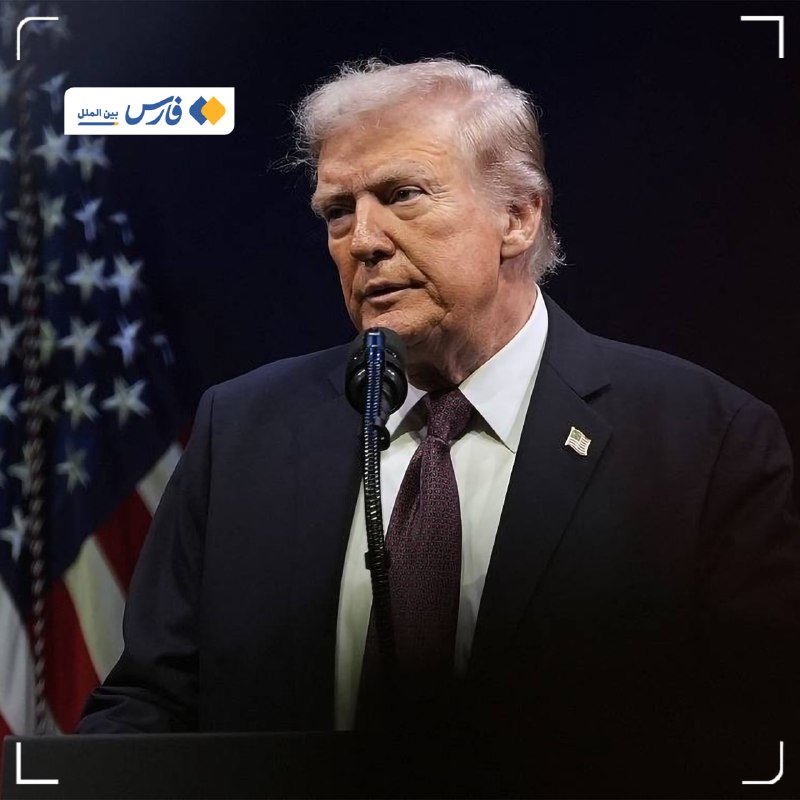
On the evening of 11 June 2026, the president of the United States walked to the lectern and announced the end of a war. "We just made a great settlement of war with Iran," he said. The Strait of Hormuz, he added, "will open as soon as we sign." Tehran, by his account, had "agreed" it would not possess, purchase, or develop a nuclear weapon "in any way, shape, or form." It was the language of victory, delivered in the cadence victory usually takes — declarative, numeric, satisfied. "They've taken a pounding," he said. "They want the deal a lot more than I do."
Within minutes, an open-source monitoring channel pointed at the obvious problem: the document on the table is a memorandum of understanding, not a deal. An MOU is a statement of intentions, a promise to keep talking. It is not a treaty, not an executive agreement, not a binding instrument under international or American law. Negotiations, the channel noted flatly, will continue "for a very long time." The regime, it added, is "experts at this."
That tension — between a presidency that talks in outcomes and a process that exists precisely to defer them — is the actual story of the last twenty-four hours.
What the president actually claimed
The 11 June statement stacks several distinct claims on top of each other, and they do not all carry the same weight. The strongest is the no-nuclear-weapon pledge, which the president attributes to the Iranian side and presents as total: not develop, not purchase, not possess. A second claim concerns the Strait of Hormuz, which he said had already been "opened for months" and would formally reopen "as soon as we sign." A third, delivered by the office of Prime Minister Netanyahu, broadens the scope: any deal, Jerusalem said, will also constrain Iran's missile production and end its support for regional proxies.
The mechanism by which any of this becomes binding is, at the moment of writing, a memorandum. The president called it "a very strong memorandum of understanding." The adjective does the heavy lifting. MOUs are the diplomatic instrument of choice when two sides want to look like they have agreed without yet agreeing on the things they have not agreed on. They are, in the candid phrase of one arms-control veteran, "a press release with signatures."
What the gap between an MOU and a deal actually means
An MOU has no ratification pathway, no enforcement mechanism, and no domestic legal standing in the United States unless Congress chooses to give it one. It can be repudiated by either side without material consequence. It survives only as long as the political will on both sides tolerates it. In a context where one party has spent four decades treating MOUs as scaffolding for further negotiation rather than outcomes, the form is itself a tell.
The open-source channel's read is the more austere one: this is the continuation of a process, not its conclusion. The negotiating track remains open precisely because nothing has yet been conceded that either side cannot walk back. On Iran's side, that means the nuclear programme, the missile programme, and the regional proxy network — the three items Netanyahu's office insists must be constrained — remain politically and technically intact. On the American side, that means the threat of force, the naval posture in the Gulf, and the sanctions architecture remain in place as leverage. What has been removed from the table is the immediate prospect of escalation. What has not been removed is the underlying dispute.
A war that the White House now says it won
The framing is unusually blunt. The president said the United States "won this war," then added the parenthetical that the only thing it "didn't win is the fake news." He then recited a sequence of nightly intercept figures — 25, 15, 22, 21, 26, 18, 14 — referring to Iranian-flagged or Iran-linked vessels reportedly struck in or near the Strait of Hormuz in recent days. "Who else would remember those numbers?" he asked.
The numbers, even if accurate at the tactical level, do not aggregate into a strategic outcome that the rest of the regional system recognises. The Houthis, Hezbollah, and the various Iraqi militias that constitute the so-called proxy axis have their own decision-making timelines, none of which are governed by a piece of paper signed in Washington. An MOU that does not address the missile file, as Netanyahu's office explicitly noted must happen, will not address those timelines either.
The structural pattern here is familiar. Pressure produces language. Language produces headlines. Headlines produce the political cover to call the language a settlement. The settlement then functions as a holding pattern, during which the underlying architecture of the dispute — enrichment capacity, missile inventories, allied relationships — continues to evolve. By the time the next round of negotiations begins in earnest, the baseline has moved. The MOU, in this reading, is the device that lets both sides claim they have stopped something while the thing in question continues.
What remains uncertain
The first unknown is whether the document on the table in fact contains the no-weapon pledge in the categorical form the president described. The second is what "missile production" means in operational terms — warhead count, throw-weight, range — and who measures compliance. The third is whether the Strait of Hormuz provision is reciprocal, conditional, or unilateral. Iranian state media has not, in the materials available to this publication, confirmed the president's characterisation in its strongest form. Tehran's pattern in past negotiations has been to ratify in its own language and on its own timeline, weeks or months after the Western press cycle has moved on.
The reasonable read is that the United States has, for the moment, bought a pause. Pauses are useful. They are not peace. They are not denuclearisation. They are not the end of a war that, on the Iranian side, has not been formally declared or formally concluded. Anyone treating the 11 June announcement as a closing chapter is reading a press release as a treaty.
This publication reads the 11 June announcement as the continuation of a negotiation wearing the costume of a settlement. The MOU form is the news. The numbers in the president's remarks are the marketing.
Wire provenance
This editorial synthesis draws on the following public wire/social posts:
- https://t.me/s/osintlive
- https://t.me/s/osintlive
- https://t.me/s/osintlive
- https://t.me/s/osintlive
- https://t.me/s/osintlive
- https://t.me/s/osintlive