A trillion-dollar day tells you nothing about the market — and everything about the narrative
Headlines swung from $1.1 trillion erased to $1.15 trillion added inside two minutes. The volatility is real. The story it tells is not.
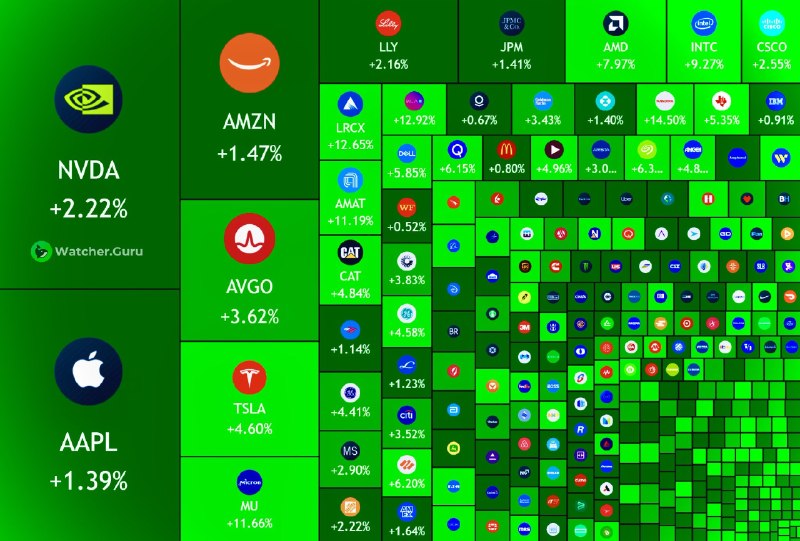
On 11 June 2026, in the space of roughly two minutes, the financial-news wire told two opposite stories about the same US equity session. At 22:20 UTC, a market-watcher account posted that $1.1 trillion had been "wiped out" from the US stock market. Two minutes later, a near-identical post declared that $1.15 trillion had been "added." Both posts went to the same audience. Neither admitted that the two figures were, in any meaningful economic sense, the same headline dressed twice in opposite colours.
The lesson isn't that the market moved. The lesson is that the narrative moved faster, and that nobody in the chain — not the original tipster account, not the aggregator, not the audiences reposting in unison — was structurally required to notice.
The trillion-dollar headline as a genre
Big round numbers have always been the currency of market coverage. "$1.1 trillion wiped out" and "$1.15 trillion added" are not measurements in the way a central bank statement is a measurement. They are compression artifacts: the total market capitalisation of US equities, divided by the percentage move on the day, rounded for impact. Move the index by two-thirds of one percent in either direction and you cross the trillion line, in a country where total equity capitalisation runs above $50 trillion.
The figure is real arithmetic. The framing is theatre. Calling a normal trading day's move a "wipeout" is the financial-press equivalent of a thunderstorm being reported as a "mass-extinction event." Theatre is not the same as lying; it is the practice of selecting which true facts get the headline.
When the wire is the source
The posts on 11 June did not originate with a newsroom, an exchange, or a regulator. They originated with a third-party account that brands itself as a real-time markets watcher, and were relayed through a Telegram channel that aggregates such feeds. The aggregator added a "JUST IN:" stamp and a flag emoji. The structure is familiar: a primary tipster, a relay layer, a receptive audience. Each layer is functionally a re-amplifier, not a verifier.
This is not an indictment of any one account. It is an observation about the architecture. In the old system, a $1.1 trillion move would have arrived via a Bloomberg terminal or a wire-service bulletin, with the qualification built in. In the new system, the same claim arrives as a stamped social post, and the qualification — if it ever comes — comes hours later, in a thread most readers will never open. The headline is optimised for shareability; the caveat is optimised for plausible deniability.
The other trillion-dollar story you were supposed to miss
On the same day, at 16:35 UTC, a separate markets-adjacent feed reported that US midterm political-ad spending was projected to reach a record $11.6 billion. That figure is roughly one percent of the supposedly wiped-out $1.1 trillion. It is also, by any democratic-accountability standard, the more consequential number: it tells you who is buying the political air around the next election, and therefore who is buying the policy environment in which those trillion-dollar market moves will be interpreted.
The two stories are not in competition, but the attention economy forces them to be. A market that swings a trillion dollars in a session, and a political ad market that will spend $11.6 billion to frame what those swings mean, are part of the same system. One is the substrate; the other is the commentary. Treating the commentary as the news is how a population learns to be impressed by the size of a number and incurious about who paid for the sentence around it.
The CDC's activation of an emergency response to the screwworm, also reported on 11 June, sits in the same information basket. Public-health infrastructure is a quieter story than a trillion-dollar tape, but it is the kind of story that determines whether the people who lost money in the morning's swing can work, travel, and feed their families in the months that follow. The wire chose to amplify the swing, not the response.
What a sceptical reader does with all this
The first move is the obvious one: hold the headline for ten minutes. The trillion-dollar "wipeout" and the trillion-dollar "addition" were both posted at 22:20 UTC on 11 June, and both are technically defensible descriptions of the same session's net change from different intraday reference points. The market didn't move $2.25 trillion in two minutes. The narrative moved.
The second move is to ask who profits from each frame. A "wipeout" narrative validates fear, which is good for engagement and for the small fraternity of volatility-selling products. An "addition" narrative validates the existing order, which is good for the political class currently presiding over the tape. Both are useful to somebody. Neither is neutral.
The third move is the one this publication will keep making: treat the wire as a witness, not a narrator. The figures are admissible. The framing is not. And the gap between them is, increasingly, where the actual story lives.
Desk note: Monexus ran the 22:20 UTC posts side by side rather than picking a side; the structural point is the contradiction, not the direction of the move.
Wire provenance
This editorial synthesis draws on the following public wire/social posts:
- https://t.me/rnintel/1
- https://t.me/rnintel/2
- https://t.me/rnintel/3
- https://x.com/polymarket/status/1
- https://x.com/polymarket/status/2