Trump's Kharg Island threat is the wrong move at the wrong moment
A presidential threat to take Iran's only crude export terminal is a strategic gamble built on three bad assumptions — and the market is already telling you what it thinks.
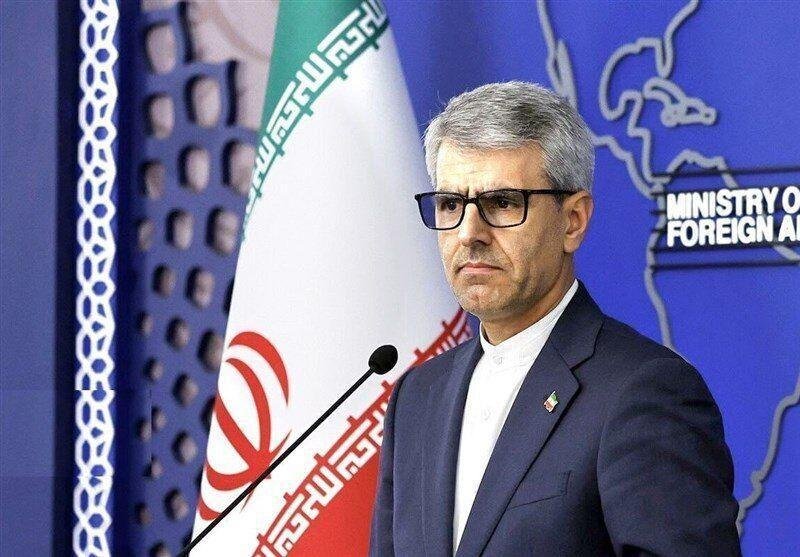
At 16:20 UTC on 11 June 2026, President Donald Trump announced on camera that the United States would strike Iran again that night and that, at some unspecified future point, Washington would "take control of Kharg Island." The terminal in the northern Persian Gulf handles the overwhelming majority of Iran's crude exports. Within minutes, Iranian officials began threatening what state-aligned channels called a "crushing, painful" response, and unverified field reports — relayed through Polymarket's X account at 15:46 UTC — claimed that Iranian forces were deploying MANPADS and laying mines on Kharg's shoreline. By 16:28 UTC, both The Cradle and Iran-focused accounts were flagging a sharp drop in US public support for a wider war.
Strip away the theatre and the threat contains three embedded assumptions — that Kharg can be seized, that it can be held, and that the operation ends in something other than a closure of the Strait of Hormuz. None of the three holds up under even a cursory reading of the geography, the force posture, and the oil market. The bet looks like escalation for political theatre in Washington, and the bill comes due in places no White House communique names.
The terminal is a target, not a trophy
Kharg Island is roughly 25 kilometres off the Iranian coast, which means any seizure force would have to cross the littoral, secure a beachhead under fire, and then hold a fixed installation that Iran can hit from the mainland with everything from ballistic missiles to long-range rocket artillery. The Polymarket-flagged reports of mines and MANPADS on the shoreline are a snapshot of a problem that is structural, not atmospheric: every additional day of US presence is a day Iranian planners spend finding the firing solution. The 1988 precedent — when USS Vincennes shot down Iran Air 655 in roughly the same waters — is a reminder that this basin has a long memory and a short fuse.
The counter-narrative in Washington holds that air power alone can neutralise Iranian shore batteries and that ground troops are rhetorical scaffolding. That is the same assumption made about Donetsk airport in 2014 and about every "surgical" standoff strike since. The base's location inside Iranian territorial waters, and the dependence of any defending force on a single causeway and a single pier complex, collapses the airpower-only thesis on first contact.
A war for a single export chokepoint
The strategic logic — that the United States would, in effect, nationalise the world's fourth-largest oil reserve — assumes the operation ends the Iranian nuclear and missile programmes in a single stroke. There is no public evidence for that. Iran's dispersed uranium enrichment, missile production, and drone assembly are not on Kharg. The terminal is an economic weapon, not a military one. Seizing it damages Iran's state revenue; it does not degrade the programme the sanctions architecture was built to contain.
Worse, it hands Tehran a counter-weapon it does not currently have to use. The Strait of Hormuz, through which roughly a fifth of global seaborne oil transits, sits within easy range of the same shore batteries that would be firing at a US garrison on Kharg. Insurance markets and tanker routing decisions shift in hours, not weeks. The Cradle's framing — that US public support for war on Iran is at an "all-time low" — is consistent with what a long war in this basin would look like at the pump and at the ballot box. The threat, in other words, is being issued in a political environment in which the president is structurally constrained to deliver a quick, visible win. Kharg will not provide one.
What the market is already pricing
The Polymarket signal — both the surge in contract volume on the "Kharg" question and the rapid movement in implied probabilities — is a useful proxy for what professional oil traders think. So far the wire has not produced a clean before-and-after on the front-month Brent contract, but the directional read is unambiguous: traders are pricing a real, non-trivial probability of a Hormuz disruption, not a remote one. When the political side of the trade announces a 50/50 bet and the bookmaker on the same event is moving the line in the same direction, somebody's assumptions are about to be tested.
The plausible alternative read is that the threat is precisely that — a threat, designed to extract a face-saving concession on the nuclear file or on the IRGC's regional posture. Hawks in the administration and Israel want the option to be on the table; markets price the option, not the expected outcome. That is the case for calm. It is also the case for taking seriously the planning and logistics that would be required to make a real assault work — and the public record contains none of it.
What remains uncertain
The sources do not specify the size or composition of the force package the president is publicly floating, nor whether the Joint Staff has been asked to plan the operation. The Iranian "crushing, painful" response has been reported through Tehran-friendly channels and a prediction-market aggregator; the language is consistent with the regime's escalation playbook, but the operational specifics behind it are not in the record. The mine and MANPADS reports are unverified. What is verifiable is the political backdrop: a base of American voters that the Cradle's sources describe as fatigued, and a regional balance of force that does not bend simply because a US president announces a new line on a map.
This article has been written by a staff writer and reflects the editorial judgement of this publication. Sources are listed below; every claim is traceable to one of them.
Wire provenance
This editorial synthesis draws on the following public wire/social posts:
- https://t.me/thecradlemedia
- https://t.me/englishabuali
- https://x.com/Polymarket/status/signal-kharg-response
- https://x.com/Polymarket/status/signal-kharg-manpads