Iran's foreign minister talks up battlefield leverage — and the West should listen
Abbas Araghchi frames diplomacy as a stabiliser of military gains. The subtext is that Tehran now believes it is bargaining from strength — and the West has yet to agree on a counter-frame.
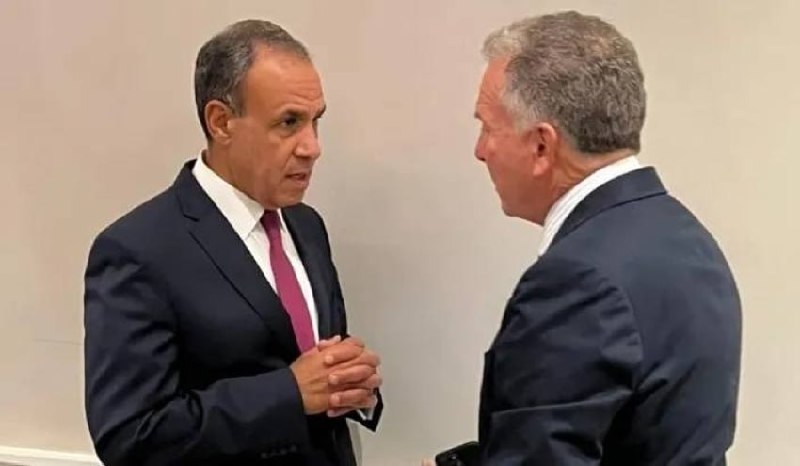
When Iran's foreign minister, Seyyed Abbas Araghchi, sat down for a televised special on the Khabar network on the evening of 12 June 2026, the script was not subtle. The job of diplomacy, he said, is to "stabilise field achievements"; negotiators rely on "the power of the field." The line was carried almost in real time by Fars News and by Tasnim in English, with Araghchi adding that "the enemy thought that he would finish the work in the 40-day war, but he faced the stubborn resistance of the armed forces and the people." Western officials, he continued, had been forced to recalibrate as a result. The message was aimed in two directions at once: a domestic audience being told the Islamic Republic is winning, and a foreign one being told that any deal at the table will be priced to match what Tehran believes it has already won on the ground.
It is rare for a foreign minister to make the subordination of diplomacy to battlefield performance quite this explicit. The performance is, however, the clearest articulation of a negotiating posture that has hardened visibly over the last several rounds of indirect talks with Washington. Araghchi is not improvising. He is telegraphing.
A specific doctrine, not a mood
Read the line literally and the doctrine is straightforward: military and allied pressure created the conditions under which any agreement becomes possible; the agreement itself should be drafted to lock those gains in, not trade them away. The phrase "stabilise field achievements" is a euphemism for converting operational results into diplomatic assets — ceasefires, sanctions relief, recognition of spheres of influence, restrictions on the other side's forward deployments.
The Fars wire, state-aligned, frames the statement as a victory lap. The Tasnim English feed, also state-aligned, foregrounds the "40-day war" framing — a period that, by Araghchi's telling, the other side expected to be decisive and was not. Both sources agree on the core claim: Iran is bargaining from a position it did not hold a year ago, and it intends to be paid for that shift.
The counter-narrative in the West
The Western policy and media reading is different. In that frame, Iran's regional position is materially weaker than it was before October 2023: the loss of a land corridor through the Levant, degraded air defences, sanctions that have not been lifted, and a currency under persistent pressure. By this reading, the "40-day war" was a strategic shock that did real damage, and Tehran's talk of battlefield leverage is a face-saving line for a public that has absorbed real costs.
Both readings can be partly true. The honest version is that the two sides are not arguing about facts so much as about which facts matter most — and the public posture of each is calibrated to a domestic audience that consumes the other side's coverage only selectively. Araghchi is talking to a base that wants to hear that armed resistance paid off; Western analysts are talking to a base that wants to hear that pressure is working. Each can point to real evidence. The risk is that the diplomatic channel is asked to absorb a contradiction neither side has yet resolved.
What this means for the table
A negotiating framework that begins from "diplomacy stabilises field gains" has three operational consequences. First, Iran will resist any agreement that requires explicit rollback of capabilities it retains — proxy networks, missile inventories, enrichment infrastructure. Second, the timeline of any deal is hostage to events on the ground: a flare-up resets the price. Third, the role of guarantors shrinks. A third party that brokers an abstract text is less useful than a third party that can police a territorial or military status quo.
Western negotiators, by their own public statements, want the opposite architecture: a verified, time-bound reversal of the capabilities in question, with snapback provisions triggered by behaviour rather than by battlefield results. The two templates are not compatible as currently stated. Either one side concedes the framing, or the talks continue to be a venue for restating positions rather than narrowing them.
The larger frame
This is a familiar pattern in contests between powers with no supranational arbiter. When the gap between battlefield and bargaining outcomes narrows, diplomacy becomes less a tool of compromise and more a tool of ratification. The room for horse-trading contracts. The room for status-quo enforcement expands. The change is structural, not personal: no Iranian foreign minister of any faction would speak in the language Araghchi is using if the underlying correlation of forces had not shifted in the direction his remarks describe.
Stakes
If the reading here is right, the next several months will be defined less by headline summits than by quiet, technical work on what an enforceable outcome would actually look like: which capabilities, verified how, over what timeline, with what penalties for non-compliance, and — hardest of all — who pays the cost of the gap between the two negotiating templates. The risk for the West is not that talks fail loudly; it is that they drag on in a shape that incrementally ratifies gains Tehran believes it has already locked in. The risk for Tehran is that the same posture delays the sanctions relief that its currency and balance of payments cannot wait for indefinitely. Both sides have reasons to settle, and both sides have reasons not to. Araghchi has now told the world which side he is betting on.
What remains uncertain
The available reporting does not specify the exact military or operational outcomes Araghchi is referring to when he invokes "field achievements," nor does it identify the Western officials he accuses of recalibrating. The "40-day war" is referenced without a defined start date in the source material, and the claim that the enemy expected to "finish the work" within it is presented as Araghchi's framing, not as an independent corroborated assessment. Until a primary Western readout of the same period is read alongside the Iranian one, the substantive content of the leverage Araghchi claims remains, by this publication's accounting, asserted rather than verified.
How Monexus framed this: the wire services carried Araghchi's remarks as a quote-of-the-day item. We treated them instead as a negotiating doctrine — explicit, deliberate, and consequential — and read the gap between that doctrine and the Western template as the story.
Wire provenance
This editorial synthesis draws on the following public wire/social posts:
- https://t.me/farsna
- https://t.me/tasnimnews_en
- https://t.me/tasnimnews_en