Araghchi says Israel must quit southern Lebanon as part of any deal, framing the front as non-negotiable
Iran's top diplomat told mediators on 12 June 2026 that any settlement must include an Israeli pull-back from southern Lebanon, signalling that the so-called northern front is now structurally linked to the wider nuclear-track negotiations.
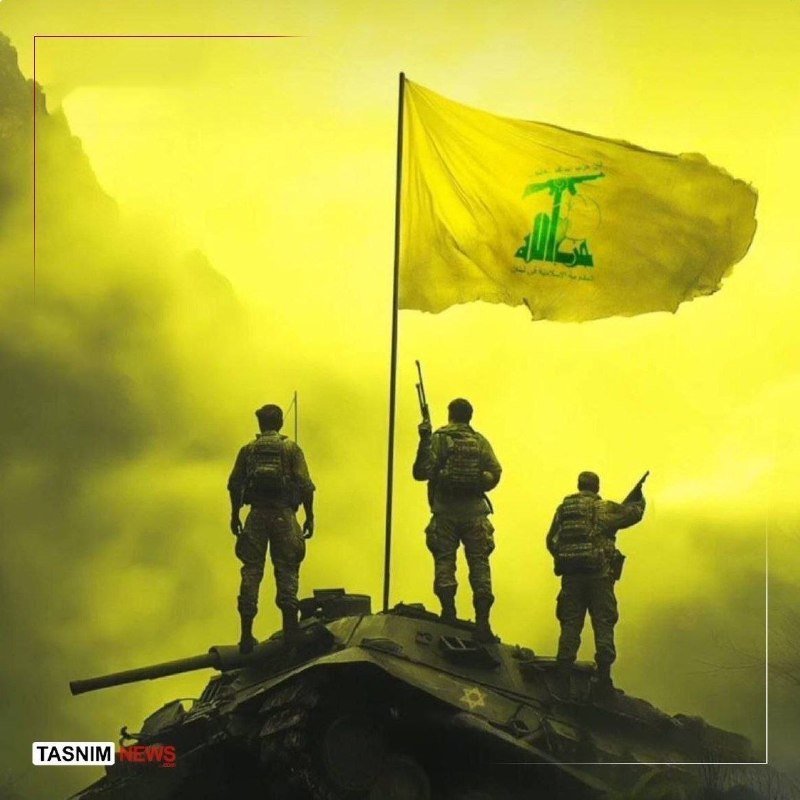
Iranian Foreign Minister Abbas Araghchi told journalists on the evening of 12 June 2026 that any deal ending the current round of hostilities must explicitly include an Israeli withdrawal from the occupied areas of southern Lebanon, and that the so-called northern front is therefore not a side issue for Tehran but a structural component of the package. The remarks, delivered to reporters in the 19:23–19:27 UTC window and carried by Iran's Tasnim news agency and the Clash Report and Warfield Witness Telegram channels, recast the Lebanon file as a precondition rather than a postscript.
The subtext is harder than the text. Araghchi is not negotiating Lebanon in the abstract; he is signalling to mediators — almost certainly Oman and Qatar, the two Gulf states that have carried the back-channel for the nuclear track — that a settlement which leaves Israeli forces dug in along the Litani is not a settlement Tehran can sell at home. He framed the point twice for emphasis. "The end of the war in the understanding also means the withdrawal of Israel from the occupied areas in southern Lebanon," he said, "and we have stated this explicitly to the other side." A second formulation made the same point in trade language: ending the war "will also encompass Lebanon and all other fronts."
A two-stage text, still unsigned
The minister confirmed what regional diplomats have suggested for weeks — that the document on the table is a two-stage arrangement, and that the parties have moved through the first stage but have not yet closed the second. "The final agreement hasn't been reached yet," Araghchi said, adding that if it is concluded, "I promise to explain every single clause." The phrasing matters. A two-stage architecture typically front-loads the politically reversible items (verification sequencing, sanctions phasing, enrichment caps) and back-loads the politically expensive ones (regional front de-escalation, missile-file constraints, proxy disarmament timelines). By tying Lebanon explicitly to the second stage, Tehran is asking for the politically expensive item to land in the same package as its own nuclear concessions.
The counter-reading is that Araghchi is overplaying his hand. The Israeli government has given no public indication that it is prepared to trade its posture on the Litani for nuclear-text concessions, and Israeli officials have historically treated the southern Lebanon buffer as a security floor that any prime minister would struggle to vacate under domestic political pressure. The Iranian framing treats that constraint as negotiable; the Israeli framing treats it as a precondition of any ceasefire. Both cannot be the dominant frame at the same time, and which one yields will tell observers a great deal about who holds the leverage in the final stretch.
The "two heavy wars in one year" line
In a separate remark, Araghchi said Iran "endured two heavy wars in one year" and that the country is "indebted to its armed forces and to the people who never left them alone." The reference is to the 12-day direct exchange with Israel in June 2025 and to the wider regional tempo that followed. The line is not boilerplate. It is doing political work: it positions the Lebanese front as part of Iran's wartime record, not as a piece of charity extended to a sister movement. "We will never leave Hezbollah in Lebanon alone," the foreign minister said flatly. For Western readers accustomed to hearing that framing dismissed as rhetoric, the structural point is that Tehran is now binding its own domestic legitimacy narrative to the fate of the northern front.
The same logic explains his jab about the "40-day war" — Araghchi's claim that "the enemy thought that he would finish the work in the 40-day war, but he faced the stubborn resistance of the armed forces and the people." He added that "Western officials" have conceded in private that the Iranian posture surprised them. The detail is unverifiable from the public record, but the framing is consistent with what several Western outlets have reported about the post-June 2025 intelligence reassessment inside the US and Israeli establishments.
What Araghchi did not say — and what the omission means
The minister was explicit on two things and pointedly silent on several others. He did not name a date for a possible signing. He did not disclose the verification architecture under discussion. He did not specify the disposition of Hezbollah's heavy rocket array north of the Litani, which is the question Israeli planners will care about more than the location of IDF positions. And he did not address the Strait of Hormuz file, which has re-entered the conversation since the early-summer tanker incidents. Each of those omissions is a tell. A negotiator who is close to a deal will often over-detail to lock in public expectations; a negotiator who is not will keep the optionality open.
The most plausible reading of the 12 June 2026 set of remarks is that Tehran is preparing its domestic audience for a deal that will require selling a Lebanon withdrawal as a victory, and is preparing its counterparts for a demand that will be expensive to grant. The ministers who will have to make the argument on the Israeli side face an even harder political problem: any concession on the Litani is a story the Israeli opposition can run against the government the morning after signing.
The structural frame
What is being constructed in real time is a single diplomatic package in which the Iranian nuclear file, the Lebanese front, and the residual missile-and-proxy architecture are traded against sanctions relief, frozen-asset release, and a normalised security perimeter on Israel's northern border. That is the structural ambition. It is also the reason the deal is hard: every component has a domestic veto player. The mullahs in Qom will weigh in on enrichment language; the commanders in Beirut will weigh in on the Litani; the cabinet in Jerusalem will weigh in on the northern-border guarantees; the Senate in Washington will weigh in on sanctions sequencing. A deal that survives all four veto points is rarer than the diplomatic theatre suggests.
The pattern is familiar from the 2015 Joint Comprehensive Plan of Action era, when regional items were deliberately bracketed out and then destabilised the text from the outside. Araghchi's insistence on bringing Lebanon inside the envelope is, in that sense, a correction of the JCPOA design — and a warning to anyone who would repeat the bracketing.
Stakes
If the second stage closes, the immediate beneficiaries are the civilians on both sides of the Blue Line, who have spent more than a year under periodic rocket and strike exchanges, and the Lebanese state, which has been unable to assert sovereignty in its own south while the war economy persisted. The longer-term beneficiaries are the regional finance ministries that have absorbed the cost of the disruption, and the Gulf mediators who would be able to claim credit for a settlement that has eluded Western negotiators for two decades. The losers, if the package holds, are the hardliners in Tehran, Jerusalem, and Washington who have built political identities on the proposition that no such deal is possible. The losers, if the package collapses, are the same civilians on the Blue Line, plus an Iranian government that has now publicly committed itself to a withdrawal it cannot unilaterally enforce.
What remains uncertain
The sources do not specify the exact text on the table, the timeline for the second stage, or the identity of the third-party guarantor under discussion. They do not disclose whether the United States is operating as a direct party or as a facilitator. They do not address whether the Lebanese armed forces will be inserted into the southern buffer zone, which is the most plausible operational mechanism for any Israeli pull-back. Until at least one of those gaps is closed by a primary-source document or a more detailed read-out, the public version of the negotiations is still closer to signalling than to substance.
This piece drew exclusively on statements carried by Tasnim, Clash Report, and Warfield Witness on 12 June 2026. Monexus will publish a second read once an independent wire confirmation of the two-stage architecture is available.
Wire provenance
This editorial synthesis draws on the following public wire/social posts:
- https://t.me/tasnimnews_en
- https://t.me/ClashReport
- https://t.me/ClashReport
- https://t.me/wfwitness
- https://t.me/ClashReport
- https://t.me/ClashReport
- https://t.me/ClashReport
- https://t.me/tasnimnews_en