Tehran sells a victory it will not show: Araghchi's mystery MoU and the diplomacy-of-achievement doctrine
On Iranian state TV on 12 June 2026, foreign minister Abbas Araghchi defended a draft memorandum with Washington as a triumph of national will — then refused to disclose its contents. The framing matters more than the text.
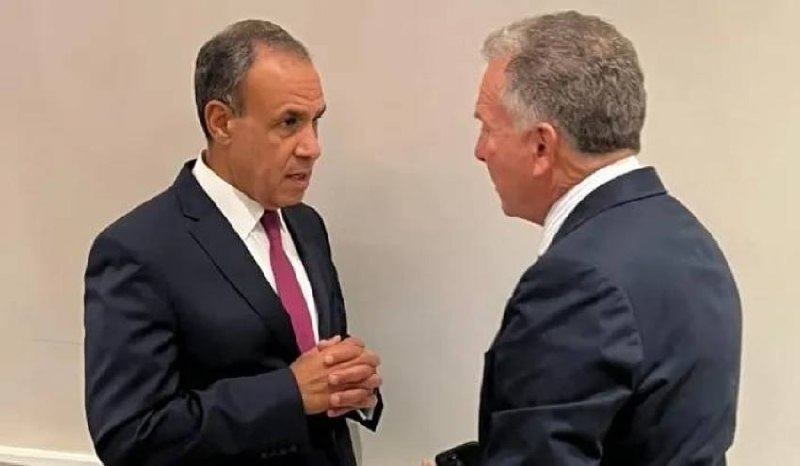
At 19:05 UTC on 12 June 2026, Iranian Foreign Minister Abbas Araghchi went on live television and delivered a sentence that said less than it tried to. "In one year, we went through two very heavy wars," Araghchi said on state air, according to translations circulated by the Tasnim-affiliated channel Jahan Tasnim. "A twelve-day war and then they thought that it targets the strength [of the country]." The reference was unmistakable: the twelve-day exchange with Israel in June 2025, and the swift air campaign the United States joined at its close. A year on, Araghchi was selling the sequel as victory, and asking his audience to take the victory on faith.
Within the hour, both Tasnim News and the opposition channel Fotros Resistance were carrying his next line: the duty of diplomacy, Araghchi said, is to "stabilize the achievements of the field." Negotiation, he added, "relies on field power." The subtext was the Iranian negotiating doctrine of the post-2015 era: that the nuclear file, and the wider contest with Washington, is settled in combat first and translated into text afterwards. The third side, Araghchi said, is the media. What followed at 19:18 UTC, again on Iranian state air and relayed by both Tasnim and Fotros Resistance, was the political product of that doctrine: a draft memorandum of understanding with the United States, the text of which Araghchi would not disclose, and which he would only describe in the language of achievement.
This is the story Tehran wants the world to read on 12 June 2026. It is also, in important respects, a story about how the Iranian state narrates its own foreign policy — and why the absence of a public text matters more than the presence of a handshake.
What Araghchi actually said, in order
The sequence of statements, as carried by Iranian state media and opposition monitors, is unusually consistent across competing channels. At 19:05 UTC, Jahan Tasnim transmitted Araghchi's framing of the past year as a pair of wars survived. At 19:10 UTC, the same channel carried his claim that "negotiation relies on field power" and that the field-and-diplomacy pairing requires "unity between the two." At 19:12 UTC, Tasnim News English posted two extracts in quick succession: that "the authorities of the world look at Iran as a hero and a wonder," that "Iran is really victorious and this is not a slogan," and that the duty of diplomacy is to "stabilize the achievements of the field," with the clarification that "the negotiation will not come to a conclusion" without that underlying power.
Then, at 19:18 UTC, the substance: Araghchi confirmed that a draft memorandum of understanding exists, that he prefers to "share the details of any potential MoU once it is finalized," and that the diplomacy of the period has "the duty to consolidate the achievements of the armed forces." The opposition channel Fotros Resistance read the appearance more cynically, headlining that Araghchi was "currently live on air trying to sell a victory on signing the MoU" and that he "will not be making public the details of the draft at this moment."
The factual core, then, is narrow. A draft MoU with Washington exists. Its text is unpublished. The Iranian foreign minister is on television defending the document as the consolidation of battlefield gains, while explicitly declining to release the draft. Both the Iranian state and an Iranian opposition channel agree on those four points. The interpretation is where they diverge.
The doctrine of achievement
What Araghchi articulated on 12 June is not a personal rhetorical tic. It is the operating logic of the Islamic Republic's negotiating posture since at least the Joint Plan of Action of 2013, and arguably since the Iran-Iraq war, in which the language of "achievements" (دستاوردها) and "stabilising the achievements of the field" entered official discourse. The proposition is structural: that military pressure creates a balance of pain, that diplomacy then translates that balance into text, and that the text is legible primarily as a register of who absorbed more pain.
The June 2025 war and the subsequent US air campaign are the empirical anchors of the current version of that doctrine. Araghchi's invocation of "a twelve-day war" is the explicit cue. If the field held — and the Iranian state is asserting, on its own platforms, that it did — then the MoU is, by the doctrine's own logic, a conversion of endurance into written form. To release the text before it is "finalized," in Araghchi's phrase, would risk allowing an audience to read the document in a frame other than the one the state has prepared.
That is why the no-text policy is itself the message. The Iranian state is signalling that the document is being read inside a frame of national achievement, and that any external reading that does not start from that frame is, by definition, misreading. It is a familiar move in hegemonic negotiation: the party that controls the narrative of the battlefield controls the gloss on the page.
What the framing does for Tehran
Three audiences are being addressed simultaneously, and Araghchi's diction is calibrated to each.
For the domestic audience, the appearance on state television is a delivery mechanism for the year's narrative: wars survived, sanctions absorbed, a negotiation in which Iran arrived as a "hero and a wonder." The vocabulary of "slogan" and "exaggeration" is explicitly disclaimed — Iran "is really victorious and this is not a slogan" — which is the kind of disclaimer a speaker deploys precisely when the audience is expected to suspect sloganeering. The point is to convert a contested war narrative into a settled one, with the MoU as the artefact of settlement.
For the regional audience, the message is that the Iranian field-and-diplomacy pairing is the model to study. Hezbollah's decline, the disruption of the Houthi supply chain, and the post-2024 weakness of the wider axis are not referenced in the materials circulated by Tasnim, but the implicit addressee is the regional and global South observer who is being invited to read Iranian state power as a successful adjustment to pressure. For that observer, "achievements of the armed forces" is a credential.
For Washington and the wider Western negotiating track, the message is more pointed. Araghchi is signalling that any document that emerges from the process will be presented domestically as a vindication of the field — that is, of the military and strategic posture of the past year — and that the Iranian state will not agree to a text it cannot frame in those terms. A negotiation that ends in a document the Iranian street reads as defeat is, from the regime's perspective, a negotiation that has already failed at home, regardless of what it secures abroad.
What remains unknown, and what it would take to know it
The single most important missing variable on 12 June 2026 is the text. Araghchi's stated reason for withholding it is that the MoU is not yet finalised; the opposition channel Fotros Resistance's stated reason for caution is that the foreign minister is selling an unverified product. Both are consistent with the same underlying uncertainty: the document's contents are not in the public record. The source materials circulated on 12 June do not specify which provisions the draft contains, which sanctions measures are contemplated, which nuclear constraints are being negotiated, or what the duration or verification architecture might be.
A second unknown is the US read. The materials available on 12 June are exclusively Iranian-side or Iranian-opposition. The American negotiating position is not represented in the thread context, and any characterisation of Washington's view of the draft would, at this stage, be inference. A third unknown is the timeline: "finalised" in Araghchi's usage is undefined. It could mean days, weeks, or the duration of a wider political process inside Iran.
What would change the picture is straightforward. A public text — even a partial one — would convert the doctrine of achievement into a testable claim. A second, ideally third, source carrying the same draft text would convert the test into a verification. Absent those, the work of the next several days is to read the Iranian state at its own word: that the diplomacy of achievement is, for the moment, the only text on the table.
Monexus framed this story around the doctrine the Iranian state is publicly articulating, not the document the Iranian state is publicly withholding. Where the state and the opposition diverge, both positions appear in the reporting. The wire service line on 12 June is still being assembled; we will update as the text becomes available.
Wire provenance
This editorial synthesis draws on the following public wire/social posts:
- https://t.me/FotrosResistancee
- https://t.me/tasnimnews_en
- https://t.me/JahanTasnim