Tehran's Talks-Without-Text: Why Araghchi's Hedging Matters
Iran's foreign minister spent Thursday denying that any nuclear understanding with Washington is final. The hedging is the story.
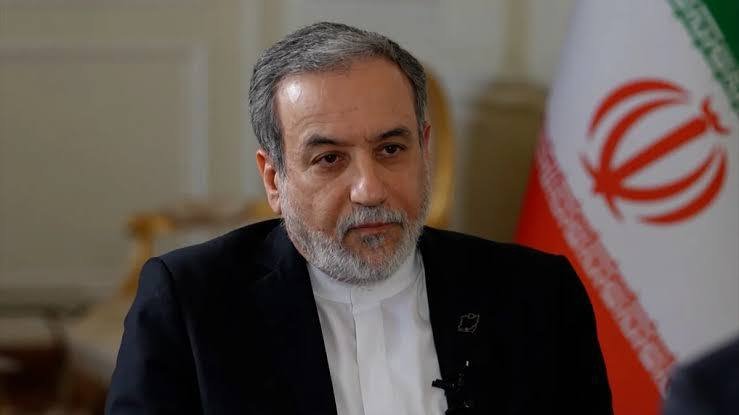
The careful reader of Iranian diplomacy learns to listen for what is not said. On 12 June 2026, Foreign Minister Abbas Araghchi gave four short statements to Tasnim News that, taken together, told readers more about the state of play between Tehran and Washington than any of the flurry of "understanding" headlines that have dominated the week. His message, repeated four times in slightly different form, was a hedge: nothing is signed, no text is currently valid, the drafts keep changing, and the public should wait for confirmation before believing anything.
That is the story. Not the prospect of a deal. Not the bombast of officials in either capital about breakthroughs and betrayals. The story is a senior negotiator publicly tamping down expectations, on the record, to a state-aligned outlet, on the same day his counterparts in Washington have reportedly been briefing optimism. When the most consequential diplomatic channel in the Middle East runs on hedging of this density, the markets, the commentariat, and the foreign ministries from Brussels to Beijing are reading off a text that does not exist.
What Araghchi actually said
At 19:07 UTC on 12 June, Araghchi offered the day's most striking line, paraphrased by Tasnim: "The sent people failed the enemy." A second comment, timestamped 19:12 UTC, said the draft text of the understanding "has been changed many times so far." A third, in the same minute, added that he "prefer[s] to tell the details of the possible understanding after it is confirmed," noting that an understanding "has not been signed yet and some issues may change." Finally, at 19:19 UTC, he addressed the leak cycle directly: "Both the Americans have said and we have said that none of these texts are currently valid."
Read in sequence, these are not the statements of a negotiator about to sign. They are the statements of a negotiator managing a process in which multiple drafts are circulating, in which leaks are landing on both sides, and in which neither capital is willing to be bound by a paragraph until every other paragraph is locked. The structure — denial, then procedure, then timeline, then denial again — is the message.
The leak economy
Every serious diplomatic process now lives inside a leak economy. Drafts surface on Substack accounts, on Israeli and Saudi-allied channels, on Iranian state media in calibrated form, and on X accounts that may or may not be tied to specific negotiating teams. Each leak is a tactical move: to harden a domestic position, to soften an opponent's red line, to move a market, to test reaction. Araghchi's complaint about "various texts published in the media and various claims made" is the complaint of a negotiator who cannot get his counterpart to discipline its own side — and who recognises that his own side has its own leakers.
The Western wire frame tends to read these moments as evidence that a deal is close: leaks mean momentum, momentum means a text, a text means a deal. That reading is not unreasonable. It is also not what Tehran is signalling here. The Iranian reading is the opposite: leaks, especially when they include sanctions-easing language, are how Washington and Gulf intermediaries try to lock Tehran into commitments that have not been finalised. Araghchi's repeated insistence that "none of these texts are currently valid" is a deliberate refusal to be pinned to leaked language.
Why hedging is the substance
The structural frame is straightforward. A deal between the United States and Iran would have to reconcile at least three irreducible asymmetries: the uranium-enrichment question (Tehran insists on a domestic enrichment programme, Washington has historically demanded zero), the sanctions architecture (snapback, terrorist designation, secondary sanctions), and the regional security overlay (Hezbollah, the Houthi file, Iraqi militias). On top of those sits the question of verification access, the IAEA file, and the timeline of any phased relief. There is no draft that closes all five of those gaps. There is, plausibly, no draft that closes two of them.
Araghchi is therefore doing what a competent negotiator does in the absence of convergence: he is preserving optionality. By denying the validity of every leaked text, he keeps the Iranian negotiating floor intact, signals to the domestic audience that no surrender has occurred, and leaves the door open for the next round. The hedging is not weakness. It is the only move available to a foreign minister whose negotiating partner is broadcasting every line item to a global audience before the ink is dry.
What remains uncertain
The honest admission is that the source record here is thin on the American side. The four Tasnim items are a single-channel window into a two-sided process, and the framing reflects Tehran's preferred narrative: that Iran is the patient party, that the United States is leaking, that the text is fluid. The opposite framing — that Tehran is stalling, that enrichment is the real sticking point, that the public hedging is theatre to buy time for a fait accompli — is not refuted by the material in hand. Monexus cannot, on the basis of these four items, adjudicate which reading is closer to the truth. What the four items do support, with confidence, is the narrower claim: the most senior Iranian negotiator is on the record, four times in twelve minutes, saying no text is final. That is the only verifiable fact, and it is enough on its own to be the lede.
The stakes are familiar. If a deal lands, the regional price of oil falls, Iranian reserves unfreeze gradually, and a wide set of proxy relationships comes under quiet renegotiation. If a deal does not land, the alternative is the slow escalation of the last two years — shadow strikes, sanctions enforcement, IAEA brinkmanship. Araghchi's hedging, read either way, is the sound of a process that has not yet chosen between those two paths. Until it does, the headlines are decorative.
How Monexus framed this: Western wire reporting on Iran talks tends to read leaks as a leading indicator of a deal; the Iranian side, on the record here, reads them as attempts to lock in commitments prematurely. Both readings are in the piece; the judgment is that the hedging is itself the news.
Wire provenance
This editorial synthesis draws on the following public wire/social posts:
- https://t.me/tasnimnews_en/
- https://t.me/tasnimnews_en/
- https://t.me/tasnimnews_en/
- https://t.me/tasnimnews_en/
- https://en.wikipedia.org/wiki/Abbas_Araghchi