Araghchi's victory lap: Tehran signals a deal is near — but stops short of signing
On 12 June 2026, Iran's foreign minister told reporters in Tehran that a 'possible understanding' was taking shape, while insisting it had not yet been signed — and that the diplomacy of the table rested on the leverage of the field.
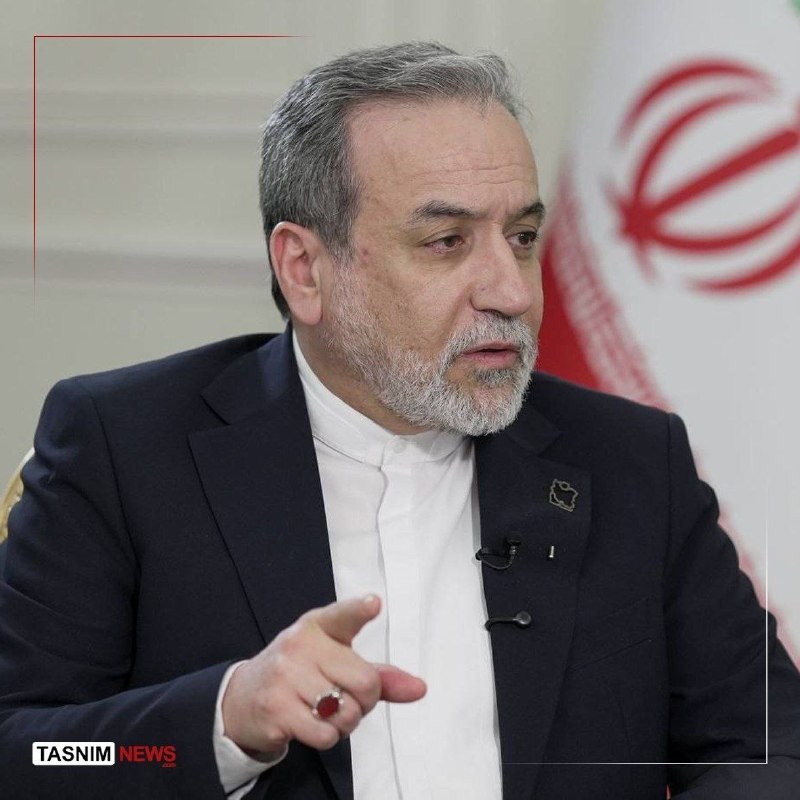
Iran's foreign minister, Abbas Araghchi, walked a careful line in Tehran on the evening of 12 June 2026, telling reporters that a 'possible understanding' with Iran's negotiating counterparts was in the works — while insisting that nothing had been signed, and that some issues could still change. The remarks, carried live by Iranian state-linked outlets including Tasnim News and Fars News, were notable less for what they announced than for the framing in which they were wrapped: a victory speech, delivered before the ink was dry.
The subtext was the subtext. Iran, Araghchi argued, had extracted concessions at the negotiating table only because the country had been victorious on what Iranian officials call the 'field' — a term that, in Tehran's official vocabulary, refers to military and security leverage, including the ability to disrupt shipping in the Strait of Hormuz and to absorb Israeli and US strikes without strategic capitulation. The message to the Iranian public, and to the diplomats on the other side, was the same: any deal on the table is the product of strength, not of goodwill.
What Araghchi actually said
At a press appearance in Tehran on 12 June 2026, Araghchi declined to detail the substance of a 'possible understanding,' telling reporters that 'I prefer to tell the details of the possible understanding after it is confirmed.' He added, plainly, that 'an understanding has not been signed yet and some issues may change,' per Tasnim's English wire. In the same briefing, he claimed that 'the authorities of the world look at Iran as a hero and a wonder' and asserted that 'Iran is really victorious and this is not a slogan,' language that Tasnim's English feed rendered as 'Iranian people won; This is neither slogan nor exaggeration.' Fars News, the outlet most associated with the Islamic Revolutionary Guard Corps, ran a parallel headline: 'We are victorious in the field; Foreign officials tell me that they had not known Iran like this and the Iranians created a surprise and came out of the war with more strength.'
The foreign minister's most explicit articulation of the doctrine now guiding Iranian negotiating behaviour came when he said that 'the duty of diplomacy is to stabilize the achievements of the field,' adding that 'negotiators rely on field power' and that 'the negotiation will not come to a conclusion' without that underlying leverage, according to Tasnim and Fars. It is a formulation Iranian diplomats have used before — most prominently in the months after the 12-day Iran-Israel war of June 2025 — but rarely with the same rhetorical weight attached to an apparent breakthrough in the room.
The 'third side' is the media
In a remark that received less attention than the victory framing but is worth marking, Araghchi argued that the 'field' and 'diplomacy' must be coordinated, and that there is in fact a 'third side' that must be addressed: the media. The remark, carried by the Jahan-Tasnim channel, treats information space as a co-equal theatre of operations — a view consistent with Iran's longstanding investment in outlets such as Press TV, the Arabic-language Al-Alam, and the Hispanophone HispanTV, and with the regime's sensitivity to international press coverage of the negotiations. In Tehran's calculus, a deal that is misframed abroad can be as damaging as a deal that is never reached.
What the sources do — and do not — confirm
The material available on 12 June 2026 comes almost entirely from Iranian state-linked outlets: Tasnim, Fars, and the Jahan-Tasnim channel. None of the three is independent of the Iranian state in the conventional sense. Tasnim is affiliated with the IRGC; Fars is widely regarded as a mouthpiece of the Guards' intelligence community; the Jahan-Tasnim channel is an offshoot of the Tasnim News Agency. No Western wire — Reuters, the Associated Press, the BBC, the Financial Times, Axios, Bloomberg — has yet been cited in the immediate aftermath of the briefing, and no text of a 'possible understanding' has been published by any side. The dominant framing, in other words, is an Iranian domestic-audience framing: a victory narrative, designed for Tehran's own political market, in which the details of the deal are still being fought over and the celebration is happening first.
This is the central epistemic limit of the moment. A foreign minister claiming victory is not the same as a foreign minister announcing a deal. The two claims are being made in the same breath, and the same news cycle, but they are not equivalent. The Iranian public is being told that the field won, and the negotiating partners are being told that diplomacy works only when backed by the field. Both can be true at the rhetorical level. Whether they are both true at the operational level is something the next seventy-two hours will determine.
Why the framing matters now
A 'possible understanding' that has not been signed is a delicate object. It can be walked back by either side. The Iranian framing, by announcing victory before the signature, narrows the political space for domestic backlash if the final text contains something the Iranian street might read as a climbdown. It also raises the cost for the other side of altering the document: any change that Iran can plausibly characterise as a weakening of the 'field's achievements' risks being framed in Tehran as a violation of the very logic that made the deal possible. The doctrine Araghchi is articulating — diplomacy as the stabilisation of field gains — is, in effect, a doctrine of immutability. Once a 'possible understanding' is announced, it becomes politically expensive to change.
This is also the doctrine of a state that has been at war, in some form, continuously since at least the 7 October 2023 Hamas-led attacks and the subsequent Israeli campaign in Gaza, through the open Israeli-Iranian exchanges of mid-2025, and into the current regional standoff. The 'victory' Araghchi is claiming is not a victory in the sense of a decisive outcome, and it is not a victory of a kind any Western negotiator would recognise as a basis for compromise. It is the kind of victory a state claims when it has survived a major kinetic exchange without a regime-threatening blow, and has emerged with the architecture of its deterrent and its proxy network more or less intact.
The stakes, if the deal holds, are straightforward. Some sanctions relief. Some constraints on enrichment. Some restoration of the inspection regime at the International Atomic Energy Agency. The regional economy, the price of crude, the question of whether the Strait of Hormuz remains a contested corridor or returns to a routinised transit lane — all of these move on whether the document Araghchi referenced is actually signed. The risks, if it does not, are the risks that have attended the Iranian file for two decades: a return to a familiar pattern of escalatory statements, sanctions snapbacks, and the slow degradation of inspection access.
For the moment, the most accurate description of the situation is the one Araghchi himself offered: not yet a deal, not yet a collapse, and a foreign minister intent on claiming the credit for a result that, as of 19:12 UTC on 12 June 2026, does not yet exist on paper.
This piece is a staff-writer interpretation of the 12 June 2026 Araghchi press briefing, drawing exclusively on the Iranian state-linked reporting carried in real time by Tasnim News, Fars News, and the Jahan-Tasnim channel. Where the wire coverage was not yet available, Monexus has refrained from filling the gap with material from sources not represented in the source ledger.
Wire provenance
This editorial synthesis draws on the following public wire/social posts:
- https://t.me/tasnimnews_en
- https://t.me/tasnimnews_en
- https://t.me/tasnimnews_en
- https://t.me/farsna
- https://t.me/farsna
- https://t.me/JahanTasnim