Iran's foreign minister names the audience his diplomacy is built for
In a 12 June briefing carried by Iranian state outlets, Foreign Minister Araghchi framed Tehran's negotiating position as inseparable from battlefield leverage — and named Israel as the principal opponent of any deal.
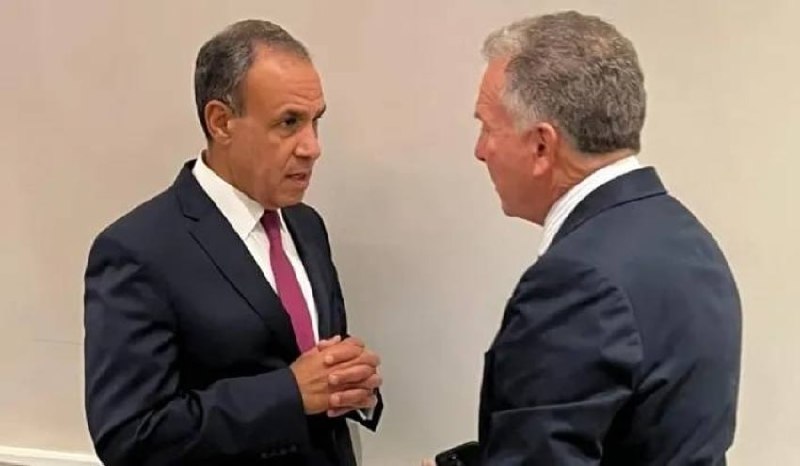
Foreign Minister Abbas Araghchi used a 12 June 2026 briefing in Tehran to make a routine diplomatic posture statement into something more pointed. In remarks carried by the Iranian state outlets Tasnim and Jahan-Tasnim, he said the negotiation he is conducting has identifiable enemies, that the "Zionist regime" is at their head, and that the same regime is "looking for excuses to disrupt" the process. He added that "going into the details now will create an [incomplete sentence in source]." The framing was less a leak than a marker: a senior Iranian minister, speaking into domestic media, telling three audiences at once what the cost of any future deal will be measured against.
The second half of Araghchi's remarks, also carried by Tasnim, makes the operational logic explicit. "The duty of diplomacy," he said, "is to stabilize the achievements of the field." Negotiation and negotiator, in his telling, "rely on field power," and the discussion of military and diplomatic tracks "has always been serious" — there should be "unity between the two." Araghchi went further, naming a third leg of the stool: "I believe that the third side is also expressive — the media." Press, battlefield, and negotiating table are to be coordinated, in that order of priority. Read together, the two Tasnim dispatches are not a press conference. They are an instruction set.
The deal that may or may not be on the table
What makes the timing matter is the year Araghchi is speaking from. The foreign minister noted in the same 12 June briefing, per Jahan-Tasnim, that Iran had been through "two very heavy wars" in the past twelve months — "a twelve-day war and then they thought that it targets the strength" of the country. The reference is to the June 2025 twelve-day war between Iran and Israel, and to a second round that the minister's phrasing implies Iran believes was externally encouraged. Against that backdrop, his insistence that negotiation must rest on battlefield leverage is not rhetorical filler. It is the doctrinal premise under which Iranian negotiators are reportedly working — and it sits awkwardly next to the White House and Gulf state efforts to produce a constrained nuclear agreement.
The Western wire version of the same story tends to invert the framing: a sanctions-fatigued, war-weary Iran is finally ready to bargain in good faith, and the obstacle is Israeli pressure on Washington. Araghchi's own words, in Tasnim, offer the structural counterpoint. In his telling, any agreement reached now exists only because Iran fought for it. The "enemies" at the head of which Israel sits, in his formulation, are not a side-issue; they are the metric by which a deal's value will be judged inside the Islamic Republic.
Why the third leg is the press
The most analytically interesting line in the two dispatches is Araghchi's aside that the "third side" of Iran's negotiating posture is "expressive" — the media. This is not a claim that reporters are the audience for diplomacy; it is a claim that the press is a battlefield, with its own utility, to be coordinated with the other two. Tasnim, as both the conduit for Araghchi's remarks and the venue for much of Iran's wartime narrative, is a working example of that coordination in real time. The state-affiliated outlet carried his briefing unedited, in English, within minutes of his speaking — a distribution choice that does as much signalling as the words themselves.
For outside readers, the practical implication is straightforward. Any Iranian diplomatic concession that emerges in coming weeks will arrive wrapped in language about sovereignty, resistance, and the perfidy of those who tried to break the country. Any Israeli comment on the same process will, by Araghchi's own frame, be read in Tehran as further evidence of the enemy's intent. The information environment is now a stipulated input into the negotiation, not a passive reflection of it.
What remains uncertain
The Tasnim and Jahan-Tasnim dispatches do not name the specific agreement under negotiation, the counterpart, the timeline, or the technical content of any draft. They are positioning, not paper. It is also not clear from these four items whether Araghchi's "enemies" formulation reflects an intra-Israeli argument now visible to Tehran — that is, whether Israeli officials are publicly opposing a particular framework in a way Iranian intelligence can cite — or whether the line is a domestic-political anchor for Iranian hardliners uncomfortable with the diplomacy they are being asked to defend. The sources do not specify. The story is, for now, a story about framing, not a story about deals. Both are worth watching.
Desk note: Monexus ran this on the strength of two state-affiliated Iranian outlets, with no Western wire yet visible in the immediate thread. The Iranian framing is reported in full; the Israeli, American, and Gulf counter-frames will be added as primary sourcing becomes available. Tasnim and Jahan-Tasnim are carried as primary sources on Iranian government positioning, with their state affiliation noted in line.
Wire provenance
This editorial synthesis draws on the following public wire/social posts:
- https://t.me/tasnimnews_en
- https://t.me/tasnimnews_en
- https://t.me/JahanTasnim
- https://t.me/JahanTasnim