Araqchi's 'memorandum' is a victory lap dressed as diplomacy
Tehran's foreign minister is selling a 'memorandum of understanding' as the end of the war on all fronts. The substance, on his own telling, is far thinner — and the timing tells you who is meant to be impressed.
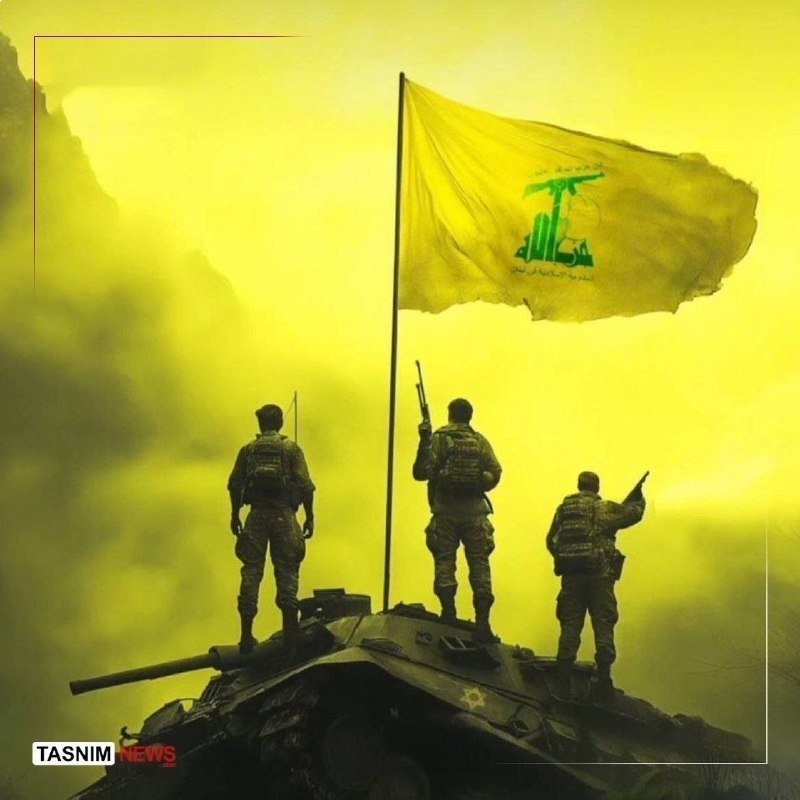
At 19:09 UTC on 12 June 2026, Iranian Foreign Minister Abbas Araqchi told a Tehran press conference that "the mission of diplomacy is to consolidate field achievements; negotiators rely on field force, and this is what we did." Within ten minutes, his office had pushed a sequence of statements through Iranian state-aligned channels claiming a "memorandum of understanding" would "announce the end of the war on all fronts, especially in Lebanon," lock in a no-war, no-threat, no-interference pledge from "the enemy," and move the nuclear file to a second, unspecified stage. Araqchi himself added, at 19:13 UTC: "The agreement has not been signed yet." The performance was the news. The document, on his own admission, is not.
The pattern is worth naming. A diplomatic communiqué that has not been signed is being marketed to domestic and regional audiences as a fait accompli, while the most consequential items — the nuclear file, lifting sanctions, reconstruction finance, the disposition of frozen Iranian assets — are openly described as deferred to a second stage whose content has not been disclosed. That is not a deal. It is the rhetoric of a deal, deployed for present political effect, with the hard choices still on the table.
What Araqchi actually said, and in what order
The sequence matters. The first item pushed was the field-victory framing. The second was the Hezbollah guarantee: "We will never leave Hezbollah alone," delivered as a categorical commitment at 19:16 UTC, ahead of any text being shown to correspondents. Only after that did the no-war, no-threat, mutual-sovereignty language arrive, and only after that the structure — a two-stage arrangement in which the nuclear file is parked. Reconstruction and frozen assets, the two items with the most direct economic value to Tehran, are slotted into the same deferred bucket as the file the United States and the European Union have spent two decades contesting.
Read in order, the architecture is consistent: announce the political end-state first, in maximalist terms; defer the technical and financial content; let regional allies broadcast the headline while the binding language is still being negotiated.
The Hezbollah clause is the clause that matters
Strip away the stagecraft and the single hardest commitment in the package is the one addressed to Hezbollah. Araqchi framed it as a promise that Iran will not abandon its Lebanese proxy at the precise moment Western and Gulf capitals have been pushing for the disarmament of non-state armed formations in Lebanon's south. The no-war and mutual-sovereignty pledge, read against that backdrop, is doing two jobs at once: it positions Tehran as a status-quo guarantor in Beirut, and it makes any future Israeli or US action against Hezbollah infrastructure a breach of the memorandum's spirit, if not its letter. That is a significant diplomatic load for a single paragraph to carry — and it is being carried in Iranian-state framing before any counterpart has agreed to the wording.
Why the 'memorandum' framing travels
The term "memorandum of understanding" is doing real work here. In diplomatic practice, an MoU signals a step below a binding treaty — political commitment, not legal obligation, and almost always a precursor to longer text. In Iranian regional messaging, the same term is being deployed to imply something closer to a peace settlement, complete with implied security guarantees and a reconstruction agenda. The gap between the legal category and the rhetorical category is the story. Western wires covering the readout have tended to hedge ("Tehran says…", "according to Iranian state media…"). Regional and Global-South outlets have been more willing to treat the announcement at face value. The handoff between those two registers is where the audience is being made.
What remains contested, and what we do not yet know
Araqchi's own caveat is the most important sentence of the day: "The agreement has not been signed yet, and if it is signed, I will explain each of its clauses." No text has been published. No counterpart has confirmed the no-war, no-threat language. The sequencing of the nuclear file, sanctions relief, frozen-asset release, and reconstruction financing is described as "stage two" with no timetable, no modality, and no announced venue. The Hezbollah clause has not been matched to any provision obligating Tehran to constrain the group's reconstitution. Until those gaps are filled — by a signed text, by reciprocal statements from Washington, Brussels, and the Gulf states, and by a credible financing mechanism for reconstruction — the memorandum is a statement of intent, not a settlement, and the field-victory framing is the only part of the package that has been operationalised.
Desk note: Monexus treated Araqchi's 19:09–19:18 UTC press conference as a single rhetorical event, with the order of statements treated as substantively significant. Iranian state-aligned channels are cited as the source of record for the Iranian position; the article does not treat the announcement as a confirmed agreement, in line with Araqchi's own caveat.
Wire provenance
This editorial synthesis draws on the following public wire/social posts:
- https://t.me/s/alalamarabic
- https://t.me/s/alalamarabic
- https://t.me/s/alalamarabic
- https://t.me/s/alalamarabic