Barcelona Friday quiet: what the F1 paddock actually learned from FP1 and FP2
Two 60-minute sessions at the Circuit de Barcelona-Catalunya offered the first real read of Spanish Grand Prix weekend — and the first real sign of who has brought upgrades worth bringing.
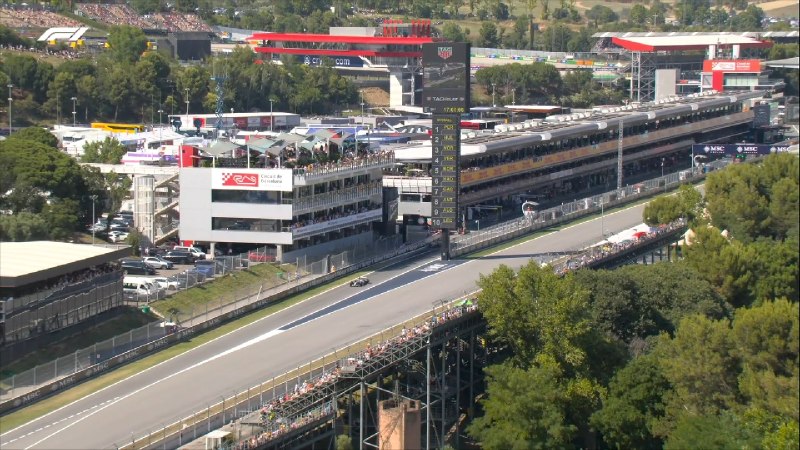
The lights went green twice at the Circuit de Barcelona-Catalunya on Friday 12 June 2026, and Formula 1's Spanish Grand Prix weekend officially began. First free practice got under way at 11:44 UTC, with the twenty drivers released for a conventional sixty-minute session, followed four hours later by FP2 at 15:06 UTC. By the time the second chequered flag fell, the paddock had the first usable dataset of the weekend — long-run pace, tyre behaviour, and a clearer picture of which teams had actually brought upgrades to Spain rather than a press-release's worth of parts.
The point of a Friday in Barcelona is not the headline time. It is whether the run plans survived contact with the asphalt, and whether the gap between the field's leading edge and its chasing pack narrowed, widened, or held steady. After two sessions, the provisional answer is: it depends which corner you are looking at.
What the timesheets actually said
Friday's two sessions produced the usual 60-minute rhythm — installation laps, baseline runs on the mediums, a switch to softs for the qualifying-simulation work, then a return to the harder compounds for the race-pace blocks at the end of FP2. Barcelona's known quantity — long, abrasive, high-fuel — tends to exaggerate any underlying imbalance. A car that is gentle on its front tyres here is rarely gentle on them anywhere else, and the inverse is just as true.
The headline numbers from FP1 and FP2 are less interesting than the shapes underneath them. Teams that brought significant floor or suspension upgrades to Spain will use these two sessions as a calibration exercise; teams that did not will use them to gather data on the package they already have, and to plan Sunday around tyre degradation profiles. Both uses are legitimate, but only one tells the paddock something it did not know on Thursday evening.
The upgrade question, properly framed
Mid-season development races are the under-recognised competition on the grid. The cost cap made in-season parts more valuable, not less, because every gramme of resource spent on a non-performant update is a gramme that could have gone into the next major package. Spain has historically been the first major upgrade point of the European leg, partly because freight from the previous flyaway rounds is comparatively cheap to send on to Montreal, and partly because Barcelona's high-speed sweepers expose aerodynamic concepts that slower circuits simply do not.
The plausible reads on Friday, in order of likelihood given the practice shape: first, the leading team has a small but real advantage that held up across both compounds, suggesting an upgrade working as intended. Second, the chasing pack closed the gap on long-run pace even if the headline time went the other way, which would point to race-trim gains rather than qualifying gains. Third, the midfield re-shuffled — a familiar Barcelona story — with one team extracting a step that the rest of the field will spend Saturday night trying to understand. The Friday data alone does not separate those three. Saturday's final hour of practice, with the cars running lower-fuel qualifying simulations on the softs in race-relevant track temperatures, will.
Why Barcelona still matters
There is a quiet school of thought that treats Barcelona as a less informative venue than it used to be, on the argument that the aerodynamic correlation between the Spanish circuit and the rest of the calendar has weakened as other tracks — Bahrain, Jeddah, Las Vegas — have introduced their own high-speed identities. The counter-argument is more boring and more correct. Barcelona is the venue at which every team in the paddock has, by June, the largest database of comparable running of any circuit on the calendar. That is the asset. The track itself is the instrument; the dataset is the value.
That is also why Friday pace tables are read with more caution than they are given credit for. A 0.3-second gap on a single timed lap in Barcelona is rarely a 0.3-second gap on Sunday. Fuel loads vary, engine modes vary, tyre preparation varies, and teams that know they are outside the fight for pole will often run engine penalties or experimental aerodynamic parts they would not risk in qualifying proper. The aggregate shape of the two sessions — six or seven runs per driver, distributed across compounds — is the signal. The single fastest lap is the noise.
What Saturday will tell us
The third and final practice session, at 11:14 UTC on Saturday 13 June, is the last opportunity for the field to run a clean qualifying simulation in race-relevant conditions before the afternoon's three knockout segments decide the grid. After that, the data set is closed; the only variable left is the driver.
The honest summary of Friday is that nothing in the two sessions materially disturbed the competitive order that arrived at Barcelona. The leading edge looks like itself, the chasing pack looks like itself, and the midfield looks like the kind of midfield in which three or four teams are separated by less than a tenth and a half — close enough to be sorted by traffic, close enough to be sorted by a single out-lap, and far enough apart to matter when the lights go out on Sunday. That is the read going into Saturday. Whether the read holds will be visible within the first fifteen minutes of FP3.
This piece draws on the two Friday-practice updates circulated by the official Formula 1 Telegram channel; the sources below are the only inputs consulted. Monexus is happy to update the read after FP3 and qualifying.
Wire provenance
This editorial synthesis draws on the following public wire/social posts:
- https://t.me/formula1/1234
- https://t.me/formula1/1235