Canada's World Cup Kickoff Is a Test the Country Did Not Ask For
The hosts are playing. The question is whether the tournament will belong to them, to FIFA, or to the broadcasters that paid for it.
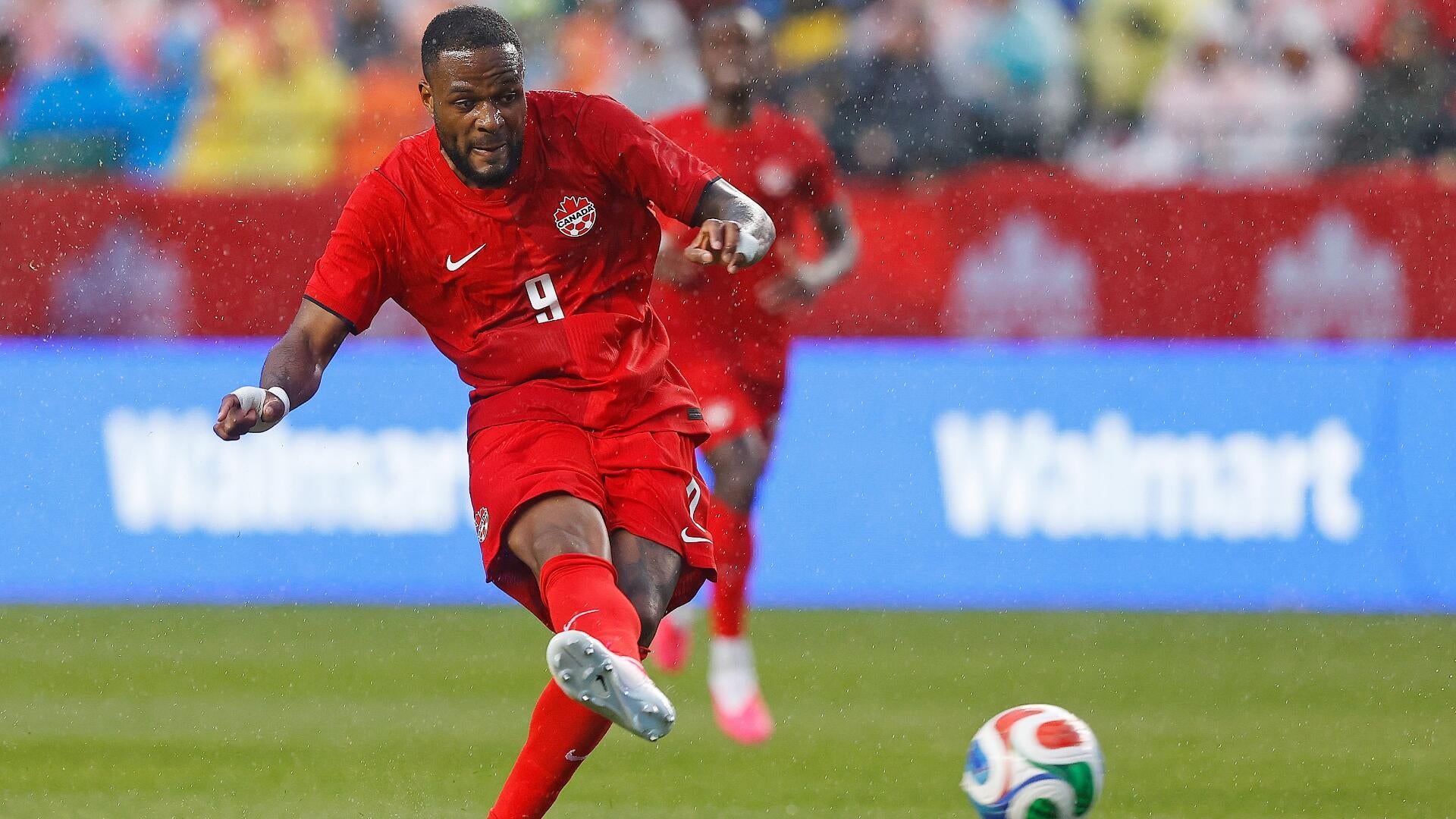
At 19:03 UTC on 12 June 2026, the ball moved at Toronto Stadium. Argentina's Facundo Tello, a CONMEBOL referee, pointed to the centre circle and Canada kicked off the second match of their home World Cup against Bosnia and Herzegovina, the first of three host-nation openers across a tournament that FIFA has spent the better part of a decade selling as the biggest sporting event in history.
What looks, in the moment, like a routine group fixture is something denser. A 48-team World Cup staged across three countries is no longer just a competition. It is a stress test of who gets to define the host — the federation that bid, the cities that built, the broadcasters that paid, or FIFA itself. Canada has not asked for that test. It is hosting it.
The optics of a soft opening
Bosnia and Herzegovina is, on paper, the kind of opponent that allows a story to write itself: ranked outside the top 70, returning to a World Cup for the first time since 2014, and walking into a stadium that is, by any honest accounting, Canadian. Toronto Stadium will be dressed in red. The announced crowd will be near 45,000. The first Canadian goal, if and when it arrives, will be replayed into a hundred highlight reels.
The temptation for a host federation is to treat the opening fixture as a coronation rather than a match. Canada's senior men have never won a World Cup game. Their best prior finish was the group stage in 2022 in Qatar, and the squad that takes the field tonight is younger, less travelled, and more dependent on a generation of dual-nationals who chose the maple leaf over another shirt. The result of the Bosnia game is less interesting than the shape of the performance: whether the Canadians can press a mid-tier European side for 90 minutes without the occasion swallowing them.
The framing fight the tournament has already lost
The harder story is the one that began before kickoff. FIFA's decision to award the 2026 tournament jointly to the United States, Mexico and Canada was sold as a North American coming-out. In practice, it has become a North American compromise. The United States is hosting the bulk of the matches, including every game from the quarterfinals onward. Mexico gets the consolation of opening the tournament, as it did in 1970 and 1986, with games in Guadalajara, Mexico City and Monterrey. Canada, despite being a co-host with full sovereign status on the bid, has the smallest slice: 13 matches in total, all in Toronto and Vancouver, and none after the round of 16.
That distribution is not a Canadian failure. It is the structure of a bid Canada entered in 2018, when the federation concluded it could not credibly host a 32-team tournament alone, and that the political case for a tri-national North American pitch was stronger than the sporting one. The political case won. The sporting one has been quietly trimmed ever since.
The counter-narrative — that Canada won a once-in-a-generation opportunity and is making the most of it — also holds. Toronto Stadium has been reconfigured. The federation has spent the last cycle fast-tracking citizenship for eligible players. Vancouver is preparing for seven matches, including a Canada group fixture the federation will treat as the de facto national catharsis. The infrastructure story is real. It is also, structurally, a story about a country learning to host events it did not, on its own, have the scale to organise.
What a host actually wins
The standard pitch for a World Cup is the standard pitch for an Olympics: infrastructure, tourism, soft power, a generation of newly converted fans. Canada heard the same numbers in 2010 (Vancouver Winter Olympics), 2015 (Women's World Cup), 2019 (Basketball World Cup) and 2015 (Pan-Am Games). The accounting on those events is mixed. The venues tend to last. The promised tourism surge tends to be revised downward within 18 months. The "legacy" line tends to be spoken by people who did not pay for the new transit line.
The honest question for Canada in 2026 is not whether the tournament will be a success — it almost certainly will, by any operational measure — but whether the country will own the moment or rent it. Hosting rights, in the modern FIFA economy, are a licence to stage a product that broadcasters and sponsors have already sold. Theadians in the stands and the players on the pitch are the visible layer. The deeper layer is the rights-holders: the television partners that have already locked in the windows, the sponsors that have already paid for the perimeter boards, the governing body that has already determined how the prize money will be distributed and who gets a slice of the surplus.
The stakes, plainly stated
If Canada wins the group — and the bracket permits a path through Bosnia, the winner of a more awkward tie, and a round-of-16 opponent that will almost certainly be a European side — the next three weeks will be the loudest continuous civic moment the country has produced in a generation. The federation will claim the credit. The broadcasters will claim the audience. FIFA will claim the model. None of them will be wrong.
If Canada does not — and the schedule is not generous, and the squad is young, and Bosnia has been here before — the tournament will still go on, because the tournament is not really about Canada. It is about whether a 48-team World Cup in three countries can be staged without the seams showing. The hosts are, in the end, the stagehands. The product belongs to someone else.
That is the part of the deal Canada signed in 2018, and the part that becomes visible the moment Facundo Tello blows the opening whistle at Toronto Stadium. The match will be Canada's. The month will not.
This publication will follow Canada's run through the group stage, the distribution of matches across the three host nations, and the broadcast-economy questions FIFA has so far declined to answer in public.
Wire provenance
This editorial synthesis draws on the following public wire/social posts:
- https://t.me/telesurenglish
- https://t.me/GeoPWatch
- https://t.me/telesurenglish