Hezbollah claims ambush of Israeli armored column in southern Lebanon
Hezbollah's operations room says its fighters repelled an Israeli ground advance toward Majdal Zoun after tracking 12 armored vehicles overnight. Israeli confirmation had not appeared in the immediate aftermath.
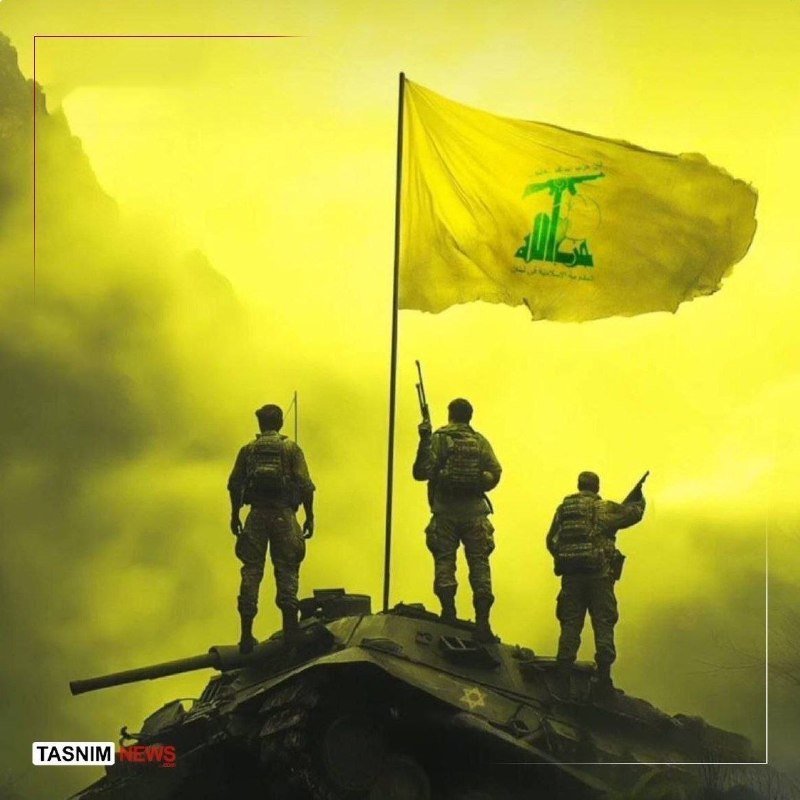
Hezbollah's operations room in Lebanon said on the afternoon of 12 June 2026 that its fighters had ambushed and repelled an Israeli ground advance on the outskirts of the southern Lebanese town of Majdal Zoun. The group, a long-established Iranian-backed political and paramilitary movement that has traded fire with Israel across the Blue Line since October 2023, claimed it had tracked twelve Israeli armored vehicles moving overnight from the border village of Shamaa before engaging them. The claim was carried simultaneously by the Iranian state-linked outlet Tasnim, by the Beirut-aligned news agency Jahan Tasnim's Telegram feed, and by The Cradle Media, a Beirut-based outlet that regularly amplifies the axis-of-resistance narrative. The Israeli military had not, as of the claims' circulation at 14:40 and 14:45 UTC, issued a public statement corroborating or denying the account.
The incident lands inside a familiar contest of claims that has defined the northern front of the war in Gaza's shadow. Hezbollah's own channel is, by long custom, the most enthusiastic narrator of its battlefield performance. The Israeli Defense Forces have, on numerous prior occasions, announced operations in southern Lebanon that produced no Hezbollah claim, and announced retaliatory strikes for incidents that residents in the affected villages said did not occur as described. The gap between the two communications rooms is the story's main structural feature. A reader trying to make sense of what actually happened in the olive groves outside Majdal Zoun on the night of 11 June 2026 has, at this moment, only one side's first draft of events.
The Hezbollah account
According to the statement circulated at 14:40 UTC on 12 June via The Cradle Media's Telegram channel, Hezbollah's operations room said its fighters monitored a force of twelve armored vehicles moving overnight from Shamaa toward Majdal Zoun, a town in the Tyre district a few kilometres from the Israeli border. The statement, as relayed by The Cradle, says the column was repelled after resistance fighters engaged it along the route. Tasnim's English-language feed, posting at 14:44 UTC, framed the same event as a deliberate ambush: it said Hezbollah announced that on Thursday night — the 11th — the vehicles began moving, and that resistance fighters "caught the occupying force" along the way. A parallel Jahan Tasnim post at 14:36 UTC repeated the figure of twelve vehicles and said the soldiers were forced to withdraw. None of the three posts cited a precise casualty toll, named an Israeli unit, or provided photographic evidence. The Cradle's version described the fighters as having "repelled" the advance, language that is shorter on tactical specifics than on political claim-making.
The pattern is consistent with how Hezbollah has communicated previous southern-Lebanon engagements: a battlefield announcement is issued within hours, a tactical narrative is asserted, and external confirmation is treated as a secondary question. The infrastructure of the claim is the operations-room statement, distributed across aligned outlets in the same hour, which converts a single announcement into a multi-voice story. By the time an English-language desk like this one is reading the wire at 14:45 UTC, the claim is already in three places.
The Israeli silence
The absence of an Israeli statement is itself a data point. The IDF has, on prior occasions, confirmed ground activity in southern Lebanon explicitly — announcing commando raids, demolition operations against border villages, or precision strikes against specific Hezbollah cells, usually with the language of "targeted operation" or "activity to dismantle terrorist infrastructure." A column of twelve armored vehicles is not a covert operation; it is a battalion-scale movement that, in a normal Israeli communications cycle, would be described either as a deliberate clearing operation or as a tactical repositioning. The Israeli press — Times of Israel, Ynet, the English desks of Haaretz and the Jerusalem Post — had not, in the immediate aftermath, carried a matching account. Israeli social-media channels frequented by reserve-soldier commentators, which often surface unconfirmed ground activity, were also quiet on the episode in the hour after the claim. That silence can mean any of three things: the operation occurred and is being held back from confirmation for operational security; the operation did not occur as described; or the operation was smaller than Hezbollah's framing and is not deemed newsworthy at the IDF level. Each reading produces a different policy picture, and the sources do not distinguish among them.
The pattern underneath
The episode is a small specimen of a much larger communications problem. Since October 2023, the Israel-Hezbollah front has operated on a managed-attribution model: Hezbollah claims strikes; Israel rarely confirms, occasionally denies, and sometimes confirms without detail. The Blue Line is densely monitored by UNIFIL, the United Nations Interim Force in Lebanon, whose reporting is supposed to produce an authoritative weekly picture, but whose statements are usually released days after the events they describe and rarely resolve contested claims. The structural effect is that the public record of the front is built, in real time, from two partisan feeds. Independent reporting from inside southern Lebanon has been heavily constrained by the conflict environment, which means that third-party verification of the kind a Reuters or BBC correspondent would normally provide is thin on the ground. In that vacuum, Hezbollah's statements function as the first draft of history whether or not they are accurate, and the corrective that would normally come from a wire reporter on the ridge above Majdal Zoun is absent.
What the sources do and do not tell us
The three Telegram feeds in circulation converge on a single narrative: twelve vehicles, an overnight move, an ambush, a repulse. They do not name the unit, the type of vehicles, the duration of the engagement, the casualties on either side, or whether the column reached its intended objective before withdrawing. There is no video, no before-and-after imagery of terrain, no indication of which Hezbollah cell engaged the column. The accounts are formulaically Hezbollah-favourable, and the institutional stake of all three outlets — Tasnim is Iranian state media, Jahan Tasnim is an Iranian-aligned agency, and The Cradle is a Beirut-based outlet known for sympathetic coverage of the regional axis — is openly declared. A reader who wants to know what actually happened outside Majdal Zoun on the night of the 11th will have to wait for either an Israeli statement, a UNIFIL weekly tally, or independent reporting from a wire correspondent on the Lebanese side of the line. None had appeared by the time this article filed.
This piece leaned on three Hezbollah-aligned wire accounts, in line with the operational reality that the public first draft of southern-Lebanon engagements is usually issued by Hezbollah's own operations room. The Israeli communications cycle, when it speaks to this specific incident, will be added as a wire update on The Monexus live thread.
Wire provenance
This editorial synthesis draws on the following public wire/social posts:
- https://t.me/thecradlemedia/0
- https://t.me/tasnimnews_en/0
- https://t.me/JahanTasnim/0
- https://t.me/JahanTasnim/0
- https://t.me/TheCradleMedia/0