Hezbollah MP says Iran told Beirut the Lebanon front is folded into the US–Iran ceasefire — a claim Washington and Tehran have not publicly confirmed
A Hezbollah parliamentarian says Tehran has privately told Beirut that the fighting in Lebanon is now part of the same arrangement that paused the US–Iran exchange. The claim is consequential — and unverified by either capital.
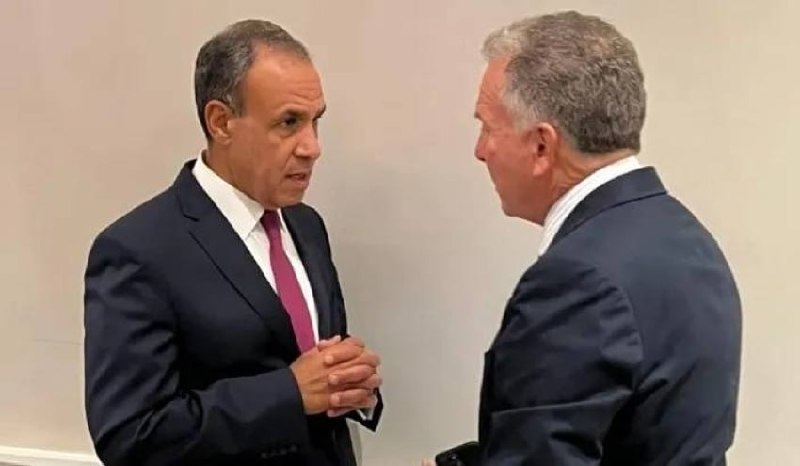
At 19:07 UTC on 12 June 2026, Iran's Tasnim News Agency published a single-sentence dispatch attributing to Hossein Al-Hajj Hassan, the Hezbollah faction's representative in the Lebanese parliament, an unusually sweeping claim: that Iran had "clearly communicated" to Beirut that the Lebanese front was part of the same ceasefire architecture that paused the US–Iran exchange, and that Israel would withdraw from Lebanese territory in implementation. Within thirteen minutes, a parallel version of the statement had been logged on the al-Hajj Hassan–monitoring Warfront Witness channel, and by 19:20 UTC an English-language feed of the same quote had surfaced on rnintel, citing the Hezbollah MP directly. The tempo — three near-identical posts, three different platforms, one news window — is itself the news. It looks less like a leak than like a coordinated placement, and it asks a question the principals have so far declined to answer on the record: is Lebanon, in fact, inside the deal.
The claim is consequential because, if accurate, it would re-classify the Israeli campaign in southern Lebanon from a separate bilateral front into a subsidiary clause of the US–Iran arrangement that has dominated the diplomatic calendar for weeks. The framing is Hezbollah's, not Washington's or Tehran's. The official Iranian and American channels have, to this point, confined their public statements to the bilateral track, and the Israeli government has not been heard from on the question of a southern-Lebanon withdrawal since the start of the formal pause. What al-Hajj Hassan is doing, in effect, is narrating a diplomatic reality in advance of its confirmation — the kind of move a party to a negotiation makes when it wants the other parties to ratify, by silence or by speech, a fact on the ground.
What was actually said, and where
Al-Hajj Hassan's statement, as carried by Tasnim and amplified by the pro-Hezbollah Warfront Witness channel, runs in two clauses. The first: that Iran has informed Hezbollah that Lebanon is "included in the agreement" between Tehran and Washington — that is, that the Lebanese front is part of the same ceasefire package. The second: that Israel will withdraw from Lebanese territory. The English-language Iranian wire Tasnim frames the first clause as a clarification that the Lebanon track is folded into the Iran–America ceasefire; the al-Hajj Hassan paraphrase, as reported to al Jazeera, adds the Israeli-withdrawal element that the Tasnim text leaves implicit. The al-Hajj Hassan attribution to al Jazeera is significant: it is a public-facing interview venue, not a back-channel, and it suggests the movement wanted the claim to be available for wire pickup in both English and Arabic.
What is missing from all three posts is just as telling. None of the messages cite an Iranian source by name. None cite a US source. None give a date for the alleged communication, a venue (Tehran, Beirut, a third capital), or a document — the usual scaffolding that an on-the-record diplomatic claim carries when it is meant to bind. The Iranian MFA's English-language wire has not, in the materials available to this publication, echoed the framing, and there has been no parallel readout from the US State Department, the White House, or the office of the UN special coordinator for Lebanon.
The Hezbollah interest in the claim
Hezbollah has reasons to want this story told in this voice, in this window. The movement's domestic position in Lebanon has been eroded by the cost of the southern front — displacement in the south and the southern suburbs of Beirut, an economy in free-fall, and a public conversation that has, for the first time in two decades, openly questioned the post-2006 deterrence logic. A statement that frames the ceasefire not as Hezbollah's choice but as Tehran's diplomatic dividend does two things at once. It repositions the movement as the faithful implementer of a regional settlement rather than the protagonist of a strategic miscalculation. And it locks Lebanon, rhetorically, into an architecture that gives Beirut a seat at the table even if no one at the table has put one there for them.
There is also a competitive logic. The Lebanese state — the presidency, the prime minister's office, the army command — has been pressing for a parallel bilateral track with Washington and with Israel that would treat Lebanon as a sovereign interlocutor rather than as a Hezbollah problem to be managed. Beirut's envoy to the UN, the Lebanese Armed Forces, and Prime Minister Nawaf Salam's office have all been careful, in public, to insist on a state-to-state frame. Al-Hajj Hassan's claim cuts directly across that line. It tells the Lebanese public that the channel that matters is not the one in Beirut, that the decision has already been taken in Tehran, and that the implementation in the south will follow.
What Washington and Tehran are publicly saying — and not saying
Neither the US nor Iran has, in the source set available to this publication, confirmed the Hezbollah framing of the package. The Iranian side, in its public English wire, continues to describe the arrangement as bilateral and to refer to Lebanon only in the context of the Lebanese government's parallel diplomatic efforts. The US side, to the extent that it has been heard from on the wider package, has stuck to the same framing. The Israeli government, which would be the party most directly bound by an Israeli-withdrawal commitment, has been conspicuously silent on the southern-Lebanon question since the start of the formal pause, and the IDF's English-language channel has carried no operational guidance that maps to a phased pullback.
This is the pattern that makes al-Hajj Hassan's claim difficult to handle. The structure of the Iran–America package, as it has been described in parallel reporting elsewhere on the wire, is a layered instrument: a public framework, a private understanding, and a set of side-letters that bind regional actors in ways the public text does not. It is in those side-letters, if anywhere, that Lebanon's status would be set. A Hezbollah MP claiming to have read the side-letter, and to have been briefed by Tehran, is either telling the truth about a private understanding — in which case Washington and Jerusalem have not yet decided whether to ratify it — or is running a positioning play designed to make the side-letter public by force of repetition.
The structural frame
What we are watching, in plain language, is the public surface of a regional arrangement catching up with the private text. The actors who negotiated the bilateral US–Iran pause have, in their public statements, been at pains to keep the deal narrow — a focused exchange on nuclear constraints and sanctions relief, with the regional spillover managed by ambiguity. The actors on the ground — Hezbollah in Lebanon, the Iraqi militias on the Syrian border, the Houthi movement in the Red Sea — are pushing in the opposite direction. Each wants its own file folded into the same architecture, with its own concessions attached. The al-Hajj Hassan statement is the loudest of those pushes to date. The question is not whether the claim is true. The question is whether it becomes true by default, because no one with the standing to deny it bothers to.
What remains genuinely uncertain
The sources do not specify when, where, or by whom the Iranian communication to Hezbollah was made. The claims about Israeli withdrawal are unattributed beyond the al-Hajj Hassan interview to al Jazeera, and the al-Hajj Hassan text does not give a timeline. The Israeli government has not, in the materials available, addressed the question. The US State Department has not, in the materials available, addressed the question. The Iranian MFA's public English wire has, in the materials available, stayed on the bilateral line. The Lebanese government has, in the materials available, continued to insist on a state-to-state framing. Any of four things could happen next: a denial from Washington that hardens the Lebanese state's hand; a confirmation from Tehran that ratifies al-Hajj Hassan's reading; a public Israeli statement that ties a withdrawal to conditions Beirut cannot meet; or — the most likely outcome on present tempo — a long, deliberate silence during which the Hezbollah framing becomes the working assumption of the wire and the framework on which subsequent reporting is hung.
This publication framed the al-Hajj Hassan statement as an unattributed diplomatic claim rather than as confirmed reporting, in line with the absence of corroboration from the Iranian, US, Israeli, or Lebanese state channels in the source set.
Wire provenance
This editorial synthesis draws on the following public wire/social posts:
- https://t.me/rnintel
- https://t.me/tasnimnews_en
- https://t.me/wfwitness