The Streaming Industry's 'Goddamn Mess': What Jimmy Iovine Got Right About the Structural Failure of Music
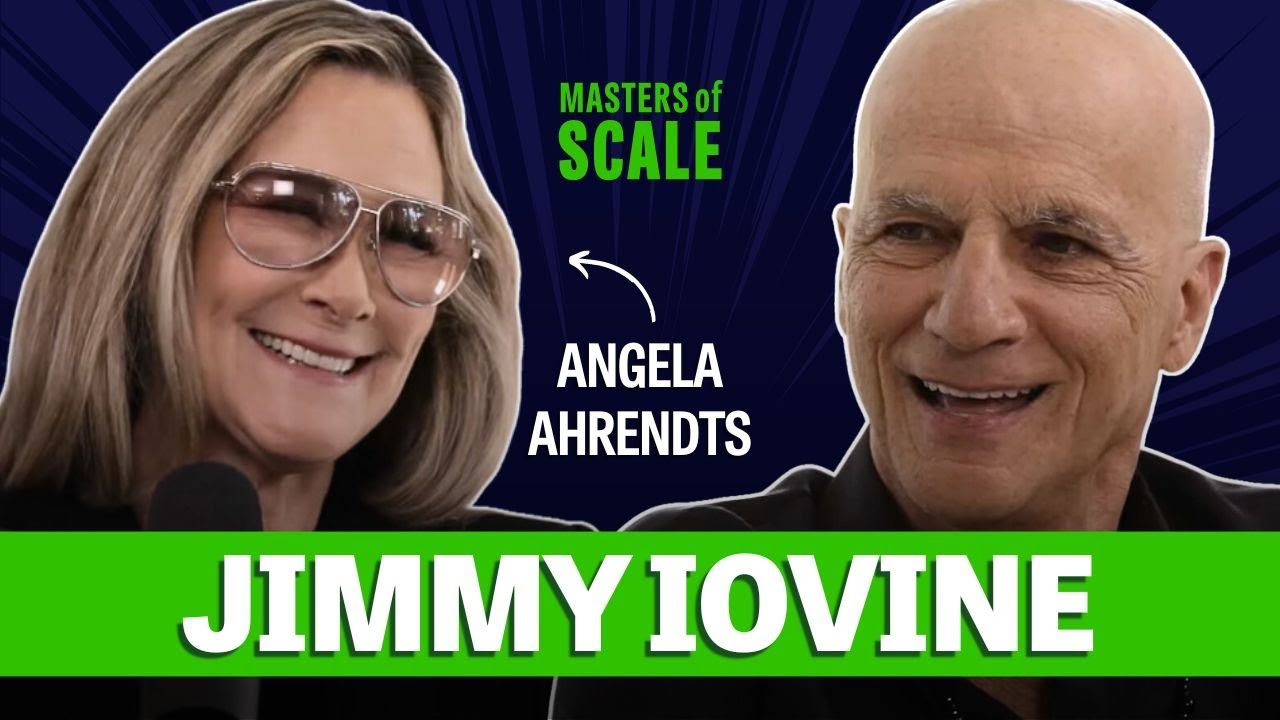
On 5 June 2026, Jimmy Iovine sat down for an unusually candid conversation on Masters of Scale. The producer-turned-executive, now in his fifth decade in the music business, used the interview to deliver a structural autopsy of the industry that made him wealthy — and the one that succeeded it. His verdict, delivered in his characteristic blunt register, was unsparing: the streaming era is a "goddamn mess" with no margins on either side, because the labels have lost their audience and the streamers have the audience but not the content.
It is a striking diagnosis from someone who helped build both halves of the problem. Iovine spent 18 years as a record producer before founding Interscope in 1990, then built Beats into a hardware and subscription business that Apple acquired in 2014. Few people alive have better perspective on how music's economic centre of gravity migrated from recorded product to platform — and what that migration cost.
The structural diagnosis
The streaming industry, in Iovine's framing, is broken along a clean fault line. The record companies do not have a direct relationship with their audience — that is the historical breakage. The streaming services do have the audience, but they do not own the content and they are not making money. "The record companies are hurting because they don't have an audience," Iovine said. "The streaming services don't own the content so they're not making any money. There's no margins in it. So it's a goddamn mess."
It is a critique worth taking seriously precisely because Iovine was, for two years and roughly every two months, trying to sell a remedy to Apple. He pitched Tim Cook on the idea that the way to fix the streaming problem was to integrate hardware, software, and content under one roof — and that is what the Beats acquisition, announced in 2014, was designed to deliver. A decade later, the diagnosis still holds. The two sides of the market — the rights-holders and the distribution platforms — remain structurally misaligned, and the margin pool has not magically appeared.
The pre-streaming architecture, and what it lost
To understand what Iovine means by a "lost audience," it helps to remember what the pre-2008 music business actually looked like. When Iovine founded Interscope in 1990, the model was already producer-centric: he built the company around record producers having their own labels, including Dr. Dre, Trent Reznor (Nothing Records), Timbaland, and will.i.am. The producers "were driving" the company, in his telling, not the other way around.
That was a structural innovation. It meant Interscope was, in effect, an aggregator of boutique creative enterprises — and it meant the label had to stay close to the artist, because the label was essentially a service provider. When Dr. Dre's The Chronic became "the single biggest instrument in spreading hip-hop worldwide," the relationship was direct. Interscope could see the audience and knew how to reach it.
That direct line is the thing Iovine is mourning. Once the catalogue migrated to streaming services, the artist-label-audience triangle dissolved into a many-to-many blob. Labels became wholesalers; artists became tenants; audiences became data points. The audience is now in the hands of the platforms, which is precisely the condition Iovine describes as a mess.
The counter-narrative: streaming saved the industry
The standard industry counter-narrative deserves a hearing before accepting Iovine's framing. Streaming is widely credited with reversing a fifteen-year revenue collapse caused by piracy. When Apple entered the streaming market, Iovine himself noted, there were only 3 million subscribers in America — and he praised Daniel Ek, saying he "should be honored" for extracting the licenses that made subscription streaming possible. Apple's entry, in this telling, validated the model and accelerated the recovery.
By 2024, global recorded-music revenue had returned to roughly the highs of the early 2000s peak, with streaming accounting for the bulk of the growth. From the labels' perspective, streaming has been a financial rescue. From the platforms' perspective, it has been a brutal scale game: Spotify and Apple Music have grown subscriber bases into the hundreds of millions while operating at or near break-even on the music side. Iovine's contention is that the recovery came at the cost of the structural relationship that used to generate the real money — the artist-audience bond.
The contradiction in the two readings is not as clean as either side pretends. Labels did lose direct audience contact, and platforms do have thin margins. But the labels have also recovered their aggregate revenue, and the platforms have built durable user bases that did not exist a decade ago. The "goddamn mess" is real, but it is a mess that nonetheless produces more recorded-music revenue than at any point in history.
A culture consequence: fame over greatness
Iovine drew a sharp line between the music industry he entered and the one he is now critiquing. The pivot point, in his telling, is Instagram. Before the platform, an artist who failed to deliver a great second album would "go in the toilet." Fame could not substitute for craft because fame was not independently monetisable. Now, in his framing, artists can monetise fame for twenty years without needing the second album.
He quotes Bruce Springsteen — a man he recorded with between the ages of 20 and 25, alongside three albums with John Lennon and one with Patti Smith — as having said: "I didn't want to be famous. I didn't want to be rich man. I didn't even want to be happy. I wanted to be great." That formulation sets up the contrast Iovine wants to make. A generation of artists, in his view, are optimising for the wrong variable.
It is worth flagging what is missing from this critique. Iovine's formative artistic years were spent in studios with John Lennon, Patti Smith, and Springsteen in a five-year window he calls "college" — three Lennon albums, two Springsteen records, one Smith record. The artists who survive that selection process, then as now, are not the median. Whether the shift from album-quality-as-currency to fame-as-currency is a real cultural loss or simply a different operating environment is genuinely contested. Plenty of working musicians would argue the bar for the second album was always a survivorship-biased filter, and that the new environment produces more music, more often, for more people.
What Iovine tried to build, and what it was designed to fix
The Beats story is best read as an attempted answer to the structural problem Iovine is now describing. He pitched Universal first, offering to build businesses with their artists in exchange for funding — and was rejected. The 360-degree deal concept that Beats would eventually monetise, the producer-owned labels, the athlete-marketing pivot triggered by Maverick Carter asking for headphones for LeBron James before the Beijing Olympics — all of it was designed to recreate the kind of vertical integration that streaming has dissolved.
The product logic was also structural. Iovine told himself that Steve Jobs had a "shiny white iPod" and "shiny white earbuds" and was missing good headphones — black headphones as the obvious gap. The hardware was the consumer-facing expression of a thesis: the streaming model could only work if the platform controlled the full stack of hardware, software, content, and audience relationship. Apple bought that thesis for roughly $3 billion in 2014.
Twelve years on, the thesis is half-validated. Apple Music is one of two dominant global streaming services, and Apple has the deepest hardware integration in the business. But Apple Music is still a thin-margin operation relative to the iPhone franchise that surrounds it — which is, in a sense, the proof of Iovine's point. The streaming service exists because it serves the hardware; it does not, on its own, generate the kind of returns a vertically integrated music business of the twentieth century could.
The stakes
The structural failure Iovine describes is not a temporary dislocation. It is the new equilibrium. Labels will continue to license to platforms; platforms will continue to operate on thin margins; artists will continue to find that fame is more reliably monetisable than craft. The audience will continue to belong to whoever runs the recommendation algorithm.
The 2014 Beats deal, which closed after roughly two years of Iovine pitching Tim Cook every two months, is the closest the industry has come to a structural response. Apple Music is what the response looks like in practice: a streaming service inside a hardware ecosystem, subsidised by the broader device franchise. Whether any of this constitutes a fix or merely a profitable way to live with the mess is the question the next decade of music economics will answer.
Iovine, for his part, is no longer running the operation. He is, instead, running an interdisciplinary academy at USC — the Iovine and Young Academy, which has been operating for 12 years — designed to teach students to think across silos. His argument is that siloed learning should be dead, because the tech companies are buying all content distribution and the next generation of leaders need to be fluent across disciplines. It is, in its own way, a continuation of the same diagnosis: the systems are too integrated, too platform-dominated, and too marginless for old specialisms to survive intact.
"Most things like that really are poltergeist," Iovine said of the strange patterns that produce breakthroughs. "Walk through the light." It is a peculiar line for a man describing a market failure. But then, the streaming era has always had the character of something the industry is walking through without quite understanding what it is.
Kicker
The streaming industry is not collapsing. It is doing something more interesting, and more durable: it has settled into a low-margin equilibrium that rewards distribution scale over creative primacy. Jimmy Iovine spent five decades trying to keep the audience and the artist in the same room. The platforms have made sure they are not. Whether that is a mess or simply the new shape of the business is the argument the next decade of music economics will have to settle.
Wire provenance
This editorial synthesis draws on the following public wire/social posts:
- https://www.youtube.com/watch?v=VVEb8DCZoLM