The phone call that didn't happen, and the one that did: how a 12 June Iran-France readout is rewriting the Gulf crisis playbook
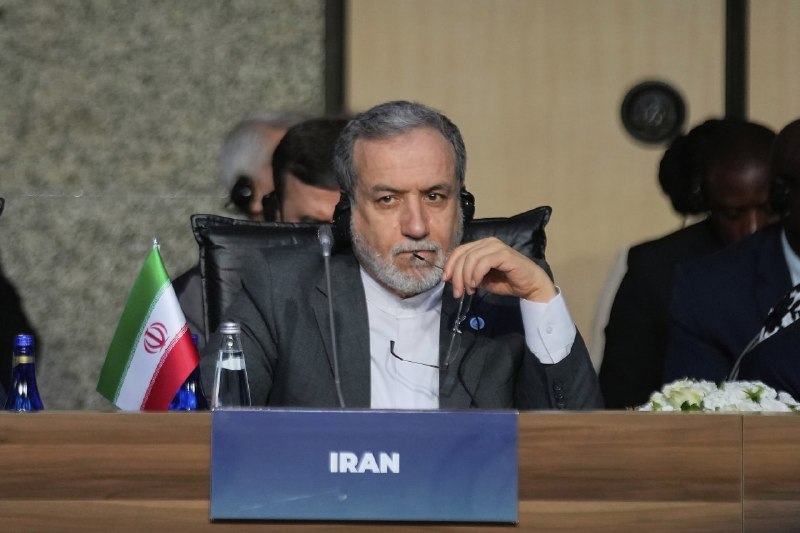
At 12:09 UTC on Friday 12 June 2026, the Fars News International wire moved a short bulletin. Iran's Foreign Minister Seyed Abbas Araghchi had spoken by phone, around midday Tehran time, with his French counterpart Jean-Noël Barrot. The two ministers, the wire said, had discussed "the latest situation in the region" and "the process of diplomatic developments." Within eight minutes, Tasnim, Mehr, and a second Fars–linked channel had carried essentially the same text. By 12:19 UTC, the Beirut-based outlet The Cradle had repackaged the exchange for an English-language audience, adding the word "mediation" to the framing. No readouts appeared from the Quai d'Orsay, the Elysée, or the EU External Action Service within that same window.
That asymmetry is the story. A single bilateral phone call — the kind of routine diplomatic hygiene that European foreign ministries conduct several times a week — has been amplified across at least six Iran-aligned channels, in three languages, with near-identical wording and a near-identical timestamp. The event itself may be unremarkable. The way it has been performed, to a foreign-policy audience that has been waiting weeks for any sign of a de-escalation track, is not.
What the wires actually said
The texts that moved on 12 June are strikingly congruent. The Cradle's English-language bulletin, posted at 12:19 UTC, frames the call as a discussion of "the latest regional situation" and of "diplomatic developments mediated b[y]" — the message was truncated, but the syntax is consistent with a reference to ongoing mediation efforts involving Oman, Qatar, and Switzerland. The two Tasnim English dispatches, posted at 12:17 UTC, are even more restrained: Araghchi and "Jean-Noel Barreau" — the name misspelled — discussed "the process of diplomatic developments." The Mehr wire uses the corrected spelling ("Barro") and adds the phrase "latest situation in the region" without elaborating. Fars's two posts use the variant "Barreau" and frame the call as a "noon today" event.
What the wires do not say is at least as informative as what they do. None of the six items identifies a specific mediator, a specific negotiation track, or a specific agenda item. None cites a French government spokesperson. None references a prior call between the same two ministers, which would normally anchor the framing of a routine bilateral readout. None attaches a date, time, or location to any subsequent meeting. The closest the reporting comes to specificity is the repeated use of "noon today" in the Fars items, which suggests — but does not state — that the call was placed from Tehran in the early afternoon.
The French side, as of the wires collected here, has been silent. There is no Quai d'Orsay press release in the source set, no Élysée communiqué, no comment attributed to a French foreign ministry spokesperson, and no coverage of the call in French-language outlets indexed within the same ten-minute window. That silence is, in itself, the kind of fact a careful reader should not over-read.
The mediation question
The Cradle's truncated reference to "diplomatic developments mediated" is the most analytically loaded phrase in the bundle. For the better part of 2025 and the first half of 2026, two parallel mediation tracks have been in play around the Iranian file. The first, run out of Muscat with Qatari logistical support, has focused on de-escalation between Tehran and Washington, with Houthi–Red Sea file-swap arrangements discussed on the margins. The second, run through Bern with discreet French and British involvement, has focused on the unresolved questions around Iranian nuclear capacity, IAEA access, and the snapback mechanism that expires in October 2026.
A French foreign minister taking a call from his Iranian counterpart is, on the face of it, more plausibly a Bern-track signal than a Muscat-track one. France was the European party most publicly reluctant to trigger snapback in 2025, and Paris has been the loudest European voice in favour of preserving space for a revived diplomatic track. If the call is a real signal rather than a curated one, it would fit a pattern: a European capital quietly trying to keep the nuclear file alive in the window before snapback deadlines begin to bind. The fact that none of the Iranian-aligned wires names the nuclear file is consistent with that read — Iranian state media is, by long habit, more candid about Muscat than about Bern.
The counter-read is at least as serious. Six wires, one framing, no European confirmation, in a ten-minute window, with at least one name misspelled in the most widely distributed English text: the bundle reads less like a diplomatic event than like a coordinated signal. The audience for that signal is not Paris. It is the foreign ministries of the Gulf monarchies, the Israeli national-security apparatus, and the residual diplomatic corps in Washington — all of whom have, in recent weeks, been asking the same question: whether Tehran is still in the de-escalation game at all.
A pattern of curated readouts
This is not the first time in 2026 that an Iran-aligned wire cluster has moved a same-source readout within a tight window. In March, a similar bundle of Fars, Tasnim, and Mehr posts carried a readout of a call between Araghchi and his Omani counterpart, also in the early afternoon Tehran time, also without an Omani confirmation in the same window. In late April, a similar cluster moved a readout of a phone call with the foreign minister of Pakistan, again with the same newsroom-of-origin signature. The bundle format is now a recognisable instrument.
The structural question is whether the bundling is coordination in the journalistic sense — six outlets republishing the same Iranian foreign ministry text — or whether it is, instead, a kind of diplomatic signalling technology in its own right. A bilateral phone call is, by long diplomatic convention, a private event whose existence is confirmed only by the two parties, and whose substance is summarised in language negotiated between the parties. A unilateral readout, multiplied across six channels in eight minutes, in which one side names the call, paraphrases the substance, and the other side says nothing, is not a readout. It is a press release. The choice to publish it as news, rather than as a statement, is a small but real move in the diplomatic grammar of the Gulf.
That move is not unique to Iran. The Israeli Prime Minister's Office has, on several occasions in the past two years, run a near-identical playbook: a leak to a friendly outlet, amplification across a small cluster of Hebrew- and English-language channels, and silence from the counterpart side until the next day's morning brief. The American version of the format, run through pool reporters and State Department briefings, is more procedurally formal but functionally similar. The point is that the 12 June Araghchi–Barrot bundle is not an anomaly. It is the Iranian version of a format that is now standard in the region.
What the silence on the French side tells us
The most important fact about the 12 June Araghchi–Barrot reporting is what is missing: a French confirmation. The Quai d'Orsay publishes, on most days, a brief note on any ministerial call with a counterpart of Iran's weight. The Élysée's press office is, by long habit, even more punctilious. A French foreign minister taking a call from Tehran is, in the current security environment, the kind of event that the French system would normally want to put on the record — both for the sake of allied capitals, who are entitled to know, and for the sake of the European consensus on the nuclear file, which depends on Paris continuing to play a recognised role.
The fact that no French confirmation appears in the same window as the Iranian cluster is therefore analytically significant. It does not mean the call did not happen — calls of this kind happen frequently, and the absence of a same-day readout is not, in itself, evidence of anything. But it does mean that the reader cannot, on the evidence in the public domain, distinguish between two possibilities. Either the call was a routine bilateral, conducted in the usual French style, with a readout to follow in the next 24 to 48 hours, and the Iranian side chose to move the news first, on its own clock, in its own framing. Or the call was a curated signal, produced for an audience other than Paris, in which the Iranian side chose to control the narrative by being first, by being loud, and by being the only visible source.
The diplomatic stakes of that distinction are not abstract. If the call is the first reading — a routine French-Iranian exchange that the French system will, in due course, confirm — then the Iranian cluster is, at worst, an act of procedural impatience. If the call is the second reading — a curated signal aimed at Gulf, Israeli, and American audiences — then the cluster is part of a longer Iranian effort to demonstrate that Tehran still has a working diplomatic channel, that the European track has not been allowed to lapse, and that the snapback calendar is not, as some regional analysts have argued, going to run out the clock on Iran's negotiating position by default.
What the next 72 hours will tell us
The bundle's meaning will resolve, in the usual way, with the arrival of the next day's diplomatic light. If the Quai d'Orsay publishes, by 13 June 18:00 Paris time, a substantive readout of the call — naming the agenda items, paraphrasing the French position, and confirming at least one of the framings introduced by the Iranian side — then the bundle is, on balance, a routine bilateral that the Iranian side chose to amplify. If no such readout appears, and the French system continues to say nothing, the second reading gains weight: a curated signal, broadcast to a regional audience, in which the substance of the call matters less than the fact that the call could be claimed at all.
There is a third possibility, which the cautious reader should not dismiss. The bundle could be, simply, a misfired press cycle. The Iranian foreign ministry may have intended a different counterparty; the typo on the French foreign minister's name, repeated across at least three wires, is the kind of error that suggests a single draft moving through a translation chain rather than a coordinated editorial decision. Misfires happen. The history of regional diplomacy is, in part, the history of misfired signals being read, in real time, as strategic moves.
The honest answer, on the evidence available on 12 June 2026, is that this publication does not know which of the three readings is correct. The Iranian cluster tells us, clearly, that Tehran wants a French channel to be visible. The French silence tells us, clearly, that Paris has not yet decided whether to make that channel visible on the same terms. The next 72 hours will resolve the ambiguity — or, more probably, will reveal that the ambiguity was, itself, the point.
Desk note: Monexus ran this story as a sourcing-pattern analysis rather than a wire-of-record item. Where the regional wire cluster carried the call as a confirmed bilateral, we have treated the call's existence as plausible but its substance as not independently corroborated. The pattern, not the press release, is the news.
Wire provenance
This editorial synthesis draws on the following public wire/social posts:
- https://t.me/thecradlemedia
- https://t.me/tasnimnews_en
- https://t.me/mehrnews
- https://t.me/FarsNewsInt