Tehran's Hormuz declaration is less about the waterway than about who writes its rules
Iran's foreign minister says a forthcoming joint statement with Oman will redefine the Strait of Hormuz. The audience for that claim is not in Muscat.
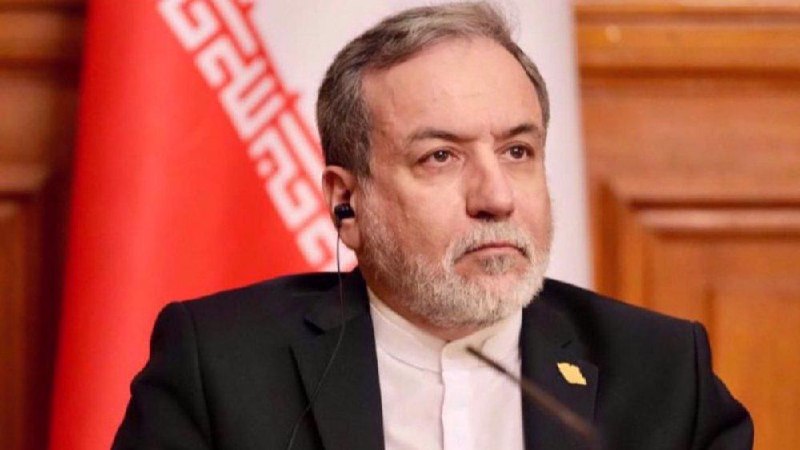
On the evening of 12 June 2026, Iran's Foreign Minister Abbas Araghchi used a string of televised and Telegram-distributed remarks to tell two audiences very different things at once. To a domestic one, the framing was triumphal: a "14-point" draft with the United States was closer than ever, designed, as he put it on live Iranian state TV, to "consolidate the victory that Iran has created on the ground," and a joint statement with Oman would reassert Iranian sovereignty over the Strait of Hormuz. To a foreign one, and to the Israeli government in particular, the same remarks carried an unmistakable warning: the deal has enemies, led by Israel, and Israel must, as part of any ceasefire in Lebanon, withdraw from "all its occupied territories," or the obligations are unmet.
Strip away the rhetoric and the operative claim is narrow but consequential. Araghchi says the Strait of Hormuz is, in his words, "without a doubt, under the sovereignty of Iran and Oman," that there is "no international waterway" running through it, and that a joint Iranian-Omani statement on its management is imminent. That is a public posture, not yet a treaty. But it lands at a moment when roughly a fifth of the world's seaborne oil transits the strait, when Iran's partners have spent two years rethinking the maritime choke points on which the incumbent order depends, and when Washington is trying to lock in a written understanding before the next crisis makes one impossible.
What Araghchi actually said, and to whom
Three distinct claims are bundled into the 12 June messaging. First, the bilateral track: a memorandum of understanding initialed in Islamabad is "closer than ever," includes "detailed discussion" of the Strait of Hormuz, the lifting of a naval blockade, and the schedule for a next round of talks. PressTV, the Iranian state broadcaster that carried the remarks, urged domestic media to "refrain from entering speculation" about the text, a tell that something specific is being withheld. Second, the maritime track: the future of the strait "will not be like before," and Iranian-Omani management of it will be codified in a joint statement issued in the coming days. Third, the Lebanon track: Araghchi linked any Israeli pullback in southern Lebanon directly to the broader deal, telling the other parties that "if these and other obligations are not met," the understanding is not in force.
The sequencing is the point. The Hormuz declaration is the leverage, Lebanon is the conditionality, and the Islamabad MoU is the wrapper. Read together, the message is that Iran's post-war position rests on a single negotiating package, not on three separate files that can be picked apart.
Why the framing is wider than the waterway
For decades, Western legal and naval doctrine has treated the Strait of Hormuz as an international strait in which transit passage must remain unimpeded, an interpretation Iran has long disputed in private and occasionally contested at sea. Asserting, on the record and on a state channel, that the strait is bilateral Iranian-Omani sovereign space is a doctrinal move, not a navigational one. It tells the United States and the Gulf monarchies that any future security architecture in the waterway will be written, at minimum, in Tehran and Muscat, and not in the Pentagon or the Gulf Cooperation Council secretariat.
The geopolitical context is hard to miss. Iran's regional axis has spent two years absorbing pressure: Israeli operations in Lebanon, a rolling naval confrontation in the Gulf, and the grinding effect of sanctions. A negotiated framework that ties the de-escalation files together would, from Tehran's vantage, convert battlefield friction into a written, reciprocal equilibrium in which the Strait of Hormuz is at the centre, not a sideshow. The corollary, which is what makes the Israeli government nervous, is that the same equilibrium legitimises Iranian presence on the southern Lebanese border that Israel is currently patrolling.
The Israeli counter-read, and the part the West is not saying aloud
Israeli officials, by Araghchi's account, are already treating the MoU as something to be undermined. That posture is consistent with how Tel Aviv has approached every prior Iran-related negotiation framework for nearly a decade. The Israeli security concern is real: a package deal that links Hormuz, Lebanon, and the nuclear file risks converting tactical gains in southern Lebanon into strategic concessions on a longer horizon. Israeli framing, reflected in Hebrew-language press and in Western-wire paraphrase, is that any agreement which leaves Iranian-backed forces armed and re-equipped inside Lebanon is not a peace, it is a pause.
The Western read, in capitals from Washington to London, is more cautious. Officials would rather have a written, verifiable framework than a re-eruption of the Gulf tanker war. The structural problem is that the same framework which the West needs for stability is the one that Iran is using to entrench its position on the strait. Neither side is bluffing entirely, and neither is bluffing only about the file it talks about most.
What this means, in plain terms
If the joint Iranian-Omani statement lands in the form Araghchi described, the practical effect will not be a new naval doctrine overnight. It will be a re-coding of the diplomatic baseline: any future dispute over passage, surveillance, or sanctions enforcement will begin from the premise that the strait is sovereign Iranian-Omani space, with international transit rights negotiated rather than assumed. That is a slow shift, and slow shifts are exactly what the current Iranian negotiating team appears to want. The Lebanon linkage is the stick: if the deal is violated on the ground in the south, the Hormuz arrangement is in play too.
The audience for all of this is not in Muscat. It is in Washington, in Tel Aviv, and in the Gulf. The most plausible read of the 12 June messaging is that Tehran is signalling it will sign only on terms that bind every file together, that the strait is the prize, and that the time to renegotiate who owns the region's connective tissue is now, while the ink is still wet on the Islamabad draft.
What remains genuinely uncertain
The sources available to this publication do not include the text of the 14-point draft, the contents of the prospective joint Iranian-Omani statement, or the specific Israeli position on the Lebanon linkage. PressTV's instruction to Iranian media to avoid speculation is itself a hint that the parameters are still moving. The reporting here treats Araghchi's public statements as authoritative for Iran's negotiating posture, and the unsigned reactions from the Israeli side as plausible rather than confirmed. Where the Western wire line and the Iranian state line diverge on what "sovereignty" over Hormuz means in operational terms, that gap is reported, not resolved.
Desk note: Monexus's editorial line on this story treats the Iranian position as a serious negotiating posture rather than as rhetoric or as fait accompli, and treats the Israeli security concern with the same weight. The piece is built on Iranian state and aligned-channel reporting for the text of Araghchi's remarks, and on the established Western-wire consensus on the strategic stakes; it does not claim a leak, a scoop, or a document.
Wire provenance
This editorial synthesis draws on the following public wire/social posts:
- https://t.me/wfwitness/
- https://t.me/ClashReport/
- https://t.me/Middle_East_Spectator/
- https://t.me/Middle_East_Spectator/
- https://t.me/Middle_East_Spectator/
- https://t.me/presstv/