Iran's foreign minister says a memorandum with Washington is closer than ever — Tehran frames the moment as a victory lap
Speaking to Iranian state media on 12 June 2026, Foreign Minister Abbas Araghchi described a US-Iran memorandum of understanding as within reach, while recasting the post-war period as an Iranian defensive success.
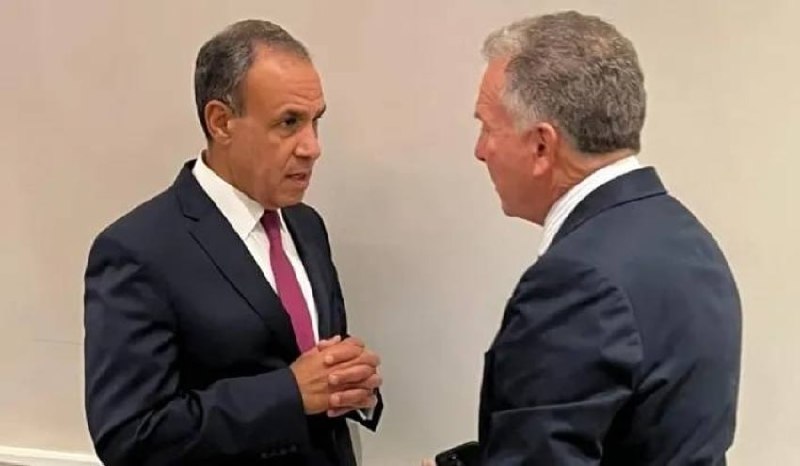
On the evening of 12 June 2026, Iranian Foreign Minister Abbas Araghchi used a coordinated round of state-media appearances to argue, simultaneously, that a written understanding with Washington is now closer than at any point in the recent talks cycle, and that Tehran had just walked away from a collapse attempt. The framing — a war-narrative victory on one side, a diplomatic opening on the other — was distributed within minutes across Press TV, Mehr News and Fars, each carrying the same core sentences with the same inflection. The speed and uniformity suggest a single, pre-cleared messaging line rather than spontaneous comments.
The diplomatic claim and the wartime claim are not new arguments. They are the two registers Iran has alternated between since the June 2025 war. What is new is that Araghchi is making them on the same day, in adjacent sentences, to overlapping audiences. Read together, the message is that the Islamic Republic is bargaining from a position it believes has hardened, not softened, in the seven months since the ceasefire.
The diplomatic claim, in Araghchi's own words
The headline sentence — that a memorandum of understanding between Tehran and Washington is "closer than ever" — was carried by Press TV at 19:20 UTC on 12 June 2026, attributed directly to Araghchi. A memorandum of understanding, in this context, is the document both sides have been circling around since the fifth-round Oman-mediated channel re-opened in late spring. The format matters: an MoU is not a treaty and is not a binding nuclear arrangement. It is, at most, a written record of what the two sides have agreed to keep talking about, and what they have provisionally agreed to stop doing while the talking continues. The lower the document's legal weight, the easier it is to sign and the easier it is to walk away from.
In Iran's domestic register, calling an MoU "closer than ever" does useful work: it signals movement without conceding substance. In Washington's register, an MoU is also useful — it generates a deliverable for a presidency that needs a non-collapse headline from the Middle East file. The two incentives are compatible on the page. They are not necessarily compatible in the underlying negotiation, where the disagreements over enrichment capacity, stockpile size, and the sequencing of sanctions relief remain the same disagreements that have blocked a deal for two decades.
The wartime claim, and what "12-day war" means here
The second register is the harder one to read. Araghchi told the same state-media audience, again on 12 June 2026, that "the enemy thought that after the 12-day war, he would be able to surrender Iran in the 40-day war, but he faced fierce resistance from the people and the armed forces of Iran." The line was carried by Mehr News at 19:07 UTC and Fars at 19:05 UTC, with the Press TV feed following at 19:19 UTC.
The reference is to a two-phase framing now standard in Iranian official discourse: a "12-day war" in June 2025, and a longer, lower-intensity "40-day war" that followed. The construction is the regime's own. It treats the immediate kinetic exchange as a discrete event, and the subsequent sanctions tightening, diplomatic pressure, and information campaign as a continuation of the same conflict by other means. The function of the framing is to deny the post-war period the status of "post-war" — to keep the country, in its own telling, in a state of active defence.
The claim that the "40-day war" was repulsed is, in this telling, the predicate for the diplomatic confidence. If Iran believes it has just absorbed and survived a sustained American-Israeli pressure campaign, it can afford to talk from a position of strength. If it does not believe that, the "MoU closer than ever" line is aspirational cover.
Why the same foreign minister is making both arguments on the same day
A diplomat who opens one front is expected to close another. Araghchi did not. He opened two in parallel. The most charitable reading is that this is the standard dual-audience technique of a sanctions-pressed foreign minister: hard language for the home audience that must be persuaded the leadership did not fold, soft language for the external audience whose signatures are needed. Fars and Press TV carry the hard language; the MoU line, picked up by regional outlets and almost certainly by Western wires in the hours that followed, carries the soft language. The two are not contradictory inside the Iranian information system. They are complementary.
The less charitable reading is that the dual message is a sign of an unresolved internal argument inside Iran's negotiating team. The harder the wartime frame, the less room there is domestically for the concessions an MoU would require. The softer the diplomatic frame, the less plausible the wartime frame becomes to outside observers who are asked to believe that the same government that just "won" is also on the verge of conceding something. Araghchi is walking a narrow line, and the simultaneous delivery suggests the line is being walked in real time, not from a settled position.
The structure beneath the messaging
The pattern is familiar from the last several US-Iran episodes. Diplomatic movement and the rhetorical hardening around it arrive in the same news cycle, not in opposition to each other. The official Iranian position is that the country is simultaneously under siege and on the cusp of a deal, and that the deal — when and if it comes — is being made by a government that has not been forced to the table. That is a coherent narrative inside the Islamic Republic. It is also a narrative that puts the burden of any collapse squarely on Washington: if the MoU does not materialise, it is because the United States walked away from a partner that had already absorbed the worst it could send.
For the United States, the structural interest is the opposite. A signed document, however thin, converts an open-ended crisis into a managed one and gives the White House a deliverable. For Iran, the structural interest is to extract the maximum relief from the document while conceding the minimum that is verifiable from the outside. The two incentives meet in a narrow zone — the MoU — and the only question is whether the zone is wide enough to hold the weight both sides need it to carry.
What remains uncertain, and what to watch next
The source material for this article is, by necessity, one-sided. Every quotation in the public record of Araghchi's 12 June 2026 comments is being filtered through Iranian state channels — Press TV, Mehr News, Fars — and through the political logic of those channels. There is no American readout in the source set, no Omani mediator statement, no IAEA technical note. The sources do not specify what the MoU would actually contain, what either side has conceded to bring it "closer than ever," or whether the document Araghchi is describing is the same document the United States believes it is negotiating.
What to watch, concretely, in the days that follow: a Western-wire read of the same conversation, an Omani or Qatari mediator statement placing the talks in a regional context, and any IAEA reporting on Iran's enrichment activity in the two weeks before Araghchi's comments. If those three signals converge with the Iranian narrative, the "closer than ever" line is genuinely close. If they diverge, the dual message is doing the work of a negotiating position, not a deal.
This article draws exclusively on Iranian state-media reporting — Press TV, Mehr News and Fars — for the 12 June 2026 statements attributed to Foreign Minister Araghchi. Where Monexus would normally cross-reference with a Western wire and a regional mediator readout, neither was available in the source set at time of publication; the framing above flags that absence rather than papering over it.
Wire provenance
This editorial synthesis draws on the following public wire/social posts:
- https://t.me/presstv/
- https://t.me/presstv/
- https://t.me/mehrnews/
- https://t.me/farsna/
- https://t.me/presstv/