Iran says US deal would lock in Hormuz as a 'deterrent' — and conditions final accord on a 14-point MOU
Tehran's foreign minister says a 14-point memorandum of understanding is in final review and would treat the Strait of Hormuz as a deterrent — with a fuller nuclear deal deferred.
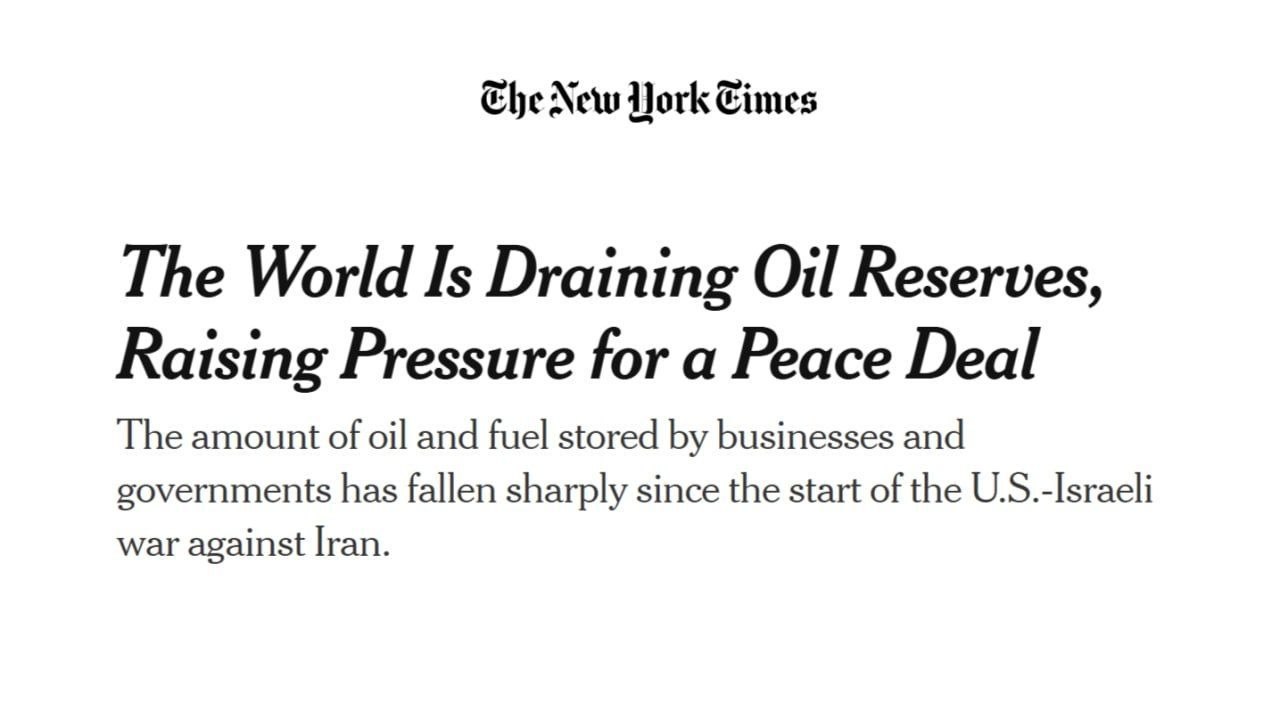
Iranian Foreign Minister Abbas Araghchi told reporters in Tehran on the evening of 12 June 2026 that a 14-point memorandum of understanding with the United States has reached a final draft and is in the last stages of review, and that the Strait of Hormuz would sit inside that document as a deterrent instrument. The remarks, carried in real time by Iranian state-aligned outlets Tasnim, Fars and Press TV between 19:07 and 19:35 UTC, sketch a two-stage architecture: an MOU on a wider set of issues now, with the nuclear question explicitly pushed into a "final agreement" that does not yet exist.
The pitch from Tehran is that the United States is being asked to commit to something unusual — a written pledge not to start a war against Iran and not to use threats, alongside parallel Iranian language about respecting sovereignty and non-interference. In return, Tehran is offering, at this stage, only a procedural concession: the nuclear file moves to a second track, and what America has asked for on the nuclear side, in Araghchi's telling, is not on the table yet.
A 14-point document, and a hostage clause
According to Araghchi, the MOU would commit both sides to non-aggression language. "America pledges not to start a war and not to use threats," he said, framing that as part of a reciprocal package in which "America and Iran pledge to respect each other's sovereignty and not interfere." He added that the Strait of Hormuz and the question of "lifting the sea blockade" are inside the document — the same chokepoint through which roughly a fifth of global oil normally transits. Without elaborating on the legal mechanism, Araghchi described the strait as "one of our most important deterrent tools."
There is a built-in tripwire. "If what is stated in the memorandum of understanding is not implemented," Araghchi said, "the negotiations for the final agreement will not be carried out." In effect, the MOU functions not just as a confidence-building step but as a precondition: the nuclear track, the part Western capitals treat as the substance of any deal, is gated on Tehran's assessment of whether Washington is actually delivering on the points already on paper. The framing favours the side with less to lose from delay — and that is, on the calendar as it stands, Iran.
The nuclear file is deferred, not closed
Araghchi was explicit that "the nuclear issue has been postponed to the final agreement" and that the negotiations are "two-stage." America's nuclear demands, he said, "were not acceptable to us at this stage" — a formulation that reads less as a refusal than as a postponement under cover. A separate strand of the draft addresses reconstruction, which Araghchi described as a "reconstruction and economic development plan." In other words, sanctions-relief architecture, the part Tehran has the most reason to want locked in quickly, is positioned adjacent to the non-aggression language; the part Washington treats as the central deliverable, is on a slower track.
This sequencing matters. It allows both governments to claim a win without either having to actually ratify the most politically toxic commitment on its own side. The Trump administration can show voters a document that mentions non-aggression and Hormuz; the Iranian side can show a domestic audience that the nuclear file has not been conceded and that the strait is recognised, on paper, as a deterrent — a term that, in Iranian strategic vocabulary, tends to imply leverage rather than concession.
The Strait of Hormuz as the real prize
The most consequential sentence Araghchi delivered was the shortest. "The Strait of Hormuz is now one of our most important deterrent tools," he said, naming it alongside the "lifting of the sea blockade" as an item raised inside the MOU. He did not detail what "lifting the sea blockade" refers to in legal terms; the phrasing suggests Tehran is asking for a written acknowledgement that freedom of navigation through the strait will be treated as a mutual commitment, rather than as something Iran can be sanctioned for asserting.
For oil markets and for the Gulf states, this is the part of the draft to watch. The strait is the chokepoint that, in any escalatory scenario, gets mentioned first. Codifying it — even in a non-binding MOU — would be a structural change to how the United States and Iran talk about the waterway. It would also constrain any future American administration that wanted to lean on the threat of maritime interdiction as a tool of pressure, because the precedent would already be on the page.
What we do not know — and what the framing does not settle
The reading from Tehran is that this is a real, near-final text, with the MOU close to signing and the nuclear track pushed to a later phase. The reading from Washington, as relayed through this set of Iranian-state dispatches alone, is harder to fix: these briefings give Iran's posture in Araghchi's own words, but the American counter-position — what the US is prepared to sign, what it has conceded, what it has dropped — is not in the source material available to this publication. Iranian-state outlets are also reporting inside an information environment in which the same principals regularly treat announcements as part of negotiations rather than as outcomes of them. Araghchi's line that "Trump tweets whatever he wants from other people's mouth," as relayed by Fars, is a reminder that Tehran expects the public framing to keep shifting.
There is also a domestic-audience layer that any serious reading has to keep in view. Araghchi's reference to "the 12-day war, the 18th and 19th riots, and the 40-day war" — naming the episodes in which Iran's leadership believes it has been under coordinated pressure — signals that the MOU is being sold in Tehran not as a thaw but as a managed outcome of resistance. A deal framed that way is more politically defensible at home; it is also more vulnerable to any US action that can be read in Tehran as breaking the spirit of the non-aggression pledge.
The shape of the deal, as far as it can be read from these dispatches, is this: a wide, non-binding political understanding now, covering non-aggression, the strait, reconstruction, and an explicit deferral of the nuclear file; and a binding nuclear agreement later, conditional on whether the first part of the bargain is implemented. The standard counter-reading — that this sequence is a way for Tehran to lock in the political concessions while keeping the nuclear question open indefinitely — is the reading Western negotiators will arrive at first. The reading from Tehran is that it is a way to ensure the United States cannot renege on the political concessions after the nuclear file is closed. Both readings are coherent. Which one survives contact with the signed text will depend on the specifics of the 14 points, which the public has not yet seen.
How Monexus framed this: the wire cycle in mid-June is dominated by Iranian-state descriptions of a draft the US side has not yet put on the public record; this piece reports Tehran's version of the document in detail, flags the tripwire clauses, and treats the Hormuz question as the structural story, while noting explicitly that the US counter-position is not in the source material.
Wire provenance
This editorial synthesis draws on the following public wire/social posts:
- https://t.me/PressTV/14611
- https://t.me/Tasnimnews_en/21347
- https://t.me/Tasnimnews_en/21346
- https://t.me/Farsna/28001
- https://t.me/Tasnimnews_en/21345
- https://t.me/Tasnimnews_en/21344
- https://t.me/Tasnimnews_en/21343
- https://t.me/Tasnimnews_en/21342