Musk crosses the trillion-dollar line as SpaceX lists on Nasdaq
Elon Musk has become the first individual whose net worth is publicly marked above $1 trillion, after SpaceX's Nasdaq debut pushed the company's valuation past the threshold and pulled its founder across with it.
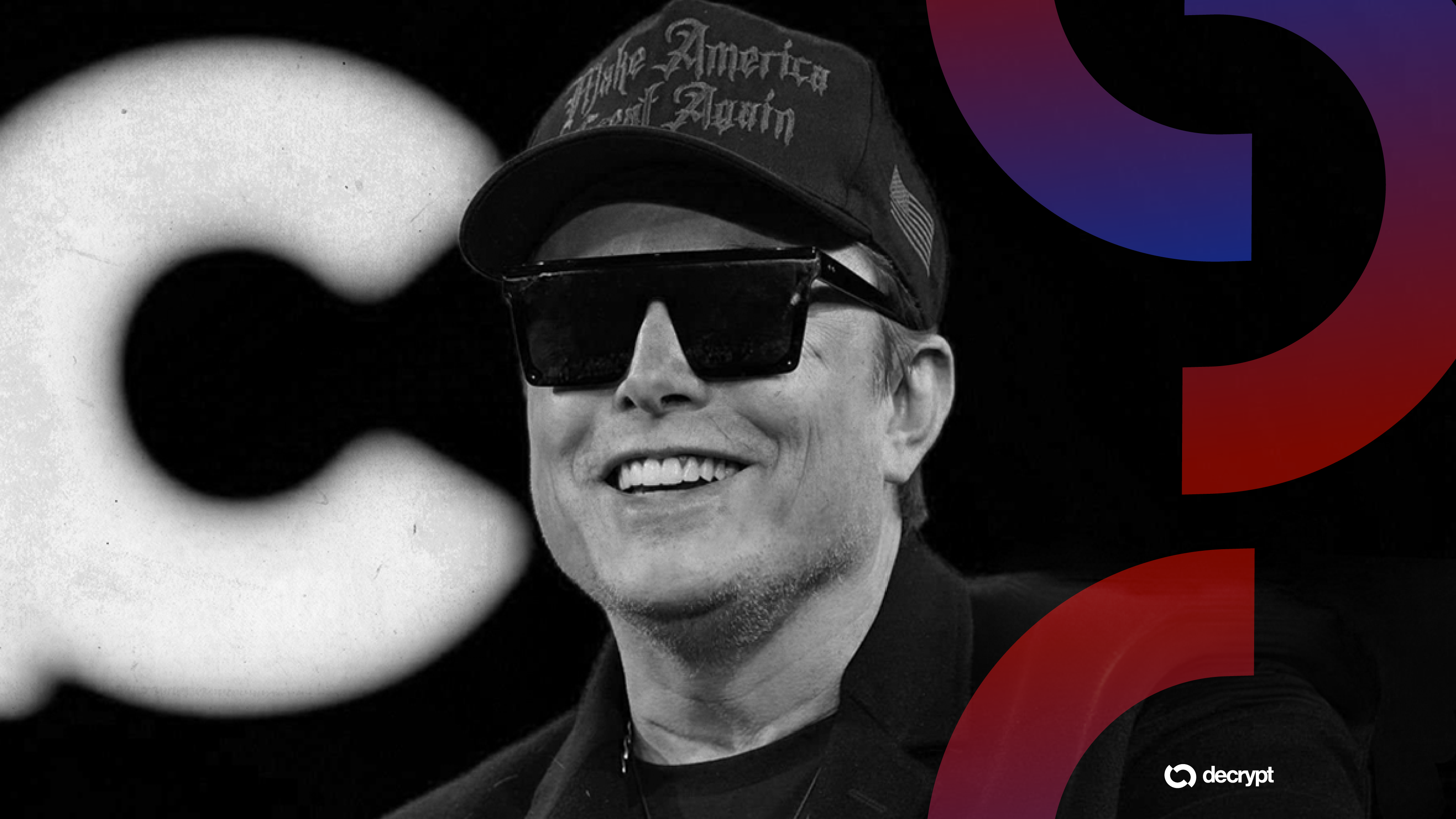
At 17:30 UTC on 12 June 2026, Deutsche Welle reported that Elon Musk had become the world's first paper trillionaire, hours after SpaceX began trading on the Nasdaq stock exchange with shares climbing more than 25% above the opening price. The mark is a function of mark-to-market wealth rather than realised cash, but it is a threshold no individual has previously cleared in public markets, and it is being read less as a personal milestone than as a signal about how the cost of entry into the launch-and-satellite business has moved.
The listing lands Musk in territory that did not exist a decade ago. Forbes' billionaires list, the Bloomberg Billionaires Index, and the Financial Times' rich list all use public-equity prices to value founders' stakes; with SpaceX now quoted, the largest single block of Musk's net worth is no longer a private estimate. The company he founded in 2002 has, in effect, become the price-setter for his fortune.
A valuation built on launch cadence and Starlink
What the market is pricing, on the limited evidence of the first session, is not a typical aerospace listing. Deutsche Welle's reporting describes an opening-day jump of more than 25% above the IPO price, which by itself is a strong debut but not historically extraordinary. The structural story is the combination of two businesses sitting inside one corporate envelope: a launch services provider with a reusable first stage that now sets the global cadence for low-cost access to orbit, and Starlink, the low-Earth-orbit broadband constellation that has become both a consumer product and an instrument of connectivity policy in Africa, Southeast Asia and the Middle East.
Daily Nation's Kenya edition framed the debut in global terms, noting that the share-price move makes Musk the world's first trillionaire. Al Jazeera's breaking-news desk ran the same headline in the same hour. The convergence is unusual: outlets in Nairobi, Doha and Berlin all reached for the trillion-dollar figure within a thirty-minute window on Friday afternoon, which suggests the framing is being driven by a small number of agency wires rather than by independent analysis. The Deutsche Welle report uses the careful phrase "paper trillionaire, at least by market value," which is the more accurate formulation — Musk is unlikely to ever liquidate the position at the quoted price, and a meaningful sell-down would compress the price that defines his net worth.
The counter-narrative: paper versus real wealth
The dominant read is that Musk has joined a club of one. The counter-read, more common in market commentary than in headline copy, is that the trillion-dollar figure is a creature of index methodology. A founder who owns roughly 40% of a $2.5 trillion company is, by definition, a paper trillionaire; if SpaceX's shares fell 20% tomorrow, he would still be the wealthiest individual on earth, but no longer a trillionaire. The concentration of personal wealth in a single equity is itself the story, not the round number.
There is a second, more uncomfortable counter-narrative. SpaceX's launch business depends on a permissive regulatory environment at the Federal Aviation Administration and on continued NASA and US Department of Defense launch contracts, both of which have been treated as stable inputs in the company's pre-IPO roadshow. Starlink's global growth, meanwhile, runs through national telecommunications licences issued in markets where Washington carries weight — a fact that connects the company to dollar-hegemony arguments that go well beyond a balance-sheet entry. None of the available reporting on Friday's debut addresses that dimension; it is a gap worth flagging for the desk to revisit once the first post-IPO quarterly disclosures are filed.
Structural frame: when the firm is the person
What the listing actually does is narrow the gap between Musk-as-individual and SpaceX-as-institution. For most of the company's life, its private valuations were an exercise in triangulation — secondary trades, tender offers, insider marks — and Musk's net worth was a function of those marks. With the equity now trading, his wealth is the company, and the company is, in practice, a quasi-sovereign operator. Starlink's terminals have been deployed in Ukraine, in Sudan, in disaster zones from Türkiye to the Pacific, often on terms that resemble foreign aid as much as commercial service. A publicly traded company carrying that role is a different kind of asset than a privately held one: it has quarterly earnings calls, a board, a fiduciary duty to shareholders, and a SEC filings trail that anyone with a Bloomberg terminal can read.
The structural pattern is familiar. A small number of technology founders have, over the past decade, accumulated personal fortunes large enough to exceed the GDP of mid-sized economies. The round-number milestone is largely symbolic — there is no behavioural difference between $999 billion and $1.001 trillion — but symbolic milestones move policy debate, and the trillion-dollar figure is likely to be cited in arguments about wealth taxes, antitrust, and the political leverage of large private capital. The fact that the wealth is concentrated in a single equity tied to launch and satellite infrastructure, rather than in a diversified portfolio, sharpens the question.
Stakes: who gains, who adjusts
The proximate winners on Friday were index providers and the brokers handling allocation, alongside the institutional investors who received IPO shares at the offering price. The proximate losers, in the narrow market sense, are the late-stage private investors who marked SpaceX at the same valuation on secondary trades earlier in 2026 and now have a public print to justify or revise.
The longer-horizon stakes sit with regulators and counterparties. NASA, which has moved aggressively to use commercial providers for crew and cargo, is the most exposed single counterparty; the US Department of Defense's launch contracts are the second. A publicly traded SpaceX inherits the disclosure obligations that come with that status, but it also gains a permanent capital base and a market-determined cost of capital. For competitors — Blue Origin, the European launch consortiums, the Indian and Japanese national agencies — the listing is a benchmark, and a difficult one to argue against on price. For Musk personally, the milestone changes the geometry of every negotiation he enters into, from Twitter's debt structure to his various entanglements with federal agencies, without changing the underlying assets by a single dollar.
What remains uncertain, and the sources do not resolve, is how the share price will settle once the first-day pop fades. A 25% opening-day jump is, on long-run evidence, a poor predictor of twelve-month performance, and the IPO lock-up periods will introduce a fresh supply of shares in the autumn. The trillionaire framing is real for as long as the price holds; whether the price holds is a question that Nasdaq, not Forbes, will answer.
Desk note: Monexus has framed this as a market-structure story rather than a personality story — the listing, not the man, is the news. The single-line "paper trillionaire" qualifier used by Deutsche Welle is the language we have kept; the more breathless trillion-dollar headlines elsewhere have been treated as derivative framing rather than independent reporting.
Wire provenance
This editorial synthesis draws on the following public wire/social posts:
- https://nation.africa/kenya/news/world/spacex-ipo-makes-elon-musk-the-world-s-first-trillionaire-5494594
- https://t.me/DDGeopolitics