Pakistan brokers a US-Iran text: what 'agreed in principle' actually means
On 12 June 2026, Pakistan's prime minister said Tehran and Washington have an agreed text. The deal's substance, and whether it holds, is a different question.
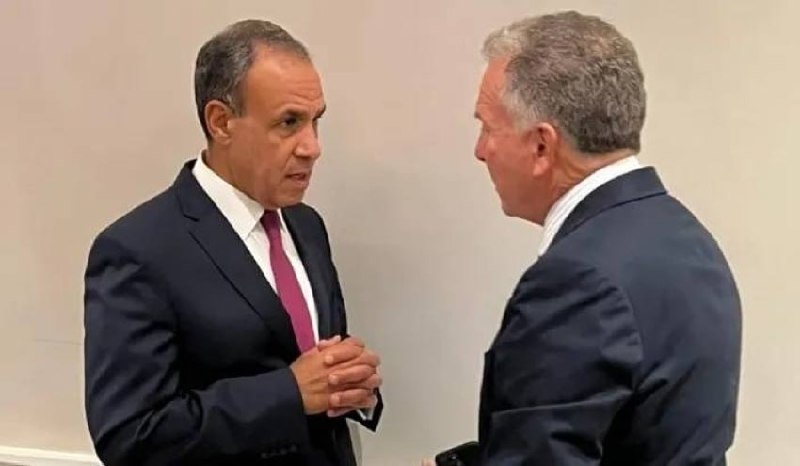
On the evening of 12 June 2026, in a statement that travelled through every diplomatic cable in the Gulf, Pakistan's Prime Minister Shehbaz Sharif said that a "final, agreed upon text of the peace deal has been reached" between Iran and the United States. The line was carried at 19:30 UTC by Press TV, the Iranian state broadcaster, and within minutes was repeated across X by Unusual Whales at 18:31 UTC and by the geopolitical account @Megatron_ron at 18:51 UTC. The wording was identical in all three. That uniformity is itself the story: when Tehran, Washington, and the mediator all want the same sentence on the wire at the same time, the sentence has been negotiated.
The question is what the sentence means. "Agreed text" is the language of negotiators who have something to announce without yet having something to sign. It signals that a draft exists, that the parties have stopped redlining each other's changes, and that a third-party capital — in this case Islamabad — is willing to lend its name to the announcement. It does not, on the evidence available, signal that a final exchange of signatures, an exchange of prisoners, or a verifiable nuclear concession has occurred. The deal exists in the form a deal takes in the last forty-eight hours before it either becomes real or quietly dies.
What was actually said
Press TV's bulletin, distributed in English on Telegram at 19:30 UTC on 12 June 2026, quoted Prime Minister Sharif directly: "a final, agreed upon text of the peace deal has been reached." The Iranian state outlet framed the announcement as a Pakistani diplomatic success, noting that Islamabad was "working to finalize next steps." The phrasing matters. Press TV is a state outlet, and its framing privileges the Iranian reading — that this is a peace deal, that it is final, and that Pakistan is the honest broker. None of those three framings has been independently corroborated by a Western wire at the time of writing.
The X account @unusual_whales, a markets-and-geopolitics account with a following that treats it as a real-time news desk, broke the same line at 18:31 UTC, forty-one minutes before Press TV's English bulletin. @Megatron_ron, a geopolitical commentary account, repeated it at 18:51 UTC. Both repeated the Pakistani attribution. None of the three posts offers a paragraph of substantive detail: no description of which sanctions would be lifted, no schedule for uranium enrichment limits, no naming of a release of frozen Iranian assets, no mention of the fate of Iran's stockpile of 60%-enriched uranium, no reference to a guarantee mechanism or a verification protocol. What the three posts share is the single sentence and a willingness to transmit it.
That is a recognizable shape. A mediated breakthrough between two governments with a forty-year adversarial history does not normally arrive as a single quotable line attributed to a third prime minister. It arrives, instead, after a structured exchange of technical documents, a final round of shuttle diplomacy, and a coordinated release strategy in which each capital claims credit for the parts it cares about. The 12 June announcement has the shape of the coordinated release, not yet the shape of the technical exchange.
Why Pakistan, and why now
Islamabad is not a neutral venue for this kind of mediation. Pakistan shares a 900-kilometre border with Iran, a Sunni-majority state that has, since 2024, maintained working relations with the Shia Republic even as the Saudi–Iranian rapprochement that began in Beijing in March 2023 cooled into a working but cautious distance. Pakistan is also a nuclear-armed state that has itself been the target of US sanctions, secondary sanctions, and Countering America's Adversaries Through Sanctions Act (CAATSA) pressure over the past decade. Its prime minister is therefore a credible interlocutor in the sense that he is not perceived in Tehran as a US client, and is perceived in Washington as a security partner that can deliver a message.
The timing fits a known pattern. The most intensive phase of US–Iran diplomacy in the first half of 2026 has tracked three variables: the International Atomic Energy Agency (IAEA) reporting cycle on Iran's enrichment capacity, the US presidential election calendar, and the price of Brent crude. A deal announced in mid-June sits cleanly inside a window in which the IAEA's June quarterly report is due, in which an American administration has political incentive to claim a non-proliferation win before the autumn, and in which Gulf producers have been signalling a preference for an oil market that is not being repriced by a regional war. None of that is a guarantee of durability. It is, however, an explanation of why an announcement of this kind would be made now and not in April.
There is also an Iran-side logic. The Islamic Republic has, over the past two years, expanded its enrichment capacity, hardened its negotiating position, and demonstrated a willingness to absorb sanctions pain in exchange for strategic autonomy. A peace deal that is announced but not yet implemented is, for Tehran, almost a perfect instrument: it moderates the sanctions environment, it opens space for the partial unfreezing of assets held in third-country banks, and it does not require a verifiable rollback of the nuclear programme that the country's security establishment considers existential. The downside risk — being blamed if the text collapses — is being carried, for the moment, by Islamabad.
What is not in the public record
Three things are conspicuously absent from the 12 June reporting.
The first is the text itself. No outlet has published a draft, a summary of provisions, or a list of undertakings. "Agreed text" is being used as a unit of announcement, not as a unit of disclosure. Without the document, it is not possible to verify whether the agreement covers the nuclear file, the regional file (Hezbollah, the Houthis, Iraqi militias), the sanctions architecture, the frozen-assets question, or any combination of these. The historical track record suggests that mediated US–Iran breakthroughs that are announced before the text is published tend to be more fragile than the ones announced after.
The second is a US-side confirmation that goes beyond a "we are aware of the reports" formulation. As of the 19:30 UTC Press TV bulletin, no US State Department readout, White House statement, or statement from the office of the US Special Presidential Envoy for the Middle East has been cited in the public Telegram or X traffic available to this publication. The Iranian side has claimed the announcement. The Pakistani side has claimed the announcement. The American side, in the public material, has not.
The third is any reference to a verification or snap-back mechanism. A US–Iran agreement that does not specify what happens if either side is judged to have violated the text is, in practical terms, a press release. The 2015 Joint Comprehensive Plan of Action (JCPOA) included a dispute-resolution process and a defined sanctions-snapback procedure. Any successor arrangement that omits these features inherits the JCPOA's political weakness without inheriting its legal architecture. The 12 June reporting does not speak to this point.
Reading the room
Two readings of the announcement are plausible, and both are worth holding in the same hand.
The first is that this is the opening beat of a serious diplomatic process. The JCPOA was preceded by a similar interim announcement in Lausanne in April 2015, and the period between Lausanne and the final July 2015 text was used for exactly the kind of technical work — centrifuge accounting, sanctions sequencing, IAEA access protocols — that the 12 June statement does not describe. Under this reading, Islamabad is performing the role Lausanne played: a venue whose neutrality and prestige make it possible for the parties to claim, in public, what they have not yet agreed in private. The fact that the text is not yet public is consistent with a process that is, for the moment, being managed by the parties rather than by the press.
The second reading is that this is a tactical announcement — a coordinated effort by Tehran, Washington, and Islamabad to move the price of oil, the price of the rial, and the political temperature in the Gulf in a particular direction for a particular window. Under this reading, the announcement of "agreed text" is itself the deliverable, and the text, if it exists in binding form, will surface later or in a different form. Announcements of this kind are not new. The 2023 Saudi–Iranian rapprochement announced in Beijing was initially greeted with similar scepticism, and three years on it has produced an uneven but real partial thaw in Yemen, in Syria's re-entry into the Arab League, and in direct Saudi–Iranian security coordination. That precedent cuts both ways: announcements of this kind can harden into real arrangements, but the hardening is never automatic.
What is at stake
The first-order stake is the Iranian nuclear file. The IAEA's most recent public reporting indicated that Iran had continued to expand its stockpile of 60%-enriched uranium, that its breakout time had shortened, and that access for inspectors had been reduced. A verifiable deal that rolls back enrichment capacity in exchange for sanctions relief is, by any measure, a stabilising outcome for the non-proliferation regime. A deal that announces a rollback without delivering it is destabilising, because it lowers the political cost of further expansion.
The second-order stake is the price of oil. A credible US–Iran deal would, on a conservative reading, return somewhere between 1.0 and 1.5 million barrels per day of Iranian crude to a market that has, over the past eighteen months, been priced for a war-risk premium. Saudi Arabia and the UAE have the spare capacity to absorb some of that, but not all of it, and the marginal price effect is downward. The diplomatic history of US–Iran negotiations has, on several occasions, been influenced by Riyadh's view of what a deal means for the OPEC+ quota. The 12 June reporting does not speak to whether that conversation has happened.
The third-order stake is the regional balance. A US–Iran deal that does not address Hezbollah's arming, the Houthi missile and drone programme, or the Iraqi militia ecosystem is a deal that defers those questions rather than resolving them. Israel, in particular, has been explicit in recent months that a nuclear-only US–Iran agreement would be inadequate. Any deal that emerges in the coming weeks will have to navigate that objection, and the fact that the 12 June reporting does not address it is not, on its own, evidence that the final text will not — but it is evidence that the announcement is being managed to keep that conversation out of the headlines for the moment.
The honest summary
What is known at 20:00 UTC on 12 June 2026: a single sentence, attributed to the prime minister of Pakistan and transmitted by Iranian state media and by two X accounts, says that an "agreed text" of a US–Iran "peace deal" has been reached. What is not known: the text, the parties' confirmation beyond the Pakistani attribution, the scope of the agreement, the verification architecture, the sequencing of sanctions relief, and the position of the United States government as expressed in its own voice. What is plausible, and worth holding onto: that the announcement is the first public marker of a process that has been running for some time in private, that the absence of a published text is consistent with how similar processes have been managed in the past, and that the durability of the announcement will become visible in the next seventy-two hours as either an authenticated US readout or a contested one.
The right register for the moment is caution without cynicism. The 2015 process taught that an announced text is necessary but not sufficient. The 2018 withdrawal taught that a signed text is not, on its own, durable. The 12 June announcement is the beginning of a phase, not the end of one. It is a marker worth taking seriously, and a marker not yet worth taking as final.
— Monexus News, long-reads desk. The wire carried the announcement; we have read it against the public record and noted what is missing. The same story will be worth rewriting in forty-eight hours.
Wire provenance
This editorial synthesis draws on the following public wire/social posts:
- https://t.me/presstv/
- https://t.me/Megatron_ron/
- https://t.me/presstvtext/