A trillion here, a trillion there: SpaceX, Musk, and the strange math of a single man's net worth
Elon Musk has crossed a paper-wealth threshold no one has before. The number is real, and it is also, in a meaningful sense, meaningless. That tension is the story.
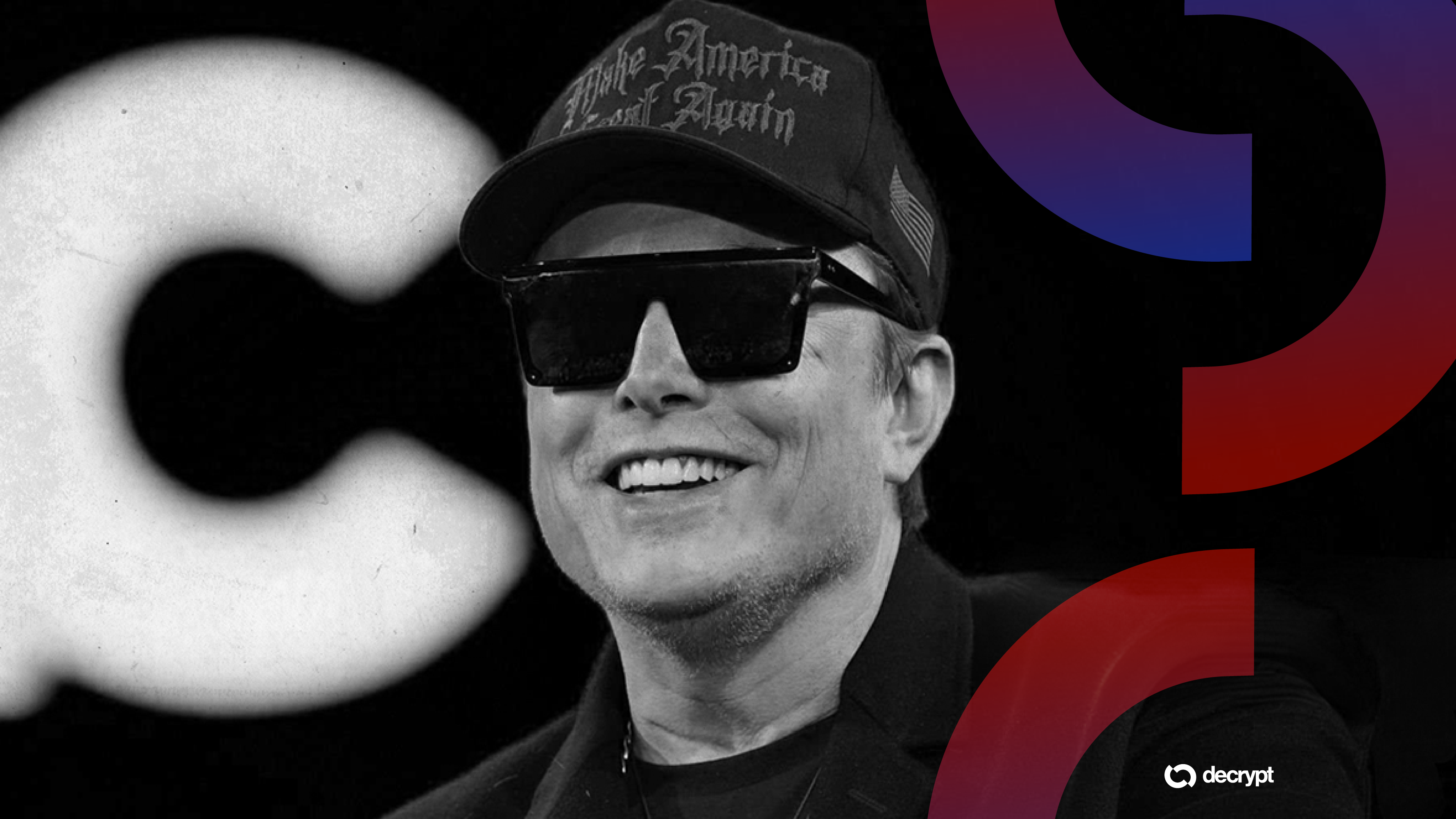
Elon Musk is now, on paper, the first person in history to be worth more than $1 trillion. SpaceX shares opened at $151 on 12 June 2026, giving the company a market capitalisation above $2 trillion, and within hours that figure had crept toward $2.2 trillion — enough to make SpaceX the world's sixth-largest listed company by value, and to lift Musk's net worth into a club of one. The framing of the moment is almost over-determined: a man whose public reputation is at one of its lowest points, whose political behaviour has cost him real money in the last eighteen months, becoming the most expensive individual on Earth. The number is real. The number is also, in a meaningful sense, meaningless. That tension is the story.
The milestone, properly understood, is not about a man getting rich. It is about the type of wealth that the public markets now accept as legible. A trillion-dollar net worth has historically been a country-scale figure. Crossing it on the strength of a single private space company — one whose revenue base is, by industrial-age standards, narrow — tells you something specific about how capital is being allocated in 2026, and about who gets to be the vessel for that allocation. Monexus finds that the more interesting question is not "what does Musk do with a trillion dollars," but "what does it mean that a single concentrated position in a single private firm, briefly traded, can produce that headline."
The math, and what the math leaves out
The reported numbers trace cleanly. The SpaceX IPO priced at $135 per share. By 15:54 UTC on 12 June 2026, shares were indicated to open around $162 — roughly 20% above the reference price — and the stock did open at $151, giving the company an initial market cap above $2 trillion. By 18:50 UTC, secondary reporting placed the company past $2.2 trillion, slotting it into the top tier of global equities. Musk's holding, the bulk of which sits in SpaceX rather than Tesla, crossed the trillion-dollar threshold as a direct mechanical consequence. There is no scandal in the numbers. There is also no policy. A mark-to-market net worth is a function of two things: how many shares a person owns, and what the market will quote for them on a given Thursday afternoon. Both of those moved in the same direction on the same day.
The honest reading is that the figure is closer to a weather report than a balance sheet. It is highly sensitive to the next quarter's earnings, to the next Elon-Musk-tweets-while-bored cycle, to a single bad launch, and to the still-narrow float of a freshly listed name. The paper wealth can compress just as quickly as it expanded. Recall that Musk briefly lost the title of world's richest person in early 2025 when Tesla's share price fell on the back of his own political activity. The volatility is the point. Headline trillionaire status tells the reader almost nothing about liquidity, control, or the underlying earning power of the business. It tells them a great deal about the market's current appetite for scarcity.
The structural frame: concentration dressed up as merit
The bigger story sits one level up from the man. SpaceX's market capitalisation now exceeds the GDP of all but a handful of sovereign states. The company achieved that valuation while still operating in a sector — launch services, satellite broadband, and a still-theoretical Mars programme — that is, in textbook terms, capital-intensive, slow-payback, and politically dependent. The textbook case is that markets price such businesses at a discount precisely because the cash flows are uncertain. The fact that SpaceX is being priced at a premium to most of the industrial economy is, on its own, a data point about how concentrated capital has become, and how starved of alternatives the institutional investor is. With bond yields offering little, and a handful of mega-cap technology names offering everything, the marginal dollar is doing what the marginal dollar does: piling into the place where the marginal dollar already is.
There is also a governance angle that should not be smoothed over. SpaceX is, by structure, an unusually powerful vessel. It is the launch provider of choice for the US government, for NATO-adjacent space programmes, and for a growing share of the world's commercial constellation operators. It is also a private company in which one person controls the votes. Public markets now hold a sliver of that company, and the public is being told to celebrate a paper-trillion threshold. The arrangement concentrates three things in one structure: the means of access to orbit, the diplomatic leverage that comes with that access, and the wealth of a single individual whose political behaviour is already a market-moving variable. That is not a complaint about Musk, and it is not a compliment. It is a description of a configuration. The configuration is new.
Counter-read: maybe the market is just finally pricing the future
The charitable read is that markets are doing what markets are supposed to do: discounting a long-duration stream of cash flows that flow from genuinely scarce assets. The roster is familiar — orbital launch slots, Ku-band spectrum, re-usable booster manufacturing capacity, a vertically integrated supply chain that competitors are years from matching. If you take the bull case seriously, the $2.2 trillion is not a bubble; it is a market that has finally caught up with the operating reality. The other public mega-caps in the trillion-dollar club — the chip designers, the consumer platforms, the cloud hyperscalers — all got there on the same argument: that controlling a chokepoint in a future-facing value chain is worth a present-day multiple that looks insane until, years later, it does not. On this read, the $151 print is just the first trade on the way to a much higher one.
This view is not wrong; it is also not sufficient. It explains why the market might rationally price SpaceX where it is. It does not explain why there is no comparable challenger. The launch industry has consolidated to a degree that would have looked like a 1990s antitrust problem in another sector. A market that is supposed to discount future cash flows should, all else equal, be wider and more contested. The fact that it is not is the gap between the two readings — the place where this publication is more sceptical than the celebratory framing, and more sceptical than the contrarian one.
The stakes, plain
The short-term stakes are ordinary: a public market debut that prices, trades, and digests a new entrant at a size the system has rarely seen. The medium-term stakes are about float and lock-up. Most of the value in SpaceX remains in restricted shares, and the price discovery over the next six to twelve months — as insider lock-ups expire and as institutional holders rotate — will be the actual test of the $2.2 trillion figure. The long-term stakes are more interesting. A private company that controls a meaningful share of the world's access to low Earth orbit, that is also a meaningful shareholder of one of the most politically active billionaires alive, is now partially public, and therefore partially answerable to a broader investor base. That is, on balance, a moderating force. It is also a force that arrives late, after the leverage has already accumulated.
There is also a final, quieter point. A trillion dollars of net worth is, in 2026, the kind of number that competes for the reader's attention with the gross domestic product of mid-sized European states and with annual US defence outlays. The absurdity of the comparison is the point. When the wealth of one person can be discussed in the same breath as the budget of a sovereign, the categories themselves are telling us something. The question is not whether Musk is "worth" $1 trillion. The question is what kind of economy, what kind of capital market, and what kind of political settlement produces that as a coherent sentence. The SpaceX IPO did not invent that economy. But on 12 June 2026, it did put a price tag on it.
The desk noted that wire coverage of the debut leaned heavily on the headline number, with the structural questions left to the reader. The piece above reads the IPO as a configuration story, not a personality story.
Wire provenance
This editorial synthesis draws on the following public wire/social posts:
- https://t.me/s/cointelegraph
- https://t.me/s/cointelegraph
- https://t.me/s/cointelegraph
- https://t.me/s/cointelegraph