The Strait of Hormuz Is Reopening — Slowly, Unevenly, and on Terms Nobody Fully Controls
The US Navy is escorting dozens of tankers a night through a strait Iran says it has no intention of restoring to pre-war flows. The gap between those two facts is where the next oil shock is being negotiated.
On the night of 12 June 2026, the US Navy was escorting dozens of commercial vessels through the Strait of Hormuz — a transit corridor roughly 21 miles wide at its narrowest point, through which something close to a fifth of the world's traded oil normally moves. According to senior US officials cited on Friday, those escorted sailings are now carrying millions of barrels of oil each night, and the cumulative flow has climbed to roughly half of the pre-war baseline [Middle East Eye, 2026-06-12T18:59 UTC; Middle East Eye, 2026-06-12T18:18 UTC]. The US Secretary of the Interior, in remarks carried the same day, attributed the recent easing in global crude prices to that incremental return of barrels onto the water.
The oil market is, for the moment, treating that as good news. The geopolitics underneath it is considerably less reassuring, because the country that physically controls the waterway is signalling the opposite of what the escort mission implies. Iran's state news agency IRNA reported on 12 June that Tehran will not restore traffic through the Strait of Hormuz to pre-war levels — directly contradicting earlier reporting, referenced the same day, that commercial shipping would return to normal within roughly a month [IRNA via Unusual Whales, 2026-06-12T15:57 UTC]. Two governments, one strait, and two stories about how much oil will move through it tomorrow.
The numbers, and the contradiction at the centre of them
The arithmetic on the US side is unusually specific. Officials are putting the escorted fleet at "dozens" of vessels nightly, moving what they describe as millions of barrels — a number that, multiplied across the working days of a week, accounts for the "half of pre-war levels" framing that the same officials are now using publicly. That figure has become the operational baseline for shippers, refiners, and the futures desks in London and Singapore, all of whom have spent the war rerouting, drawing down stockpiles, and pricing a sustained disruption premium into the front of the curve.
The contradiction is not a minor diplomatic wobble. Iran's position, as relayed by IRNA, is that the strait will not return to its prior throughput — a statement that, if enforced, caps the upside on whatever escort capacity the US Navy is willing to provide. It also gives Tehran a permanent lever: every additional percentage point of "normalisation" is, in this framing, a concession to be extracted, not a condition to be restored.
What the reported framework actually says
The other piece of the picture, also surfacing on 12 June, is the reported terms of a US-Iran framework. According to a summary in circulation, the arrangement calls for the destruction and removal of Iran's nuclear material, the dismantling of Iran's nuclear program, the withholding of funds until compliance is verified, and a re-opening of the strait as the trade [Unusual Whales, 2026-06-12T14:19 UTC]. The sequencing matters. The nuclear dismantlement steps are presented as the precondition; the funds are released only after verification; the strait reopens as the deliverable that the oil market is already partially pricing in.
That sequencing also explains why the escort mission and the IRNA line can coexist. The US is escorting tankers to demonstrate that the strait is navigable now, under coalition protection, while a deal is being finalised. Iran is signalling that, deal or no deal, the strait's throughput ceiling will be lower than it was before the war — a position consistent with a regime that wants the corridor to remain a managed chokepoint rather than a neutral waterway.
Why the oil price response has been muted — and why that should worry traders
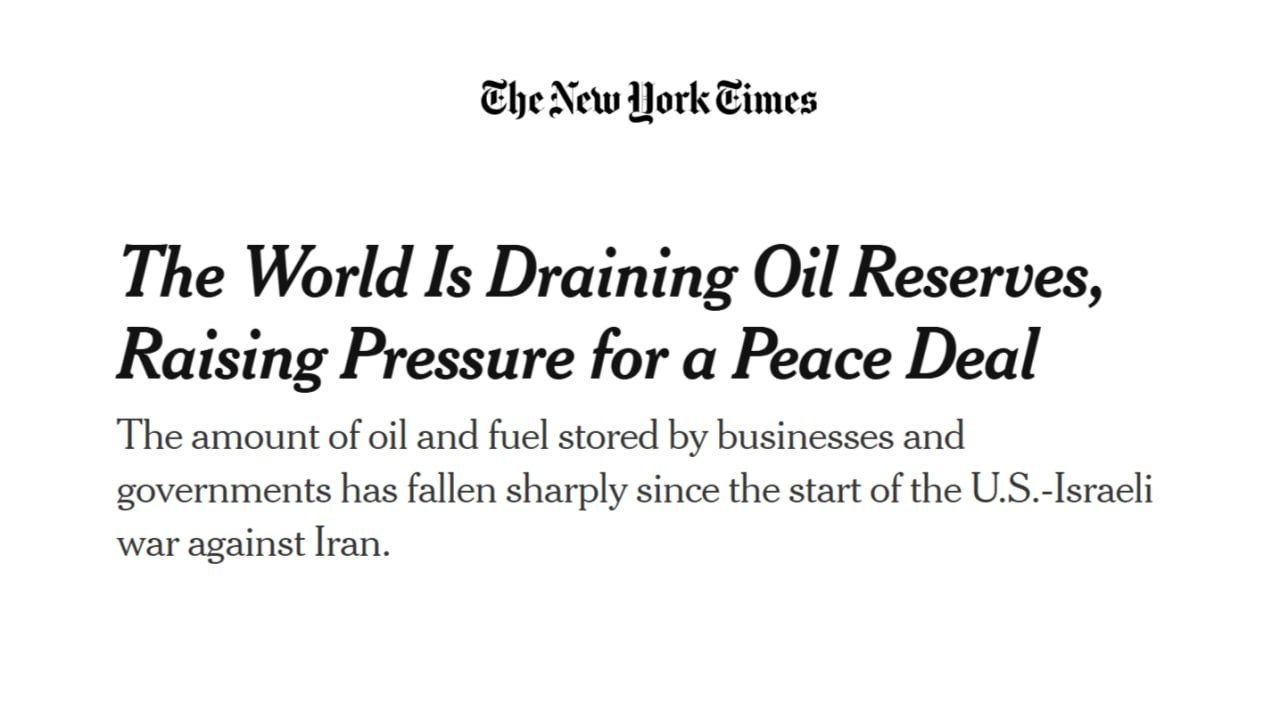
The price response to the partial reopening has been, in market terms, almost respectful. The US Secretary of the Interior's framing — that more barrels leaving Hormuz are responsible for the drop in crude — is the official explanation, and it is partly correct. The other half of the story is that strategic petroleum reserves in the OECD have been drawn down for months, that refiners have re-engineered crude slates to favour Atlantic basin grades, and that demand from major importers has been quietly rationed. Prices are lower because the system has adapted to a partial closure. They are not lower because the closure is over.
That distinction will become the story if IRNA's line holds. A world in which the Strait of Hormuz runs at half its pre-war throughput indefinitely is a world with a permanent risk premium on seaborne crude, a permanently higher freight rate through the Gulf, and a permanently larger US naval presence in the western Arabian Sea. Each of those is a cost that ends up somewhere — in fuel bills, in defence budgets, in insurance premiums on tanker hulls — and none of them appear cleanly in the daily settlement price.
Stakes, in plain terms
The two governments that matter most are sitting on opposite sides of a sequencing question. Washington wants the strait wide open, escortable, and treated as a common maritime asset, with the nuclear file as a separate, parallel track. Tehran wants the nuclear file resolved, the funds flowing, and the strait restored — but on terms that leave Iran with a structural role in determining how much oil moves, and when. The IRNA line is, in effect, an opening offer on what "restored" means.
For oil importers, refiners, and shipowners, the operative question is no longer whether the strait reopens. It is reopening. The question is the size of the new ceiling, who enforces it, and what the spread between escorted and unescorted transit ends up costing. On present trajectory, the answer to all three is: smaller than before, contested rather than settled, and priced in ways the headline crude number does not fully capture.
Desk note: Wire coverage on 12 June has framed the escort mission and the IRNA statement as two separate beats. Monexus is reading them as a single negotiation — the escort proving navigability, the IRNA line setting the ceiling — and the oil price response as adaptation to a managed closure, not evidence that the closure is over.