Tehran's victory lap and the diplomacy that produced it
Iran's foreign minister is on Iranian state media selling a war-ending memorandum of understanding. The MoU's text is not yet public, and the gap between Tehran's framing and the silence from Washington is where the next dispute will be fought.
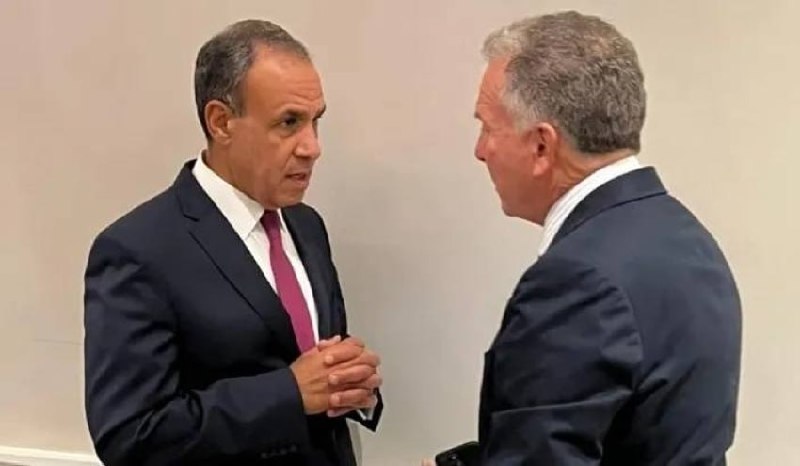
At 19:07 UTC on 12 June 2026, Iran's Foreign Minister Abbas Araghchi went on Fars News television and declared, in the cadence of a man surveying wreckage he has decided to call a triumph, that the Islamic Republic had won. The armed forces had delivered, the diplomats had stabilised, and the people had stayed in the streets every night. The occasion was a memorandum of understanding with the United States — the document Iran is selling as the formal end of the war the two countries were fighting, and the one the American side has not yet been heard from about at any comparable volume.
What Tehran is actually claiming
The substantive claim is modest in form and large in implication. Araghchi said, on the Fars broadcast, that there is "no duality between the field and diplomacy and both move in the same direction" — a deliberate repudiation of the long-standing Iranian critique that envoys talk away what generals have paid for in blood. To those two pillars, he added, "the media and the street were added this time and four pillars moved together." He credited foreign officials, in remarks aired by Fars at 19:12 UTC, with telling him that "they had not known Iran like this" and that "the Iranians created a surprise and came out of the war with more strength" — a paraphrase rather than a named quotation, and a useful reminder that this is, at present, Iran's version of events.
The text of the memorandum is not public. Araghchi told the Fars audience at 19:15 UTC that he would not release the draft at that moment but would do so later, a sequencing choice that reads as deliberate: Tehran gets to define the win before the language that defines the deal is in the public record. Until the text is on the page, every claim about what was conceded — sanctions relief, nuclear constraints, regional proxy behaviour, prisoner files — is a claim by one party only.
What is not in the thread
This matters because the picture is, at the time of writing, lopsided. The thread offers Iranian state media and an Iranian Telegram account sympathetic to the security establishment; it offers no American readout, no statement from the US State Department, no comment from the Qatari or Omani mediators who have, in earlier rounds of this contest, served as the only reliable translators between the two governments' publics. Western wire services have, in this batch, not been heard from on the substance. That is not, on its own, evidence of anything — a deal struck at speed often produces this asymmetry for hours or days — but it does mean that "Iran victorious" is presently a single-source claim. The single source is, however, the foreign minister of one of the two parties, speaking on the state broadcaster of the other co-belligerent's principal regional adversary, with the cameras running.
The counter-narrative does not need to be invented. The simplest read of the gap is that the United States has not yet decided what to call this, and is waiting on its own inter-agency clearance before letting the same microphones air the same adjectives. The more pointed read is that Washington will, when it does speak, use a different vocabulary — "understanding," "framework," "set of understandings" — and that the distance between the two vocabularies is itself the next negotiation.
The structural frame
Wars end on two clocks: the one in the field and the one at the podium. The Fars broadcast is the podium clock being set, in public, by the side that decided, for reasons of its own, that this was the hour to set it. Araghchi's insistence that the duty of diplomacy is to "stabilise field achievements" — negotiator language for: do not give back what the guns bought — is the tell. It is also the most fragile part of the structure. Diplomats who enter a room bound to lock in what the battlefield has produced are diplomats who will struggle to make concessions; but wars that end with one side's street celebrations in the foreground tend to produce a counter-narrative in the losing capital, and that counter-narrative is what kills implementation agreements before they are signed.
There is a second, larger pattern in play. A US–Iran understanding concluded in 2026, even one dressed as a memorandum rather than a treaty, would land inside a wider repositioning of the Middle East's external relationships — a period in which the United States has been visibly reluctant to commit forces to new theatres, and in which Iran's regional partners have paid their own costs. The Iranian argument, made explicitly through Fars by the foreign minister himself, is that the deterrence the war was meant to erode has, in fact, hardened. Whether that argument survives the first week of implementation is the only question worth following.
Stakes, and what to watch
The next fortnight will be the test. Three things to track. First, the text: when it appears, look for whether the sanctions-relief language is binding or aspirational, and whether the nuclear constraints are reversible on Iranian discretion or contingent on external verification. Second, the prisoner file: Iran's interlocutors will expect movement on Iranian nationals held in third countries, and the United States will expect movement on Americans held in Iran. Third, the regional extension: the proxy theatre — the places where Iran and the United States do not speak directly — will be where this deal either holds or dies, and the first round of those signals is likely to come within days, not months.
The honest uncertainty here is narrow but real. The Iranian state has a long history of announcing wins it later has to renegotiate, and the United States has a long history of signing documents it later has to disavow. What this thread documents is a moment of maximal Iranian confidence in the room, captured in real time, by the Iranian side, for the Iranian audience. The other side of that moment has not yet been recorded.
Monexus framed this against the Fars broadcast rather than the Western wires, which had not yet reported on the MoU at the time of filing. The thread is, for now, a single-source document; readers should treat Tehran's victory language as Iranian framing, not as a joint communiqué.
Wire provenance
This editorial synthesis draws on the following public wire/social posts:
- https://t.me/farsna
- https://t.me/FotrosResistancee
- https://t.me/farsna
- https://t.me/farsna
- https://t.me/farsna