UAE agrees to unlock $10bn in frozen Iranian oil revenues, in tactical reversal after months of Gulf pressure
A reported $10bn release — with $3bn already delivered — marks a sharp reversal of months of financial pressure on Tehran and rewards a Gulf neighbour that has weathered Iranian attacks on shipping and territory.
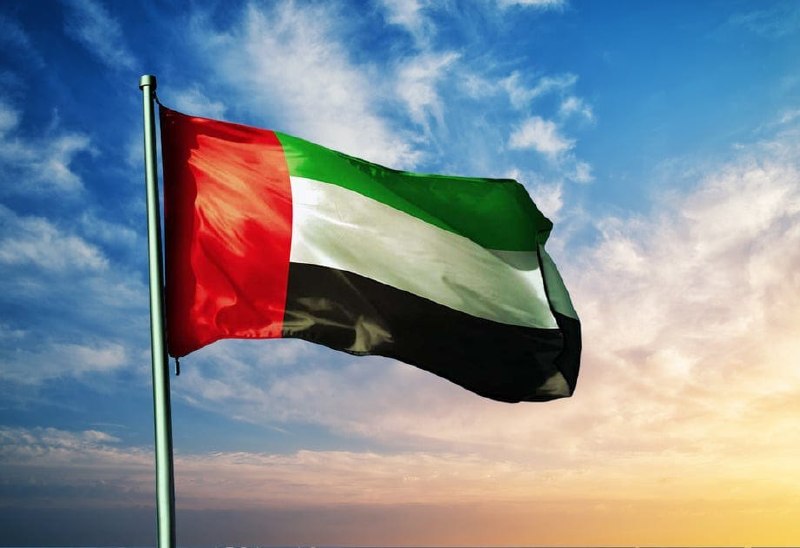
The United Arab Emirates has agreed to release at least $10 billion in frozen Iranian oil revenues, with roughly $3 billion already delivered and the total potentially reaching $20 billion, according to multiple sources cited by Reuters on 12 June 2026. The arrangement, described by regional outlets as a tactical shift in Abu Dhabi's posture, comes after weeks of Iranian attacks on Gulf shipping and territory — pressure that, on the face of it, did not produce the financial isolation the Iranian regime is now having partially reversed.
The reported deal is the most concrete example yet of a Gulf state treating Iran's coercive energy as a negotiable liability rather than a strategic threat to be deterred. It also marks an unusually public divergence between the UAE's behaviour and the broader Western pressure track on Tehran, even if the mechanics of the fund release are not formally part of any sanctions architecture.
What Reuters is reporting
Three regional monitoring accounts — Open Source Intel, the Middle East Spectator and Clash Report — circulated the Reuters story in the late afternoon UTC window, all attributing the $10 billion headline and the $3 billion tranche to "informed sources" rather than to named officials on either side. Middle East Spectator's read on the figure included the caveat that "two other informed sources said the amount could" run higher, consistent with the $20 billion ceiling floated by Clash Report. No Emirati or Iranian government spokesperson had confirmed the deal on the record at the time of writing, and the reporting carries the standard Reuters anonymity caveat: the dollar figures are not yet matched to a public budget line, a central-bank statement, or a sanctions-letters opinion.
That detail matters. Iranian oil revenues held in third-country accounts have circulated through the financial plumbing of the Gulf for years under various arrangements that are partially above-board and partially tolerated. What is different in this reporting is the scale and the timing: a release of this magnitude, reportedly beginning with a $3 billion tranche, is closer to a political settlement than a routine commercial settlement of an outstanding balance.
Why the UAE — and why now
The "tactical shift" language in the Telegram relay of the Reuters wire points to an interpretation that, on the evidence available, is the most economical reading: Abu Dhabi has calculated that absorbing a defined financial cost is preferable to absorbing the open-ended operational risk of further Iranian attacks on Gulf energy infrastructure and shipping. The UAE has spent the last several years positioning itself as a regional mediator and a destination of choice for Iranian capital seeking to exit the formal financial system. The reported release is, in that sense, a continuation of policy by other means — not a rupture with it.
There is a secondary reading worth flagging. The deal also creates a balance sheet on which the UAE can ask, quietly, for reciprocation: a de-escalation in the Iranian attacks that have, in the framing of the same wire coverage, precipitated the release. A state that pays for non-aggression is in a structurally different diplomatic position from one that simply absorbs aggression, and the political value of being the Gulf capital that "bought quiet" is real even if it never appears in a press release.
The structural frame: oil money as a substitute for political settlement
What the wire coverage describes, stripped of its anonymity, is a familiar pattern in Gulf-Iranian economic statecraft: the conversion of a political standoff into a financial transaction. The money reportedly being released is, in effect, a price — one that both sides can live with because it monetises an existing frozen relationship rather than creating a new one. The pattern is older than the current sanctions regime and will outlast it; it is also, by design, opaque. Reuters's sources can describe the headline number because the number is the political point; the underlying escrow arrangements, the condition of the funds, and the identity of the receiving entities are the technical details, and they are the part that will take longer to surface.
A second structural feature deserves attention. The reported release is happening in parallel with, not in opposition to, the wider US-Iran pressure track. That is the part of the story most likely to be misread in the Western commentary cycle, where any transfer of value from a Gulf ally to Iran tends to be framed as a defection. The more defensible reading is that the UAE and Washington are running complementary, not competing, exposure-management strategies toward Tehran, with the UAE absorbing the financial leg and the United States retaining the sanctions-enforcement and military-deterrence legs. The Reuters reporting does not adjudicate this, but the sources it cites are not describing a unilateral Emirati peace initiative.
What remains uncertain
The central fact — that a release of at least $10 billion is underway, with $3 billion already delivered — rests on Reuters's "informed sources," relayed by three Telegram monitoring accounts that frequently cross-publish. None of the parties has put the figure on the record. The higher $20 billion ceiling, flagged by Clash Report, is even softer: it is the upside of a range, not a confirmed commitment. The terms of the escrow, the receiving entities in Iran, the relationship of the release to any sanctions-letters guidance, and the political conditions attached (if any) are all unknown at the time of writing. Read this as a significant diplomatic event in shape; do not yet read it as a fully transparent financial transaction in substance.
A second uncertainty is duration. A one-time release of $10 billion is a tactical concession. A standing arrangement in which Iranian oil revenues cycle through Emirati accounts at a defined annual rate is a different instrument — closer to a sanctions workaround than a settlement. The Reuters reporting does not, at this stage, tell us which one the parties intend.
Stakes
For Tehran, the immediate stake is liquidity. Iranian budget execution under sustained sanctions pressure depends on exactly this kind of partial release to keep the formal economy functioning at the margin. For the UAE, the stake is geographic: the deal preserves Abu Dhabi's position as the Gulf capital most able to do business with Tehran, and it converts several years of accumulated Iranian-held balances into a working diplomatic instrument. For the wider Gulf, the stake is precedent — both for what counts as a tolerable Iranian coercive campaign and for what kind of financial settlement a Gulf state is prepared to underwrite after one.
For the Western sanctions architecture, the stake is more delicate. A $10 billion release is, mechanically, a release the architecture did not authorise, and it will be read in some quarters as evidence that the architecture has been outflanked by ad-hoc Gulf financial engineering. A more careful read is that the release is being tolerated because it also serves Western exposure-management interests: it lowers the temperature in the Gulf without requiring a formal sanctions concession or a deal on the nuclear file. The two readings are not mutually exclusive, and the Reuters reporting does not, on its own, settle which one prevails.
Desk note: Monexus has framed this around the financial mechanics and the regional balance of incentives that the Reuters wire makes visible, rather than around the more speculative question of what this means for the wider US-Iran track. The reporting deserves a sharp first-pass read, and the headline number deserves to be treated as both consequential and not yet fully transparent.
Wire provenance
This editorial synthesis draws on the following public wire/social posts:
- https://twitter.com/Osint613/status/2065500010062459160
- https://t.me/wfwitness
- https://t.me/Middle_East_Spectator
- https://t.me/ClashReport
- https://en.wikipedia.org/wiki/United_Arab_Emirates%E2%80%93Iran_relations